Key information
- Funding
- Self-funded
- School
- Energy, Geoscience, Infrastructure and Society
- Location
- Edinburgh
- Delivery type
- Full-time, Part-time
- Supervisor
- Gabriela Medero
- Start date
- September
Research developed by the Geomechanics team covers a wide range of areas, including laboratory testing, microstructure analysis, constitutive modelling and geotechnical and geoenvironmental engineering studies. In particular, researchers have an interest in unsaturated soils behaviour at micro and macro-scale.
Research projects
Recently, work has concentrated on testing soils at different suction and temperature levels and correlating the macro and micro-scale response. This work has special relevance to heavily compacted clays surrounding radioactive nuclear waste disposal as well as applications such as burial of high voltage cables, drilling of deep offshore wells and foundations subjected to temperature and suction changes. Research into unsaturated soils represents a relatively new area in geotechnical engineering. Climatic changes makes this topic highly relevant and research work focuses on the thermo-hydro-mechanical behaviour of these soil-water-air systems. The team collaborates with international leading researchers in this area. Work into the effects of cyclic wetting and drying on soil behaviour has been in progress for several years and is continuing. This is very relevant when investigating the effect of flooding events on soil response and microstructure.
Research is also being undertaken in the effect of suction changes on granular materials (eg sand, glass beads, coal, etc). This work is of particular relevance when handling granular materials that can be expose to different relative humidity environments (ie different suction levels can happen).
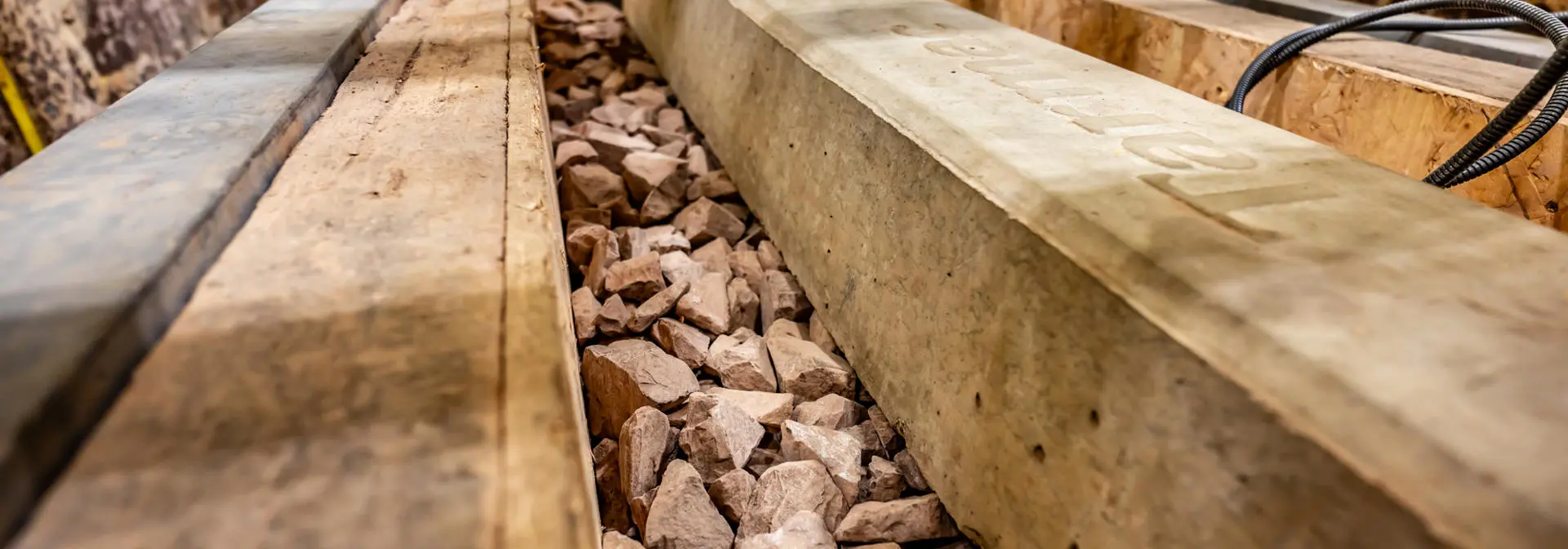
In addition, researchers have expanded their particular interest in earth construction hydro-mechanical behaviour. The data is used to examine the mechanics associated with water migration and the structure performance. This research is undertaken with industrial collaboration.
Project supervisor
Additional information
Staff contributing to this research area include:
- Dr Gabriela Medero
- Prof John McCarter
- Dr Abdellah El-Kacimi
Entry requirements
We welcome applications from suitably qualified candidates. Please visit our How to apply page.
Funding information
| Status | Full Time | Part Time |
|---|---|---|
| Scotland | £5,238 | £2,619 |
| England / Wales / N Ireland | £5,238 | £2,619 |
| International | £27,080 | £13,540 |
- Status: Your residency status is usually defined as the country where you have been ordinarily resident for the three years before the start of your course.
- International: 'International' includes applicants from European Union countries who do not hold Pre-Settled or Settled status in UK. (This does not include students from the Republic of Ireland - see above).
We offer a number of competitive funded scholarships for research degrees. Full or partial support may be available for well-qualified candidates from UK research councils, research pools, charities or industry.
View our full range of scholarships.
Why Heriot-Watt
We have been producing career-ready graduates since 1821. With our roots as the world’s first Mechanics Institute, Heriot-Watt is a pioneering university with a global reach.
At Heriot-Watt, learning goes beyond the lecture theatre. We tackle real world challenges through extraordinary research – from climate change to protecting our oceans, to advancing life-saving medical breakthroughs and shaping the next generation of AI. We are also committed to developing forward-thinking design and sustainable business practices that impact industries worldwide. On our campuses you’ll find some of the world’s most advanced facilities, while our strong industry links set you up for career success. This is why almost 90% of our graduates are in employment or further education (Graduate Outcomes Survey 2024).