
Key information
Heriot-Watt University seeks to recruit a high-quality PhD candidate for the project titled 'Financing the Circular Economy Transition'.
- Funding
- Fully funded (UK students only)
- School
- Social Sciences
- Location
- Edinburgh
- Award
- PhD
- Delivery type
- Full-time
- Supervisor
- Bing Xu
- Start date
- January, September
- Closing date
- Wednesday, 12 August 2026
- Duration
- 42 months
Edinburgh Business School at Heriot-Watt University is offering a full-time PhD studentship funded by the Engineering & Physical Sciences Research Council (EPSRC) to start in the 2026-27 academic year (either September or January entry is possible).
The studentship include a tuition fee waiver for UK fees only, an enhanced annual stipend currently set at £23,985 (10% above the standard UKRI rate), and an expenses allowance of £3,500 for training and research costs. The duration of the studentships is 3.5 years.
Overseas students are eligible to apply, but must be able to demonstrate how they would cover the difference between the UK and overseas fees.
Summary of project
The transition towards a circular economy (CE) is increasingly recognised as essential for achieving net-zero targets, strengthening supply chain resilience, and reducing dependency on critical raw materials. However, significant financial, technological, and institutional barriers continue to constrain the uptake and scaling of circular business practices and investment.
This PhD project will investigate how finance and investment can accelerate the CE transition across areas such as electronics, cooling, heating, and hard-to-recycle materials. Potential research topics include the financial performance of circular business models, sustainable and transition finance, circular supply chain investment; climate-related financial risks; ESG and sustainability disclosure; and the role of institutional investors in supporting circular innovation and resource security.
The project may also examine emerging issues such as AI-enabled and agent-based sustainability analytics, critical mineral dependency, and the resilience of global supply chains under geopolitical and environmental uncertainty. The successful candidate will join an interdisciplinary research environment working at the intersection of finance, sustainability, and industrial transition.
Project supervisor
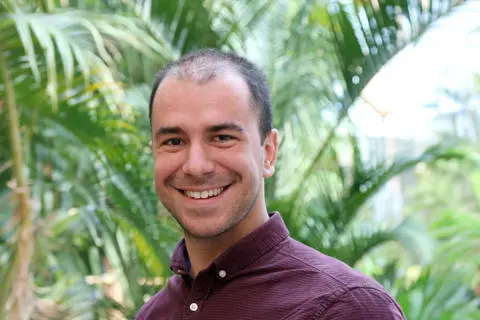
The supervisory team for this project area will consist of Prof. Bing Xu and Dr Stefano Maiani.
Candidates interested in this project area are encouraged to contact Prof. Xu (b.xu@hw.ac.uk) for an informal discussion about their research proposal prior to submitting their application.
When submitting your application for this project area, please select the option ‘Accountancy and Finance PhD’ from the drop-down list on the online application system. In addition to the standard entry criteria listed below, applicants for this project should note that a Master’s degree in Finance, Sustainable Finance, Economics, Business Analytics, Data Analytics, Energy Finance, Accounting, or a related field is desirable.
Experience with empirical research methods and programming languages such as Python, R, Stata, or Matlab is highly desirable. Familiarity with sustainability, climate finance, ESG, circular economy research, or industrial decarbonisation would be advantageous.

Entry requirements
Applicants should have an undergraduate degree with a minimum classification of 2:1 in a field relevant to the project for which they are applying. Candidates for whom English is a second language should meet the University’s minimum English-language requirements.
If you have not already studied a degree programme that was taught and examined in the medium of English, the minimum overall IELTS score is 6.5 with no score lower than 6.0 in Reading, Writing, Speaking and Listening.
Please note that possession of the minimum qualifications does not guarantee shortlisting for interview.
Funding information
Annual stipend currently set at £23,985 (10% above the standard UKRI rate), and an expenses allowance of £3,500 for training and research costs.
Why Heriot-Watt
We have been producing career-ready graduates since 1821. With our roots as the world’s first Mechanics Institute, Heriot-Watt is a pioneering university with a global reach.
At Heriot-Watt, learning goes beyond the lecture theatre. We tackle real world challenges through extraordinary research – from climate change to protecting our oceans, to advancing life-saving medical breakthroughs and shaping the next generation of AI. We are also committed to developing forward-thinking design and sustainable business practices that impact industries worldwide. On our campuses you’ll find some of the world’s most advanced facilities, while our strong industry links set you up for career success. This is why almost 90% of our graduates are in employment or further education (Graduate Outcomes Survey 2024).