Profile
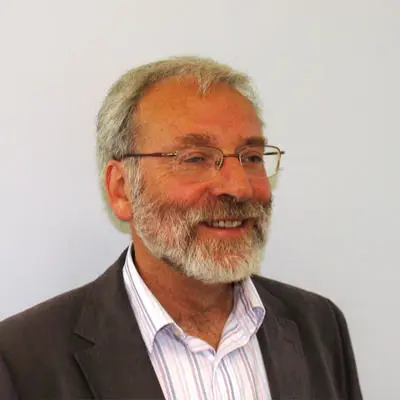
Biography
I have been Professor of Urban Studies at Heriot-Watt University, Edinburgh since August 2002, but was previously Professor of Planning & Housing, Heriot-Watt University/Edinburgh College of Art, Edinburgh (from 1994).
I was a Reader, at the former School for Advanced Urban Studies, University of Bristol, 1993-4, and Deputy Director of SAUS, 1990-92. I originally joined SAUS in 1976 as Lecturer and was promoted to Senior Lecturer in 1990. I also gained my PhD from Bristol at that time.
Prior to that I worked as an Economist with Shankland/Cox Partnership, Town Planning Consultancy, 1973-76, working on the Lambeth Inner Area Study for the government (DoE); and undertook Postgraduate study at the University of Sussex, 1970-73.
I would claim to be one of Britain’s leading academics in housing and urban economics, having been engaged in academic and applied policy research in this field since the mid-1970s. I have been involved with or led a large number projects, some highly significant, funded by government, research councils or charitable foundations. My publications include around 50 refereed journal articles, many in the leading planning/urban studies journals, half-a-dozen books, and innumerable research reports.
I am responsible for one of the few serious attempts to measure and model the impact of planning controls on the housing market in the UK, as reflected in a string of papers and reports since 1993. The most recent phase of this entails creating the first panel econometric models of the British housing market at local/subregional level with an explicit planning/land supply input. Recent research has also linked this subregional market area analysis to a neighbourhood level.
I am probably best known in England for work on housing affordability and its relationship with housing needs assessment, including developing a widely-used affordability-based needs model (e.g. Treasury, Housing Corporation, Scottish Government, Council of Mortgage Lenders). This also led into influential policy-oriented work on low demand and unpopular housing, and much evaluative work on low cost home ownership initiatives, as well as producing official guidance on how to assess local needs.
I have also pursued a stream of research on equity issues in local public services. Initially this was mainly focussed on the grant systems used to distribute resources to different geographical areas, taking account of need. A second strand was to look at ‘who uses local services?’ and to analyse the patterns and implications of this evidence. A third strand, was to analyse the small geographical level of service delivery, as in pathbreaking studies of ‘where does public spending go?’ and ‘mainstream services and their impact on neighbourhood deprivation’. This has led into a fourth strand, the analysis of service outcomes and the implications for both resource allocation and for planning/housing/regeneration policies (e.g. recent work on the influence of home ownership on educational attainment).
One other strand which has been of growing interest has been research on ‘urban form’, and in particular on its effects on social and economic sustainability of neighbourhoods/communities. This work has been enabled by larger scale, longer term funding of an interedisciplinary 6-University consortium called ‘CityForm – the sustainable urban form consortium’ by the Engineering and Physical Sciences Research Council