
Key information
The Natuna Arch (exposed on Natuna Island, Indonesia) represents a now almost entirely eroded mountain belt that rose in the Mesozoic and likely acted as a land bridge between present-day Borneo and Vietnam across the now submerged Sunda Shelf. This PhD project aims to understand when the Natuna Arch rose, and how high did it become? Importantly, this basement high on the Sunda Shelf separates the East and West Natuna basins and may have provided significant sediment into basins across the Sunda Shelf. Its Jurassic–Cretaceous rocks record an older history, but the timing and extent of this uplift require further investigation. This PhD will examine how its changing topography may have created barriers or pathways for sediment dispersal, potentially contributing to drainage reorganisation.
- Code
- EGIS2026-AG2
- Funding
- Fully funded
- School
- Energy, Geoscience, Infrastructure and Society
- Location
- Edinburgh
- Award
- PhD
- Delivery type
- Full-time
- Supervisor
- Amy Gough
- Start date
- January
- Closing date
- Friday, 30 October 2026
- Duration
- 48 months
Project Description
This Natuna Arch (exposed on Natuna Island, Indonesia) represents a now almost entirely eroded mountain belt that rose in the Mesozoic and likely acted as a land bridge between present-day Borneo and Vietnam across the now submerged Sunda Shelf. Now only pockets of the Mesozoic basement and eroded sediments remain to record its history. This project aims to understand when the Natuna Arch rose, and how high did it become? Importantly, this basement high on the Sunda Shelf separates the East and West Natuna basins and may have provided significant sediment into basins across the Sunda Shelf. Its Jurassic–Cretaceous rocks record an older history, but the timing and extent of this uplift require further investigation. This PhD will examine how its changing topography may have created barriers or pathways for sediment dispersal, potentially contributing to drainage reorganisation.
Main methodology
Regional fieldwork. Geological mapping, structural and sedimentological observations, and sampling, including Natuna Island, the Riau Islands, and northwest Kalimantan.
Geochronology. Dating rocks (U-Pb zircon geochronology) and characterising sediment provenance to establish the geological framework and investigate sediment sources and connections.
Thermochronology and integration. Low-temperature thermochronology and thermal history modelling to reconstruct cooling and exhumation. Integration with regional geological evidence to constrain uplift histories and assess implications for drainage evolution.
Biostratigraphy. Analyse available palynological and foraminifera datasets along with new data to understand the ancient elevation of this region and study the history of marine incursions across the Sunda Shelf.
Join our research community
The student will join the Southeast Asia Research Group (SEARG) at Heriot-Watt University in the wonderful city of Edinburgh. The project offers training in field and laboratory methods, opportunities to work with regional collaborators, and twice-yearly presentations to the wider international group. It would suit an applicant with a background in geology, geoscience or a related subject and an interest in tectonics and landscape evolution.
Eligibility:
This project is open to Home and overseas students. Candidates must hold as a minimum a 2:1 (or equivalent) in Geoscience at Undergraduate and preferably a Masters degree (in any STEM subject).
Funding
This is a full scholarship which will cover tuition fees (home and overseas) and provide an annual stipend (£21,805 in 2026-27) for 42 months. Thereafter, candidates will be expected to pay a continuing affiliation fee (currently £130) whilst they complete writing up their thesis.
How to Apply
- To apply you must complete our online application form.
- Please select PhD Applied Geoscience as the programme and include the full project title, reference number (EGIS2026-AG2) and supervisor name on your application form. Ensure that all fields marked as ‘required’ are complete.
- Once have entered your personal details, click submit. You will be asked to upload your supporting documents. You must complete the section marked project proposal; provide a supporting statement (1-2 A4 pages) documenting your reasons for applying to this particular project, outlining your suitability and how you would approach the project. You must also upload your CV, a copy of your degree certificate and relevant transcripts and an academic reference in the relevant section of the application form.
- If your first language is not English, we'll need to see evidence of your English language ability. The minimum English language requirement for entry to this programme is IELTS 6.5 (or equivalent) with no score lower than 6.0.If you do not have IELTS 6.5, we offer a range of English language courses to help you meet the English language requirement for this programme prior to commencing your studies. For more information about your application and our English Language requirements, please see Section 10 of our page on English Language Requirements as part of your application.
Enquiries:
Please contact Dr Amy Gough (A.Gough@hw.ac.uk) for further information or an informal discussion.
Please contact egis-pgr-apps@hw.ac.uk for technical support with your application.
Timeline:
The closing date for applications is 30 October 2026.
Applicants must be available to start in January 2027.
References:
Webb, M., Endinanda, F. and Gough, A., 2023. Mesozoic magmatism of Natuna Island, Indonesia: Implications for the subduction history of eastern Sundaland. Gondwana Research, 119, pp. 45–67.
Webb, M., Gough, A. and Endinanda, F., 2024. Depositional environments and sedimentary provenance of the Cenozoic deposits of Natuna Island, Indonesia: Implications for basin evolution in central Sundaland. Gondwana Research, 134, pp. 298–325.
Project supervisor
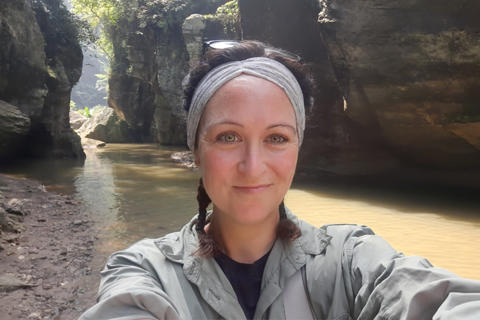
Primary Supervisor: Dy Amy Gough A.Gough@hw.ac.uk
Second Supervisor: Dr Nanzhe Wang Nanzhe.Wang@hw.ac.uk
Entry requirements
Entry Requirements
This project is open to Home and overseas students. Candidates must hold as a minimum a 2:1 (or equivalent) in Geoscience at Undergraduate and preferably a Masters degree (in any STEM subject).
Funding information
This is a full scholarship which will cover tuition fees (home and overseas) and provide an annual stipend (£21,805 in 2026-27) for 42 months. Thereafter, candidates will be expected to pay a continuing affiliation fee (currently £130) whilst they complete writing up their thesis.
Why Heriot-Watt
We have been producing career-ready graduates since 1821. With our roots as the world’s first Mechanics Institute, Heriot-Watt is a pioneering university with a global reach.
At Heriot-Watt, learning goes beyond the lecture theatre. We tackle real world challenges through extraordinary research – from climate change to protecting our oceans, to advancing life-saving medical breakthroughs and shaping the next generation of AI. We are also committed to developing forward-thinking design and sustainable business practices that impact industries worldwide. On our campuses you’ll find some of the world’s most advanced facilities, while our strong industry links set you up for career success. This is why almost 90% of our graduates are in employment or further education (Graduate Outcomes Survey 2024).