Rakesh Kudke
MSc Construction Project Management
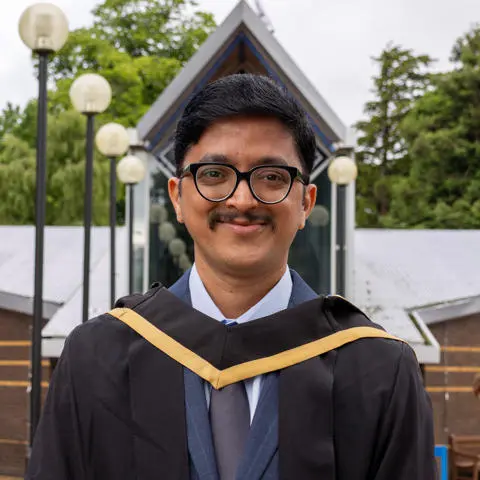
Rakesh, from India, graduated from the MSc Construction Project Management programme in 2026. Already having industry experience on his belt, Rakesh still decided to pursue an MSc and follow his passion in project management. Meeting new people, gaining opportunities and self-growth made him gain more than he realised and made the leap worth it.
Profile
Studying an MSc in Construction Project Management has been a transformative step in Rakesh’s academic and professional journey. Coming from a background in architecture and several years of experience as a Design and Project Coordinator in India, Rakesh chose this programme to strengthen his project management expertise and broaden his understanding of the construction and infrastructure sector.
Our University’s industry‑focused curriculum, practical learning approach, and strong reputation in the built environment made it the ideal place to advance his skills. Discover more about Rakesh’s journey below:
What programme did you study and why did you choose it?
I’m currently studying an MSc in Construction Project Management. I chose this programme because I wanted to build on my background in architecture and gain stronger project management skills within the construction and infrastructure sector. Having worked for several years as a Design and Project Coordinator in India, I realised I enjoyed managing multidisciplinary teams, coordinating design workflows, and overseeing project delivery just as much as the design process itself. Heriot-Watt stood out because of its industry-focused approach, practical modules, and strong reputation in the built environment sector.
What were the key differences you found between studying in your home country of India and Scotland?
One of the biggest differences was the teaching style. In India, education is often more structured and exam-focused, whereas in Scotland there is a much stronger emphasis on independent learning, critical thinking, and discussion-based learning. I also found the multicultural classroom environment very valuable because I had the opportunity to collaborate with students from different countries and professional backgrounds.
What’s your favourite / most memorable moment from your time as a Heriot-Watt student?
One of my most memorable experiences has been working on group projects with classmates from different cultural and professional backgrounds. It helped me develop teamwork, communication, and problem-solving skills in an international environment. I also enjoyed participating in student activities and volunteering opportunities, which made me feel more connected to the University community.
Can you tell us more about the support you received as a student?
The support at Heriot-Watt has been excellent throughout my studies. Lecturers and tutors were approachable and supportive whenever I needed academic guidance. The Careers Service was especially helpful with CV improvement, interview preparation, and understanding the UK job market. I also appreciated the welcoming and inclusive campus environment, which helped me settle into life in Scotland as an international student.
What advice would you give to a mature student considering Heriot-Watt?
I would say that professional experience is actually a great advantage when returning to education. Mature students bring practical knowledge and valuable perspectives into discussions and projects. My advice would be to stay open to learning, actively participate in networking and teamwork opportunities, and make full use of the University’s support services.
What are you planning to do after you graduate?
After graduating, I plan to continue building my career in the UK construction and infrastructure sector, particularly in project coordination and project management roles. My long-term goal is to work on large-scale infrastructure projects where I can combine my architectural background with project delivery and management expertise, while also contributing to sustainable construction practices.