Marcelina Lekawska
MSc Climate Change: Managing the Marine Environment
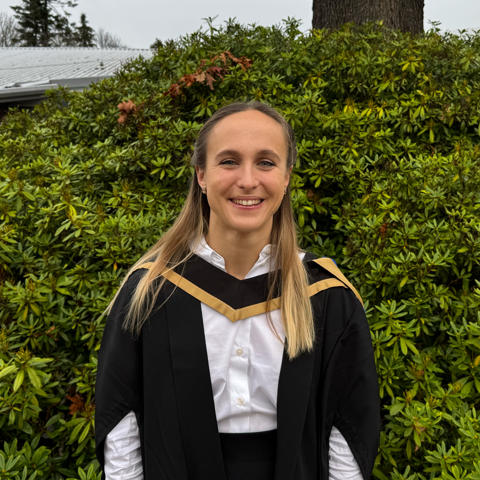
Marcelina graduated from MSc Climate Change: Managing the Marine Environment with a Distinction in 2025. Through Heriot-Watt, Marcelina was able to travel across the globe to Malaysia, conducting practical fieldwork and collecting first-hand data that introduced her to wide array of knowledge and experience.
Profile
Throughout her time at Heriot-Watt, Marcelina has learnt from leading experts in the field of marine science, conducting fieldwork in beautiful locations across Scotland and Malaysia and meeting students from various backgrounds united under the same shared passions.
By taking part in a course strongly focused on practical application and building industry connections, Marcelina has successfully secured her first job within the marine conservation sector.
Marecilan’s advice to students is “I’d encourage students to reach out to lecturers whose work genuinely interests them and to explore topics beyond their coursework. One of the greatest benefits of a postgraduate course is the access it provides to experts in your field. Take every opportunity to engage with them, seek out volunteer or research experiences, and learn from their insights on how to build the career you aspire to”.
Discover more about Marcelina’s journey below.
What programme did you study and why did you choose it?
I studied for an MSc in Climate Change Managing the Marine Environment. I chose this programme due to its strong fieldwork and practical elements. It was amazing to practice data collection methods first-hand instead of simply learning about them in a classroom. I also enjoyed the mixture of guest lecturers involved in delivering the course as it was great to learn from the expertise of such a wide variety of people.
Can you tell us about the prize you received and how does it feel to be a prize-winning student?
I received the Watt Club Medal as the top postgraduate (taught) student attaining a Master's degree with Distinction for the graduating 2024/25 cohort within the School of Energy, Geoscience, Infrastructure and Society. I'm incredibly honoured to have received this recognition after an intense but rewarding year of studies.
Can you tell us more about the fieldwork you conducted in Malaysia?
During the second semester of my course, I took the module ‘Tropical Coral Reefs: Monitoring and Management,’ which included a field course in Malaysia delivered in partnership with staff and students from the University Malaysia Terengganu (UMT). This experience allowed me to explore diverse coastal and marine ecosystems, enhance my scientific diving and field research skills, and gain a deeper understanding of the social, environmental, and economic pressures affecting Malaysia’s coastlines.
Beyond the fieldwork itself, one of the most rewarding aspects was the opportunity to learn and collaborate with students and staff from UMT by exchanging knowledge and perspectives.
What advice do you have for current students?
I’d encourage students to reach out to lecturers whose work genuinely interests them and to explore topics beyond their coursework. One of the greatest benefits of a postgraduate course is the access it provides to experts in your field. Take every opportunity to engage with them, seek out volunteer or research experiences, and learn from their insights on how to build the career you aspire to.
What are you planning to do after you graduate?
I’ve begun working as the Project Officer for the Innovation in Restoration Solway Coast and Marine Project (SCAMP). The skills and knowledge I gained during my Master’s - particularly through developing my thesis - were instrumental in securing this role. I’m excited to apply what I’ve learned to support impactful, evidence-based restoration work along the Solway Coast.