Hanaa Gatta
MSc Information Technology (Software Systems)
Hanaa is studying for her MSc in Information Technology. She chose the programme to build on her background in product and business with deeper technical skills, bridging the gap between ideas and implementation.
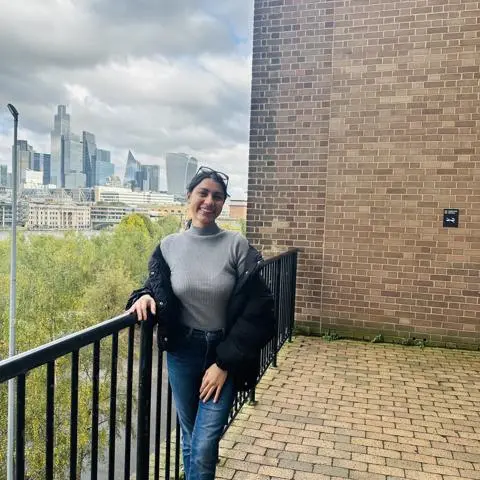
Profile
What programme did you study and why did you choose it?
I studied MSc Information Technology because I wanted to combine my background in product and business with deeper technical capabilities. Coming from fintech, I often found myself at the crossroads between user needs and backend constraints. I chose this programme to close that gap — to not just ideate but implement. Heriot-Watt’s practical approach, focus on systems thinking, and exposure to data and development tools really appealed to me. It felt like a chance to retool my career with a mindset of curiosity, precision, and purpose.
Can you tell us your favourite thing about, or a highlight memory/moment from, studying Information Technology?
My favourite part was the moment I realised that technical work isn’t about code alone — it’s about clarity, people, and real impact. For example, in our group project on sustainable fashion, I wasn’t just focused on risk models and data flow — I was thinking about the people affected, the policy implications, and how to build something that could scale. The process taught me how to communicate technical work in a way that inspires action, and how to lead with both empathy and logic.
What were the key differences you found between studying/living in Pakistan and Scotland?
In Pakistan, the education system leaned heavily toward theory and exams — whereas here, it’s more applied, discussion-driven, and collaborative. Scotland gave me the freedom to explore, make mistakes, and think aloud — which was refreshing. Living here also taught me time management in a whole new way: I balance 60+ hours of study, 20 hours of work, and still send money home. It’s been a crash course in resilience, and in learning how to build a life with both purpose and grit.
What extra-curricular activities have you gotten involved with?
Beyond classes, I worked as a Data Analyst at the Student Union, where I helped improve engagement and decision-making through visual dashboards. I’ve also participated in startup pitch competitions, joined Women in STEM meetups, and contributed to campus events. These experiences grounded me in community — and reminded me that learning doesn’t just happen in lecture halls, but in teams, conversations, and shared efforts to make things better.
What unique opportunities (e.g., research projects, internships) have you had during your studies?
I had the opportunity to work as a Research Assistant on a project that improved workplace assessments for Graduate Apprenticeships. We designed surveys and led focus groups to understand both students and mentors. My role was to make sense of all that feedback and translate it into clear, visual insights for academic leads. It taught me how to work with ambiguity, extract meaning from messy data, and shape insights into something that actually drives change.
What’s the most memorable/favourite moment from working at the Student Union as a Data Analyst?
One moment that stands out was presenting the revamped dashboard to university leadership. I’d spent weeks redesigning it to make it more intuitive — using tooltips, flow-based insights, and language that non-technical teams could connect with. Seeing it spark discussion around student wellbeing and cross-campus support made it all worth it. It reminded me that good data is not just about numbers — it’s about trust, communication, and storytelling that moves people.
How did it feel to win the Entrepreneurial Spirit award?
It felt like recognition not just of an idea, but of a journey. I was juggling shifts at the bar, long coursework deadlines, and building a pitch on sustainable homeware — all while trying to stay present and hopeful. Winning showed me that resilience and resourcefulness matter just as much as innovation. It affirmed my belief that entrepreneurship isn’t about having all the answers — it’s about caring enough to ask the right questions and keep going when it’s tough.