2026 Winners
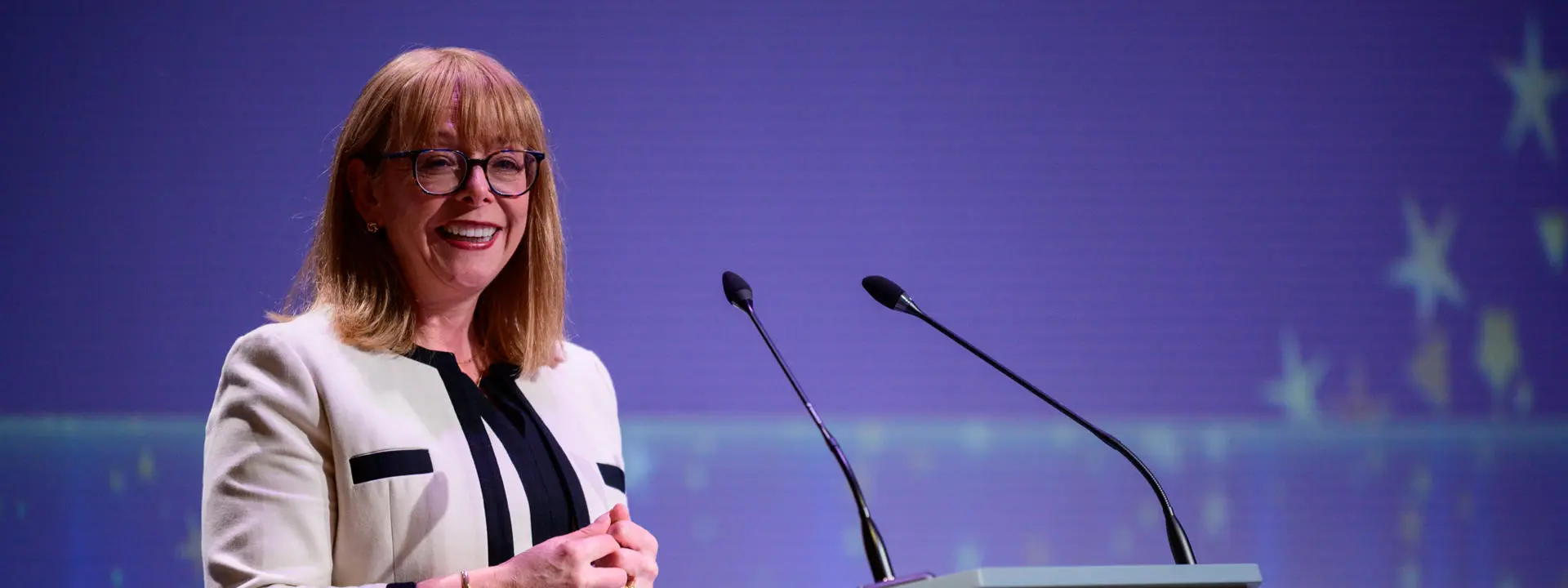
Heriot-Watt University celebrated the people and partnerships driving real-world impact at the 2026 Principal's Research Impact and Engagement (PRIME) Awards on its Edinburgh campus.
Bringing together academics, industry partners and community collaborators, the event recognised research that is making a tangible difference beyond the University, from shaping policy and driving innovation to engaging communities and supporting a more sustainable future.
The quality and diversity of this year's nominations highlight the strength of Heriot-Watt's research community and its dedication to addressing real-world challenges. Our winners and highly commended teams have shown how research, delivered in partnership with industry, policymakers, communities and third-sector organisations, can drive tangible benefits for people, places and the planet. I am delighted to celebrate their achievements through the PRIME Awards.
Prof. Nola Hewitt-Dundas
Principal and Vice Chancellor
Awards were presented across five categories, highlighting outstanding achievements in research impact and public engagement. Now in its 16th year, the PRIME Awards received over 50 nominations, reflecting Heriot-Watt's growing culture of collaboration and real-world impact.
Winners & Highly Commended
Involve
Winner: Roma Place Age team - Prof. Ryan Woolrych, Judith Sixsmith, Margaret Greenfields, Rosa Cisneros, Ann Hyde, Crina Morteanu, Petr Torak, Gaba Smolinska-Poffley, Dr Aleksandar Marinov
Roma Place Age is a co-created research project that explores ageing, health and wellbeing with Roma communities in Govanhill, Luton and Peterborough. Roma people have been involved throughout as co-researchers, helping shape the questions, gather stories and experiences, interpret data, and develop ideas and priorities for change. While ageing is at the heart of the project, this way of working has created much wider benefits such as building confidence, skills and opportunities, strengthening trust between communities and services, sharing knowledge, challenging stereotypes, and giving Roma people a stronger voice in the research and in conversations that affect their lives.
Highly Commended: ID Mind - Dr Sacha Hasan, Dr Mel McKendrick, Dr David Brown, Dr Mehdi Rizvi, Prof. Mary Elizabeth Stewart, Dr Irene Warner-Mackintosh, Nelly Whaley, Cassandra Harrison, Bryony Nisbet, Eunice Anteh, Members of participating organisations, Individuals with lived experiences
ID-Mind, led by Dr Sacha Hasan at Heriot-Watt University, positions older autistic people as Community Peer Researchers rather than research subjects, co-producing knowledge on digital mental health inclusion. Building on foundational workshops that engaged over 25 stakeholders from the NHS, third sector and lived experience communities, the project centres participants as expert evaluators of NHS Scotland's new MyCare.scot digital platform. Its participatory, art based approach, developed with Mhor Collective and Salvesen Mindroom Centre, demonstrates how genuine co production can reshape digital health services around the people they are meant to serve.
Inspire
Winner: Housing for Complex Needs - Dr Sacha Hasan, Dr Deborah Menezes
Our NHS Greater Glasgow & Clyde commissioned study into housing for people with learning disabilities and complex needs has moved from research into national practice. Findings were presented to the Scottish Government and to learning disability leads across all fourteen territorial health boards, directly shaping discussions to extend the Dynamic Support Register. Coverage in Scottish Housing News, STV News, THIIS and the CaCHE Equality in Housing podcast carried the findings to new public audiences, while practitioners across Scotland now use the report as a practical route map for solving one of the country's most persistent housing challenges.
Highly Commended: Floody Heck - Dr Ian Pattison, Andrew Tabas, Dr Leo Peskett; UoE: Prof. Lindsay Beevers
Flood risk crosses boundaries, requiring communities and organisations with different priorities to work together. Heriot-Watt researchers partnered with Forth Rivers Trust and stakeholders across two Scottish catchments to co-design Floody Heck, an innovative serious game that brings this challenge to life. Players adopt different stakeholder roles, negotiate competing priorities and collaborate to manage flood risk with limited resources. Co-designed through ten workshops, the game transforms complex research into an accessible, engaging shared experience that builds understanding of others’ perspectives. Already engaging local communities, national flood-management professionals and international researchers, Floody Heck is inspiring new conversations about how we can manage increasing flood risk together.
Influence
Winner: Comuna 8 Resilience - Prof. Harry Smith, Dr Ana Miret Garcia, The Comuna 8 Communities
Our research and collaboration with communities and local government helped the population of a low-income district of the city of Medellin with approximately 140,000 inhabitants (Comuna 8) to be better prepared to prevent and respond to disasters including landslides, debris flows and flooding, with: (1) a highly organised and proactive network of community organisations capable of negotiating with local government over disaster risk management and developing their own initiatives; (2) a cohort of community leaders trained in disaster risk management; and (3) one of the first community-led district-level integrated disaster risk management and climate change adaptation plans in the world.
Highly Commended: Sign Loud - Prof. Jemina Napier, Heriot-Watt University, Dr Claire Houghton, University of Edinburgh, Lucy Clark, deaf domestic abuse survivor consultant, Tasnim Ahmed, deaf domestic abuse survivor consultant, Heriot-Watt University BSL Interpreting Team
Sign LOUD is a pioneering participatory research project that has transformed understanding of domestic abuse experienced by Deaf women, children and families in Scotland. Co-produced with Deaf survivor-advocates, the project generated the first Scotland-specific evidence on the experiences of Deaf mothers affected by domestic abuse and has since influenced parliamentary inquiries, government discussions, practitioner training, media coverage and service development. By amplifying the voices of an often-overlooked community, Sign LOUD has helped drive systemic change in policy and practice relating to domestic abuse, accessibility and Deaf rights.
Innovate
Winner: Whisky Maturation team - Prof. Martin McCoustra, Prof. Annie Hill, Dr Ali Ozel, Dr Abdul-Lateef Haji-Ali, Dr Clay Magill, Prof. David Bucknall, Dr David Ellis, Dr Hendrik Nahler, Dr Filipe Vilela, Jose Marques-Hueso, Diageo: Matthew Crow, Peter Cockburn, Ross Sanders
Scotch whisky has been produced for over 500 years. However, the race to improve processes and reach sustainability targets remains fervent. Within an innovative Knowledge Transfer Partnership between Heriot-Watt and Diageo Scotland focussed on developing a greater insight into cask maturation, fundamental methodologies and novel techniques in analytical chemistry were used to develop and apply machine learning methods, embedding new processes within a commercial setting. Savings of over £100k per year have already been achieved through improvements in cask rejuvenation, and platforms to rapidly quantify and predict cask-derived flavour compounds are anticipated to save over £7million per year through reduced energy use and waste.
Highly Commended: Tiny Air collaboration team - HWU: Dr Michael Tanner, Dr Daniel Forbes, Emma Perfect, Tiny Air: Thor Helson, David Ralston, Chris Helson
500M surgical instruments per year are cleaned, with 75M cleaned first by hand. Banks of people stand at sinks, in the UK and beyond, and brush away tissue for instrument reuse. It is back breaking, yet enormously important work. In late 2023 Business Development Personnel met a Scottish SME, Tiny Air Ltd., that seeks to develop automated pre-cleaning systems for surgical instruments. Since then, Michael Tanner has led work – supported by Daniel Forbes - to embed knowledge within the business regarding the imaging of contamination. It’s proved a beautiful example of business-university collaboration, one driving societal, environmental and commercial impact. And the business adds that Mike is “brilliant”.
Sustainable Futures
Winner: REACT - Prof. Bing Xu, Dr Ran Liu, Prof. Jeff Kettle, Dr Mahmoud Wagih, Prof. Hadi Heidari, Prof. Nuran Acur, Dr Paul Prentice, Prof. Jason Love, Paul Jarvie, the wider REACT research and project teams
REACT is the UK’s first cross-institute sustainable electronics centre, uniting leading universities, industry and public-sector partners. Backed by over £6m from UKRI and industry, REACT takes a whole-system approach to the sector’s defining challenges: carbon emissions, electronic waste, critical raw material dependency and fragile supply chains. By connecting breakthroughs in sustainable materials and manufacturing, digital technologies, recycling and recovery, circular economy, finance, policy and responsible innovation, REACT bridges the gap between technological innovation and real-world adoption, accelerating solutions at scale to build a more sustainable, circular and resilient UK electronics sector.
Highly Commended; Whey to Go - Dr Annie Cheung, Annie Diamond, Dr Jane White, Dr Shiwen Zhuang
Working with industrial partners, the team developed a novel circular-economy approach that turns salty whey, a challenging dairy waste, into valuable products. The project achieved an estimated audience reach of over 211 million through >20 media channels, including BBC Radio 4, BBC News, The Guardian, STV, alongside engagement with a major dairy company, farmers and international media. The project generated new knowledge and potentially patentable IP, with early commercial impact through ongoing scale-up and commercialisation planning. It also underpinned a follow-on BBSRC research funding application. By advancing sustainable biomanufacturing, the project supports UN Sustainable Development Goals 12, 9 and 13.