What researchers need to know about building a successful spinout
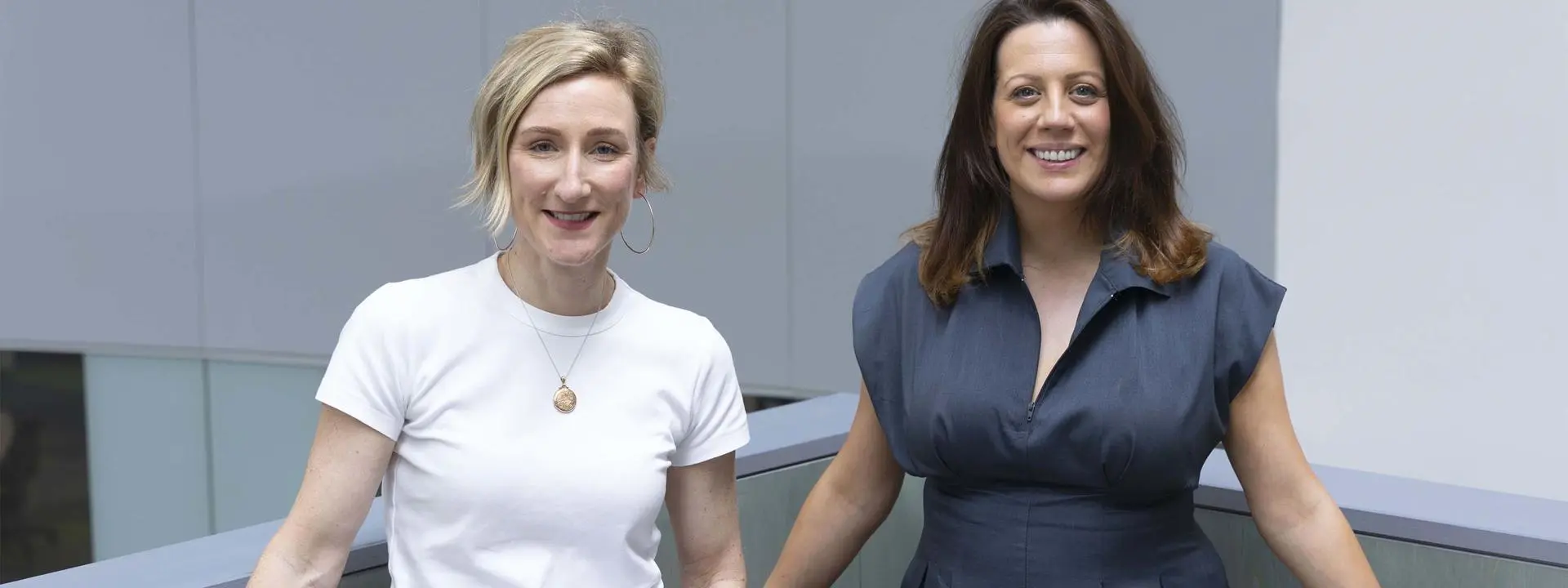
Commercialising university research can create new businesses, products and technologies with the potential to address real-world challenges. But moving an idea from the lab into the market requires more than scientific excellence. Heriot-Watt University Entrepreneurs in Residence (EiR) Jessica Mullen and Gemma Stuart share what researchers need to consider when taking their first steps towards entrepreneurship.
Great research is only the starting point
For researchers considering commercialisation, the prospect of turning years of research into a company can be exciting. It can also represent a significant shift, from developing knowledge to building something that customers are willing to use and pay for.
According to Heriot-Watt Entrepreneurs in Residence Jessica Mullen and Gemma Stuart, one of the most important things researchers can do is understand what lies beyond the research itself.
For Jessica, that means recognising that entrepreneurship can be hugely rewarding but requires commitment and resilience.
“The entrepreneurial journey is one of the most exciting and rewarding you can take. But it also takes grit and commitment for it to be successful.”
For researchers considering becoming founders, she recommends understanding what building a successful business involves and asking whether they are ready to take on the challenge and the new identity that comes with becoming a founder.
It is a sentiment echoed by Gemma, who emphasises the importance of being prepared for the human side of entrepreneurship, which can be just as demanding as the practicalities of setting up a company.
Start with the problem, not the solution
One of the biggest shifts for academic founders is learning to look beyond the technology itself.
A research breakthrough may be innovative, technically impressive and scientifically robust. But none of those things necessarily mean there is a viable business behind it.
“Build it and they will come” is one of the biggest misconceptions Jessica sees among researchers considering commercialisation.
“The research could be the most innovative and clever but if no one wants to pay for it (or the application isn’t clear) there is no company, just research.”
For Gemma, understanding the customer should begin as early as possible.
That means speaking to potential users and customers, understanding the problems they face, examining existing solutions and learning from competitors, including businesses that have failed.
“Understand what the problem is, obsess over the problem, the solution and what solutions already exist.”
This process should not happen only once. Gemma argues that founders need to continually test what they are learning throughout commercialisation and as the business grows.
The question therefore isn't simply “Can we build this?” but “Does someone need this and will they pay for it?”
Be prepared to change direction
Customer focus can be challenging for researchers who have spent years developing a particular technology or approach.
Gemma identifies becoming too attached to the original idea as a common mistake among first-time academic founders. Rather than focusing solely on proving that the research is right, founders need to listen to customers and users and be prepared to adapt the solution to meet the problem the market is presenting.
She also warns against chasing funding opportunities or changing the direction of an idea simply to fit grant requirements.
For Jessica, another challenge is communicating research in a way that people outside the academic field can understand.
Academic founders may be at the top of their discipline and have spent years immersed in their research. But investors, customers and commercial partners may not automatically understand its significance.
“Don’t assume that people will understand it or appreciate it as much as you do.”
Being able to communicate the opportunity clearly is therefore just as important as being able to demonstrate the science behind it.
The right team can make the difference
A successful spinout does not necessarily require the researcher to become the company's commercial lead.
Jessica believes that having the right combination of skills and perspectives within the founding team is critical.
“Not every founder wants to be the commercial lead and that’s OK, you can bring in someone who does.”
Technical expertise may be the foundation of a spinout, but businesses also need people who can sell, build relationships, understand customers, develop strategy and lead growth.
Gemma similarly emphasises the importance of the founding team, particularly its ability to solve problems, listen and adapt.
For both, resilience matters. Building a company rarely follows a straight line, making the ability to support one another and keep moving forward an important part of the journey.
Funding isn't the same as traction
Funding is often seen as one of the biggest milestones in commercialisation. But both Jessica and Gemma caution against making investment the ultimate measure of progress.
Jessica points out that securing funding is highly competitive and time-consuming, and can become a distraction from actually running the business.
A pitch deck and a good idea alone aren't enough.
Gemma takes the point further:
“Our ecosystem is obsessed with funding but the best way to fund your business is to get someone to pay for your product or service.”
For her, genuine commercial potential comes from evidence that customers want the product or technology whether through early insights, commitments or paying customers.
Understanding the funding landscape is still important. Gemma reflects that early in her own entrepreneurial journey, she was unaware of the wider ecosystem and missed opportunities to access early-stage funding and support.
Her experience highlights another important lesson for academic founders: you don't have to navigate commercialisation alone.
Know when the market is ready
Even with the right technology, team and price point, commercial success can depend on timing.
Gemma describes this as understanding the “market tailwinds”, recognising when external conditions are creating an opportunity and being ready to act.
“The most commercially successful businesses recognise when the market is ready and take advantage of that opportunity.”
That requires founders to look beyond their own technology and understand what is happening around them: how industries are changing, what customers need, where regulation is moving and which problems are becoming increasingly urgent.
Sometimes the opportunity isn't immediately obvious. A business may spend its early years learning, refining and adapting before market conditions create the right moment for growth.
The key is being ready when that moment arrives.
Entrepreneurship is a journey of learning
Neither Jessica nor Gemma presents entrepreneurship as a straightforward path from idea to successful company. Instead, their experiences point to a process of continual learning.
Jessica says that, looking back, she wishes she had understood earlier just how important sales would be.
“You can have the best product, excellent service, a great strategy and talented team with a thriving culture. But if you have no sales, you have no business.”
For Gemma, some of her most valuable lessons came from the mistakes and failures she encountered along the way.
“I’m a lifelong learner and I learn by doing.”
That mindset, being willing to test, learn, adapt and try again, is arguably one of the most important qualities an academic founder can bring to the commercialisation journey.
From research to impact
Commercialisation isn't simply about turning research into a company. At its heart, it is about understanding where research can address a genuine need and creating the conditions for that innovation to reach the people, organisations and industries that can benefit from it.
For researchers considering the journey, Jessica and Gemma's advice is ultimately consistent: start with the problem, listen to the market, build the right team, understand your options and be prepared to change direction.
A great idea may open the door, but it is the ability to turn that idea into something people genuinely need that creates the opportunity for lasting impact.