Clas-SiC Wafer Fab | Developing specialist talent with Graduate Apprenticeships
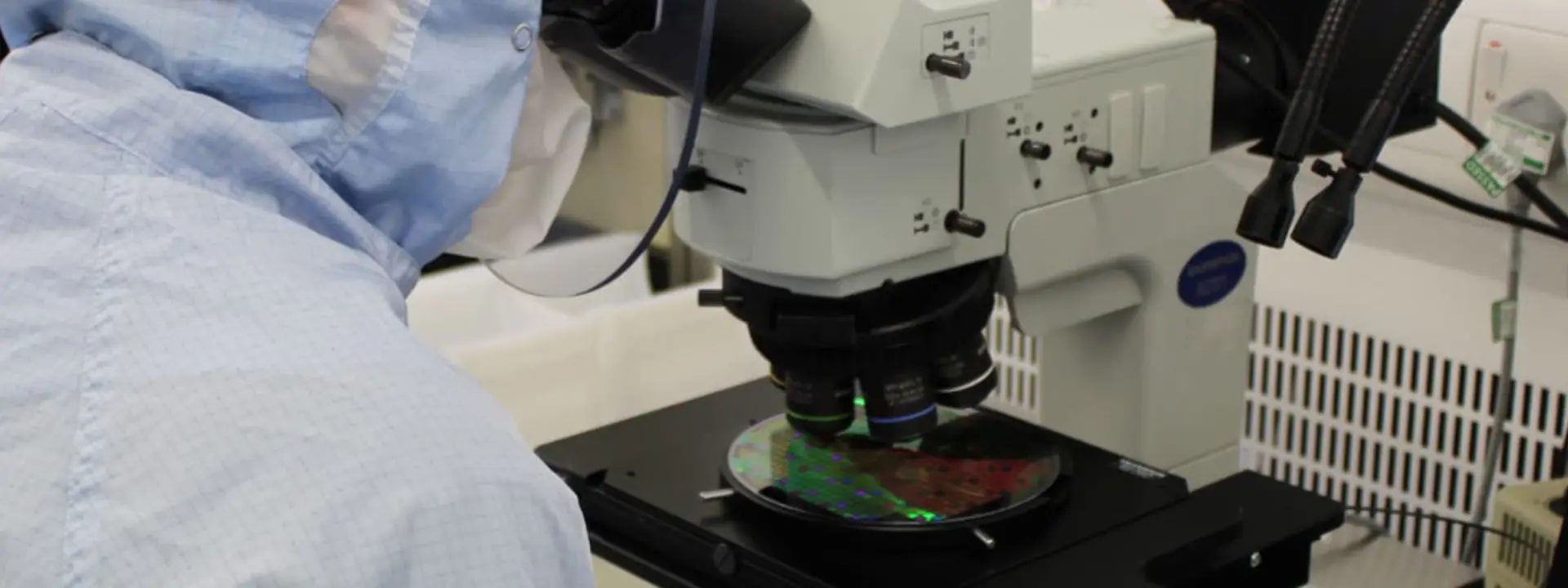
This case study focuses on one of our key employer partners, Clas-SiC Wafer Fab. It highlights how Graduate Apprenticeships have been crucial in helping the company develop talent for the specialist semiconductor industry. The case study features Richie Vannett, Process Lead Engineer.
Can you give us some background to the company?
Clas-SiC Wafer Fab is a semiconductor manufacturing foundry. It is involved in the manufacture of Power Diodes and Power MOSFET technologies, exclusively utilising 150mm Silicon Carbide (SiC) as the base material for manufacture. It is a private start-up company established in 2017, employing 74 staff and serves worldwide markets across many high technology sectors such as automotive, aerospace, green energy.
What is your role in the company?
My role is the Lead Process and Technical Support Engineer. I'm responsible for leading a team of Process Engineering staff, who are involved in establishing and controlling and improving the semiconductor manufacturing processes necessary to construct Sic Diodes and MOSFET devices. The team is responsible for leading high-value projects for the customers to implement, improve and deliver prototype and low-volume designs with high yields.
How long have Graduate Apprenticeships been part of the talent development strategy, and how has this evolved over time?
Graduate Apprenticeships (GAs) have been a key part of our talent development strategy since 2022 as we understood the need to plan for an ageing workforce - especially in the technical disciplines within our Company where any on-the-job training will be supplemented by excellent academic learning, specific to Engineering practices.
Through time we have become more proficient at ensuring the project work and training has been tailored to ensuring the Graduate Apprentices can not only contribute throughout their apprenticeship, but can also develop skills that will set them for the future.
What were the key drivers for the business choosing Graduate Apprenticeships?
The semiconductor industry is not common for Scotland, so legacy engineering staff have now exited the industry and no new engineers were being generated by traditional academic routes. The GA route offers the opportunity for ‘on-the job’ training to develop our own talent with the necessary skills required for a Semiconductor Engineer.
How many Graduate Apprentices are employed in the business and on which programmes?
We currently have three Graduate Apprentices within the Process Engineering department. They are all on the Engineering Design and Manufacture (Electronic) programme.
Do you use Graduate Apprenticeships for recruiting new talent and/or upskilling existing employees?
For Engineering disciplines, we have used the GA route for upskilling new ‘talent’. Our industry is highly specialised and so finding existing, experienced talent can be challenging given the legacy of semiconductor industry within the United Kingdom. On several occasions we have been lucky to find experience from outside the United Kingdom and these two routes combine to ensure the best possible chance of success.
In terms of existing employees being upskilled, we adopt the Manufacturing Apprenticeship route where the entry requirements are less and fit well with immediate progression from the ‘shop-floor’ towards a HNC / HND qualification and gives the potential to progress further on to the GA programme.
What general benefits have you seen the apprentices bring to the business?
Some key things would be enthusiasm, willingness to learn and question. Their flexibility is a key asset to our business. They have to make an impact and give back to the business early in their training, given we are a small company with limited resource.
What key support, structures or practices does an employer need to have in place to ensure apprentices succeed?
An important element is staff who are willing to mentor and spend time and energy in supporting the apprentices. Also, multiple projects to keep the apprentices engaged and stimulated, and a friendly and welcoming environment where younger staff can gain confidence and feel nurtured.
Can you provide some specific examples of how the apprentices have been able to apply learning in the workplace?
We place our apprentices within a process which means they must perform tasks which make direct impact in terms of Process Control / Improvement, or being involved as a team in bringing new processes and capital equipment online. They are also actively encouraged to participate in group meetings.
Do you see Graduate Apprenticeships as a development pathway for Modern Apprentices?
We have seven Modern Apprentices and we would be keen to understand the pathway to allow those to continue through GA to full attainment of a degree qualification.
What advice would you give to other employers thinking about taking on Graduate Apprentices?
We have found the GA route as very beneficial to our company. Their success is key to our future – as an ageing workforce is a real risk to our company. The GAs can bridge the skills shortage and hopefully we are producing the future leaders of our company. Our GAs are gaining experience in a newly developing sector and as such will be highly sought after, worldwide.
Overall, would you recommend Graduate Apprenticeships as part of a talent development strategy and why?
We highly recommend the GA pathway as a means of developing and nurturing new talent within critical technology sector. We can mould the engineers of tomorrow and the apprentices provide an instant return. Having youth in our workforce also enhances the working environment and ensures our mentors are challenged and engaged.
Contact
David Aaron
- d.aaron@hw.ac.uk