Unlocking the full potential of women in STEM is smart economics
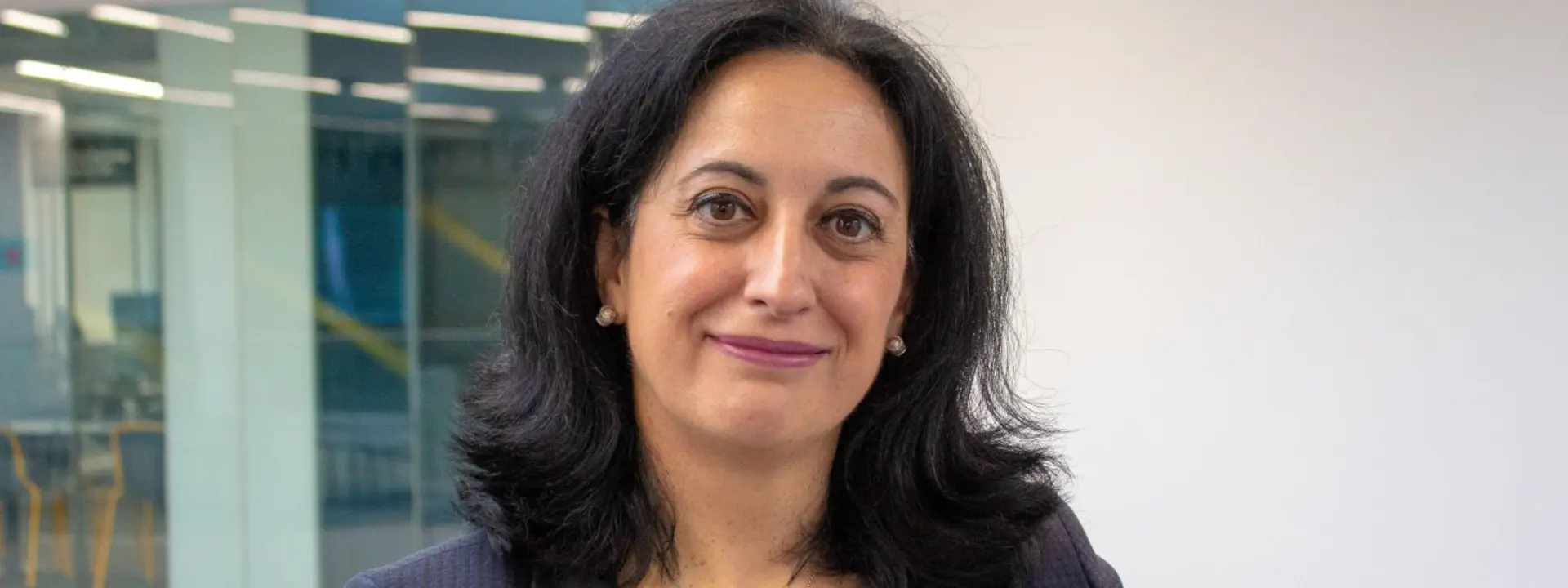
Writing in this week's Scotsman, Professor Mercedes Maroto-Valer, highlights the need to address gender disparity in STEM related careers.
Every year, the UK tech sector forfeits £2-3.5 billion because women are pushed out of roles they are fully qualified to lead. This is a crisis. Not of capability, but of systems that fail to retain half the talent the country needs.
With economic growth a priority, tackling gender disparities in science, technology, engineering and mathematics (STEM) must be seen not only as an equity issue but as an economic imperative.
For two decades, I’ve had the privilege of working with extraordinary women who are shaping a sustainable world for generations to come. Innovation thrives in diverse environments and yet, amid unprecedented challenges, we are continuing to fail the women in our field.
Currently, women make up 36 per cent of STEM graduates and only 28 per cent of the STEM workforce. This drop isn’t accidental or inevitable.
The issue is not ability, but structural attrition. Gender parity would take decades without targeted interventions, so we must do more to excite, inspire and support women.
Increased visibility matters enormously. We need to show young girls and women, early on, exactly what they can achieve. We tend to present only the ‘rock stars’ of the sector, the chief executives, professors, and globally recognised scientists.
They are inspiring, of course, but it can be daunting. Young people need to see the breadth of people in STEM, in labs, industry, government and beyond, and know there are countless ways to belong.
Retention is another major challenge. Life happens, children, caring responsibilities, illness, and in fastmoving fields, stepping away even briefly can make it incredibly hard to return.
Shockingly, up to 40 per cent of women leave the STEM workforce within seven years, while the 2025 Lovelace Report showed more than 100 women a day leave tech roles in the UK annually.
This is indicative of a system that isn’t working. Intersectionality increases the challenge, with the problems being more severe in cases of dual biases such as those related to gender and race.
Women are also frequently asked to join multiple committees and activities due to under-representation, increasing their workload compared to male colleagues.
We need to redesign systems to fully harness the available talent, with inclusive institutional cultures, equitable performance and advancement pathways, mentorship networks, flexible career pathways, maternity support, carer responsibility policies and accountable leadership.
I know from experience how tough it is to work in systems never originally designed with us in mind. I’ve been the first woman in the room more times than I can count, the first to start a family, the one who made colleagues check maternity leave policies.
Everyone’s experiences will be different. What matters is keeping sight of where you want to go. Yet that can only happen when the systems around us support the twists and turns of a career, instead of penalising those who don’t follow a straight path.
The pipeline of talent isn’t broken because women leave. It’s broken because of the way it’s structurally configured.
If we’re serious about economic growth, technological leadership and innovation, we can no longer afford to treat women’s attrition from STEM as a side issue. We need more women in lecture halls and out in the field, changing the world. It is smart economics.
More about this author
See moreWith a focus on playing a strategically important role in leading Heriot-Watt University's institutional and global change in sustainability, a new position of Deputy Principal of Global Sustainability was created.