Q&A: Studying Carbon, Climate and Conservation in Guyana
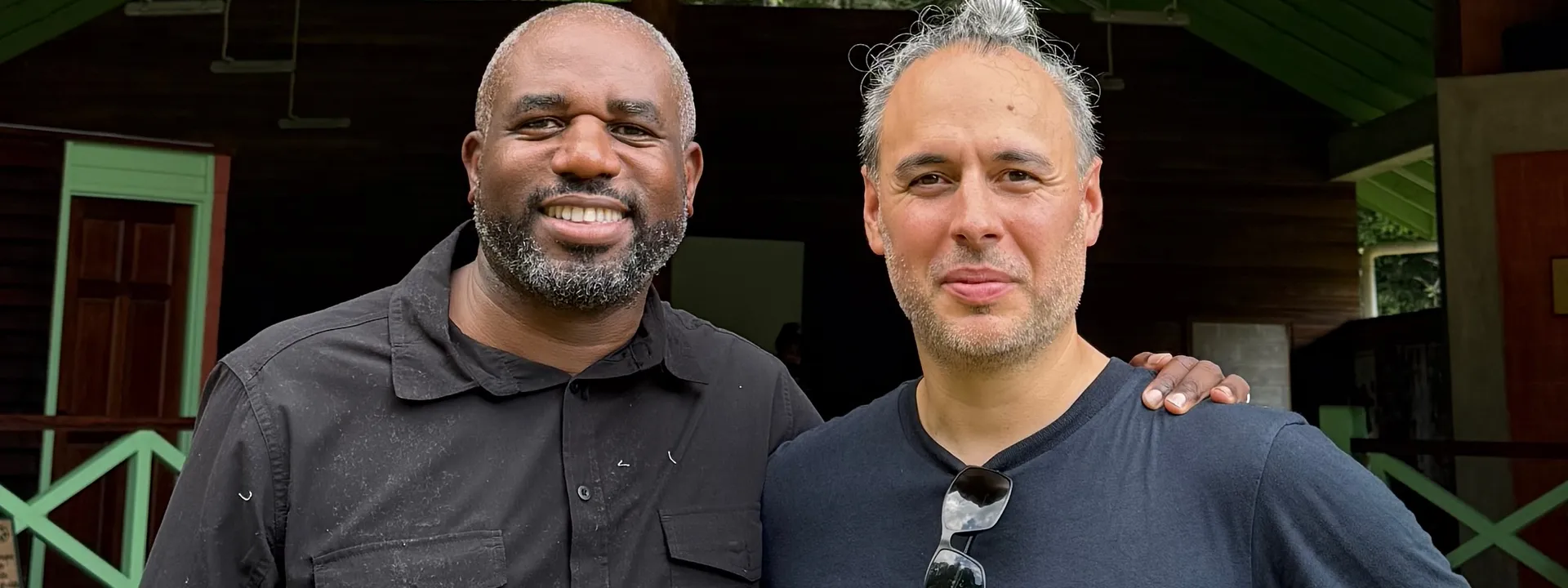
Ryan Pereira is an Associate Professor of Biogeochemistry and Carbon-Water Dynamics and Principal Investigator of the European Research Council-funded BOOGIE project (Breathing Oceans: understanding the organic skin that modulates the exchange of greenhouse gases between the atmosphere and the ocean), which explores how carbon moves through rivers, estuaries and oceans. He shares insights from the project's research in Guyana and explains why understanding carbon's journey from rainforest to ocean matters for climate and conservation.
Can you tell us about the BOOGIE project and the research you're carrying out in Guyana?
The BOOGIE project is a European Research Council (ERC)-funded research programme that seeks to improve our understanding of how organic matter influences the movement and transformation of carbon within aquatic environments, and how these processes affect exchanges of greenhouse gases between water bodies and the atmosphere. A major focus of the project is understanding the connectivity between rivers, estuaries, and the Atlantic Ocean, and how carbon is transported and transformed across these linked environments. The research explores how organic matter influences water chemistry, ecosystem processes, and gas exchange at the air-water interface, including the role of the surface microlayer, the thin biological boundary at the water's surface where many exchanges between the environment and atmosphere occur.
In Guyana, the Essequibo River provides an exceptional natural laboratory for this work. Together with partners including Iwokrama, Sophia Point and EMC Guyana, we are improving understanding of how carbon moves through one of the world's largest and most intact tropical rainforest catchments, from rainforest headwaters to coastal waters and the Atlantic Ocean.
The broader aim is to improve understanding of how tropical aquatic systems connect forests, climate, biodiversity, and the ocean. By studying these linkages, we hope to generate knowledge that supports environmental sustainability, climate resilience, and evidence-based management of globally important ecosystems.
What is the history behind your work in Guyana and the BOOGIE project?
I have been conducting environmental research in Guyana for approximately 17 years through a range of projects focused on water, carbon cycling, and ecosystem processes. The ERC-funded BOOGIE project formally began in 2021. However, it builds upon long-standing partnerships that have been developed over many years. We have worked with Iwokrama since around 2010, with Sophia Point since 2022, and more recently with EMC Guyana to support field and coastal research activities. These long-term collaborations have been essential for developing scientific understanding while also supporting knowledge exchange between researchers, conservation organisations, communities, and environmental stakeholders.
What does your research focus on within the project?
My research focuses on understanding how carbon moves through aquatic environments and how rivers connect landscapes, people, and the ocean.
Within Guyana, we are studying how carbon is transported through the Essequibo River system, how it changes as it moves downstream, and how interactions between water, the atmosphere and biological processes influence its ultimate fate. This includes understanding how carbon is stored, transformed, released to the atmosphere, and exported to coastal waters. The work contributes to international efforts to better understand the role of tropical aquatic systems within the global carbon cycle and how these systems respond to environmental change. More broadly, it helps improve understanding of how environmental systems connect biodiversity, climate, water resources, and human wellbeing.
What were your main reflections from your recent visit to Guyana?
A key takeaway was the importance of long-term partnerships in addressing complex environmental challenges. Understanding how tropical rivers, forests, biodiversity, and climate interact requires sustained collaboration between researchers, local communities, conservation organisations, governments, and international partners. The visit also highlighted how Guyana is increasingly becoming an important location for demonstrating how world-class science, biodiversity conservation and sustainable development can work together.
There is a strong commitment amongst partners to ensuring that scientific knowledge supports practical conservation outcomes while also benefiting communities. I was particularly encouraged by the continued development of Sophia Point as a hub for science, conservation, education, and international collaboration. It was also valuable to see how innovative approaches, including digital and immersive technologies, are being explored to improve public engagement with science, biodiversity, and environmental stewardship.
From a research perspective, the visit reinforced the enormous opportunity that exists to improve understanding of the Essequibo River and its connections to the Atlantic Ocean. Despite its global significance, there remains considerable potential for new discoveries relating to carbon cycling, biodiversity, and environmental change.
What opportunities did the visit provide to engage with international leaders and partners?
My visit to Guyana was primarily centered on attending the 2nd Global Biodiversity Alliance (GBA) Conference, which I attended following an invitation from the Government of Guyana and Iwokrama.
During the visit, I also had the opportunity to meet with David Lammy MP, who co-founded Sophia Point with his wife and has been a strong supporter of the centre's vision to create a hub for science, conservation, education and international collaboration. David was very supportive of our BOOGIE research programme as our activities at Sophia Point began to expand in 2022, and this visit provided a welcome opportunity to share some of the scientific progress and research outcomes that have emerged from those collaborations.
The conference brought together international scientists, Indigenous and local community representatives, conservation organisations, government leaders, private-sector partners, and funding organisations to explore how science can better support biodiversity conservation and sustainable development. A key theme of the discussions was addressing scientific evidence gaps that currently limit conservation action, while also exploring mechanisms that can help mobilise long-term investment and support for biodiversity protection. The conference highlighted the importance of strengthening connections between scientific research, environmental governance, community engagement, and sustainable financing.
King Charles III attended as part of his Caribbean tour and in recognition of his long-standing commitment to environmental sustainability. As Patron of Iwokrama, he has supported international efforts to demonstrate how conservation, research and sustainable development can work together.
The event provided a valuable opportunity to strengthen existing collaborations and identify future opportunities where research can contribute to biodiversity conservation, climate resilience, and nature-positive development at regional and global scales. Across all these activities, a common theme was the importance of building stronger connections between people, science, and nature. Whether through research, conservation partnerships, community engagement or innovative communication approaches, the shared objective is to ensure that scientific knowledge can be translated into meaningful societal and environmental benefits.