Our Enterprise Executives: Rachel Connolly
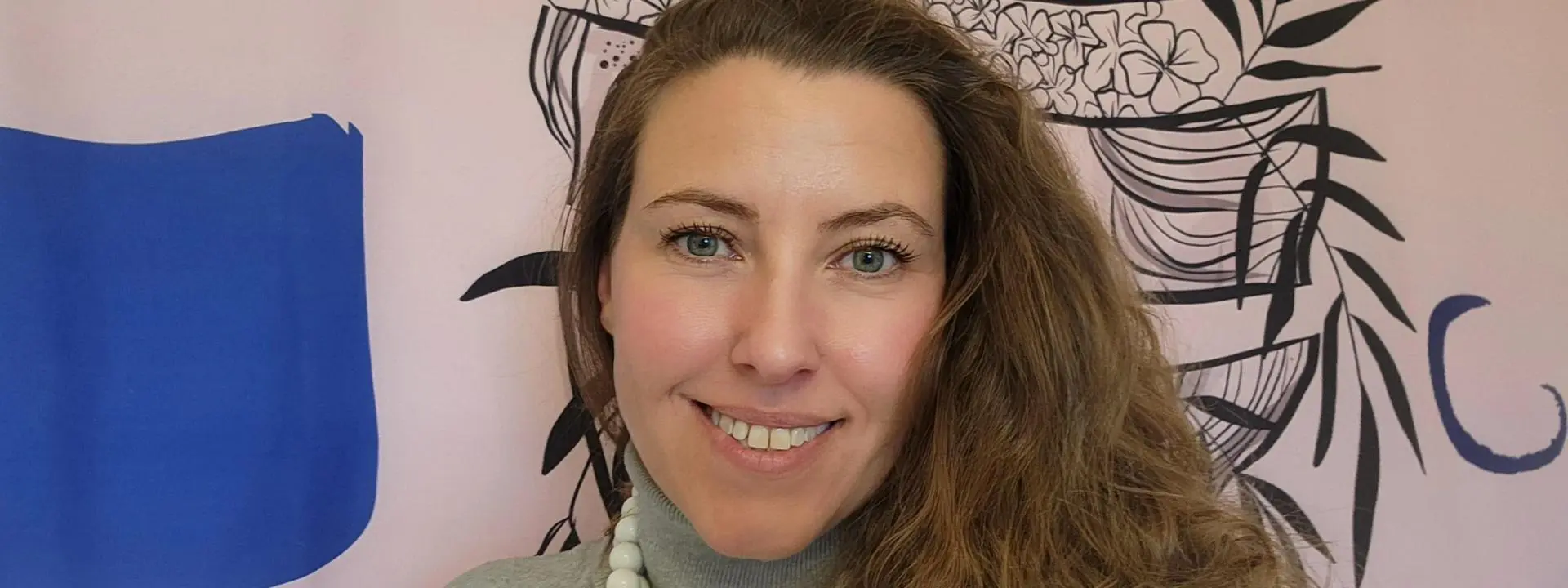
As an Enterprise Executive in Heriot-Watt’s Commercialisation Team, Rachel Connolly supports researchers, staff and students to explore their ideas, understand opportunities and find the right path towards impact. Here, Rachel shares her advice for anyone considering commercialisation and why curiosity, confidence and being open to challenge can make all the difference.
Q: Describe your role at Heriot‑Watt
A: I work within the Commercialisation team in GRID, supporting students, staff and academics to transform ideas, research and insight into sustainable businesses, partnerships and real‑world impact.
In practice, that means working with people at any stage of their entrepreneurial journey. I support early exploration and validation, help shape commercial pathways for complex academic research, and work with teams progressing towards venture creation, investment readiness and spin‑out development. This might involve translating years of research into a commercially viable product or service, or helping someone who has identified a clear market gap understand how an idea could be developed and scaled.
Q: What advice would you give to researchers or organisations considering commercialising their ideas?
A: First and foremost: don’t be afraid and don’t underestimate yourself.
You don’t need a business background to commercialise research successfully. What you already have- deep expertise, curiosity and problem‑solving ability is the hardest part. The commercial skills can be learned, supported and complemented by others.
The researchers who make the strongest transitions into entrepreneurship are those who are willing to engage early, ask questions, and test assumptions with the outside world. Commercialisation isn’t about having all the answers from day one; it’s about being open to learning what the market, users and partners are telling you.
It isn’t easy, and it can feel uncomfortable but it’s incredibly rewarding. Beyond potential venture outcomes, it gives researchers valuable insight into how policy, industry and society interact with research. That understanding strengthens research careers as much as it enables commercial impact.
Q: What are the biggest challenges researchers face when trying to commercialise their work?
A: One of the biggest challenges is not technical, it’s emotional.
Researchers often spend years developing deep expertise and a strong sense of identity around their work. Taking that work beyond academia means opening it up to external scrutiny and asking whether it is relevant, usable and genuinely needed. Sometimes the answer is not yet.
That can be uncomfortable, because early conversations with markets, partners or users are not there to validate the work. They are there to test it. The most successful commercialisation journeys happen when teams treat challenge, rejection and iteration as part of the process, not as a judgement on the quality of the research.
Feedback, including negative feedback, is data. It can help refine an application, reveal a stronger market opportunity, or show that a particular route is not viable. None of those outcomes is failure. In many cases, learning that early is the most responsible and cost-effective result.
Q: Where do you see the biggest gap between research and real‑world impact, and how is Heriot‑Watt working to close it?
A: Scotland produces world‑class research, but value is often lost between a promising proof‑of‑concept and something that is widely used, adopted or scaled. This is particularly true in deep‑tech and health, where routes to market involve long timelines, regulatory complexity and multiple stakeholders.
Heriot‑Watt is actively working to address this challenge by encouraging earlier engagement with commercial and industry thinking, rather than treating impact as something that happens only at the end of the research process. Through GRID, we support a range of possible routes to impact including spin‑outs, licensing, partnerships and collaborative R&D, recognising that different projects require different approaches.
One of the biggest opportunities lies in increasing clarity and confidence earlier in the journey: helping researchers understand what their options are, what decisions they may face, and what good progression can realistically look like at different stages.
Find out more about the commercialisation support Heriot-Watt University offers- https://www.hw.ac.uk/research-enterprise/innovation/venture-creation