Accelerating the UK’s transition to electric trucks
By Dr Alan Logan
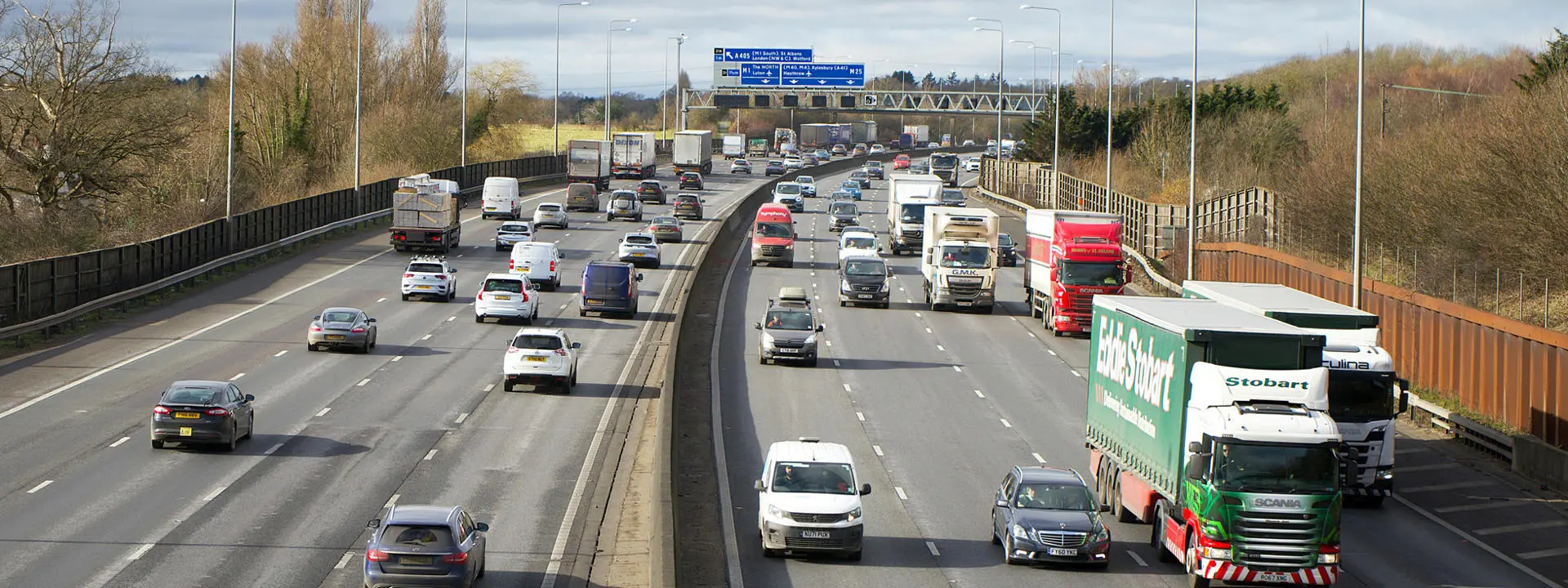
Heavy goods vehicles emit about 16% of the UK’s greenhouse gas emissions from domestic transport. So they need to be a key part of any strategy to reach net zero.
Reflecting this, the UK’s Department for Transport launched a consultation this year on a new regulatory framework on the CO₂ emissions of heavy goods vehicles (HGVs).
The DfT consultation asks for views on potential policy options, including expanding CO₂ emissions standards for HGVs, limiting sales of diesel trucks and requiring fleets to operate more electric trucks.
Our researchers at Heriot-Watt University have deep expertise in logistics and supply chains, so we were able to respond to this consultation in detail. Our feedback was led by Heriot-Watt’s Road Freight and Logistics Research Group, based at Edinburgh Business School as part of TransiT, the national UK research hub that Heriot-Watt co-leads with University of Glasgow. TransiT’s mission is to identify the fastest, least risky and lowest cost routes to transport decarbonisation in the UK, using digital twins – digital replicas of the physical world – and associated technologies.
The core message in our DfT consultation response is that new regulation is needed and would help to unlock the significant private investment needed to build charging infrastructure for electric trucks and to reinforce the electricity grid.
But key to the success of this rollout would be flexibility that recognises the different sizes and needs of fleet operators.
For example, most of Britain’s 66,000 road freight businesses are small and medium-sized enterprises (SMEs), with 90% of operators controlling fleets of 10 or fewer vehicles.
It can be harder for smaller firms to raise finance. So mechanisms like early stage grants and extended compliance timelines could help smaller operators meet the upfront costs of electric HGVs.
Another option is that the requirement for fleets to grow their proportion of zero-emission HGVs is focused just on larger operators, rather than all road freight operators. This could help to accelerate wider market adoption, with smaller operators benefitting from the development of a robust second-hand market for electric trucks.
The legislation could also help small, rural and long-haul fleet operators with targeted infrastructure schemes to build networks of electric truck charging points.
Smaller fleets often operate from rented depots or dispersed sites, where installing high capacity electric truck chargers isn’t feasible. So supporting the provision of shared charging hubs and third-party charging providers can help these businesses.
On regulation for manufacturers, we suggest this should focus on offsetting the growing weight of electric truck batteries, by requiring truck trailers to have more axles. These are the weight-bearing shafts that connect the truck’s wheels.
Our other recommendations include modernising the way freight data is collected in the UK.
In my own research as a data scientist, we rely on large volumes of robust data to carry out our work. For example, we are currently using real-world data covering more than 12% of HGV vehicle kilometres in Scotland in a groundbreaking project for Transport Scotland, Scotland’s national transport agency. This uses sophisticated simulation technologies to identify where Scotland most urgently needs charging points for electric heavy goods vehicles.
Data is key to modelling work like this – and improved national freight data could benefit both large and small freight operators.

Alan Logan is a Data Scientist and Assistant Professor at Heriot-Watt University and a Researcher for TransiT.
TransiT is a collaboration of eight universities and almost 70 industry partners, jointly led by Heriot-Watt University and the University of Glasgow. We are funded by the UK Research and Innovation Engineering and Physical Sciences Research Council, the main funding body for engineering and physical sciences research in the UK, and supported by the UK government’s Department for Transport.
More about this author
See moreDr Alan Logan works as a Data Scientist in the Centre for Sustainable Road Freight and the Centre for Logistics and Sustainability in the Edinburgh Business School at Heriot-Watt University.