Young mussels struggle as Firth of Forth conditions change, study finds
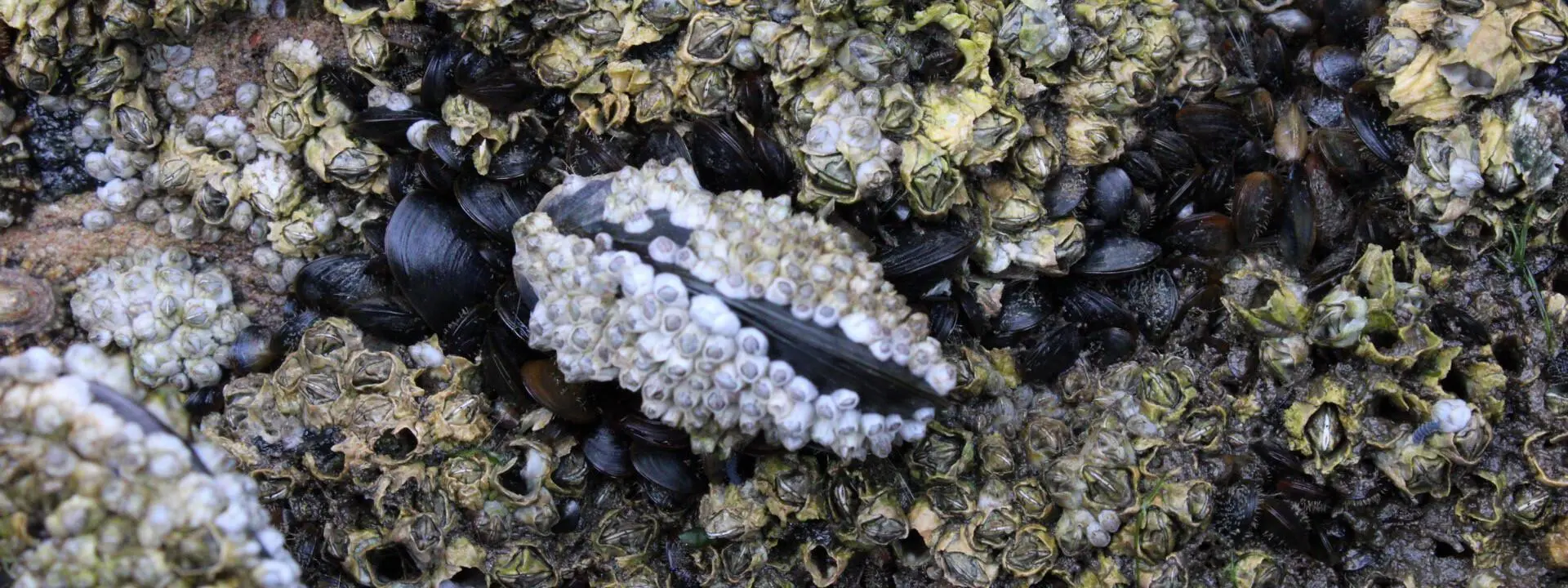
Falling salt levels in seawater could be contributing to driving blue mussels from parts of the Firth of Forth, researchers say.
Scientists at Heriot-Watt University found that baby mussels are especially sensitive to fresher water, with their growth and development badly affected when the seawater becomes diluted.
It used to take me just a few minutes to find the mussels I needed. Now there’s nothing there.
Dr Mark Hartl
Heriot-Watt’s School of Energy, Geoscience, Infrastructure and Society
The lab-based study was sparked by the sharp drop in mussel beds that were once common around Musselburgh and Cramond.
The team says their findings, published in the academic journal Frontiers in Ocean Sustainability, could also help explain falling blue mussel numbers across northern Europe.
“Now there’s nothing there”
Dr Mark Hartl, from Heriot-Watt’s School of Energy, Geoscience, Infrastructure and Society, said the university’s marine science researchers had worked with mussels from the Firth of Forth for over 20 years and had observed the disappearance of the local populations.
Dr Hartl said: “We noticed them disappearing from Cramond at first, where we used to be able to easily find and collect mussels.
“At Musselburgh, you could walk for a mile out at low tide and it would be full of mussels, even as recently as 2018.
“It used to take me just a few minutes to find the mussels I needed. Now there’s nothing there.”
The researchers stressed that the experiments were carried out under controlled conditions in a laboratory and that long-term field work is required to conclusively show that changing local salinity has been a significant driver of the loss of mussels in the Firth of Forth.
However, they said the findings could help explain the absence of younger mussels that would normally replace older and larger adults.
Dr Hartl said: “We had noticed in Musselburgh that the mussels were big, and old. There weren’t any smaller ones.
“They were reproducing and producing larvae, but the larvae didn’t seem to be developing properly.”
Wetter winters mean less salty estuaries
Isabella Jackson is undertaking the research as part of her PhD at Heriot-Watt University.
Working with Dr Mark Hartl, Isabella looked at how pollution, temperature and salinity interacted during the first stages of mussel development.
Mussel embryos and larvae were exposed to different conditions in the laboratory over 48 hours.
Lower salinity had one of the clearest detrimental effects on the mussels: reducing salinity from optimal conditions cut normal larval development by almost 29%.
Isabella said: “Mussels in the Firth of Forth experience multiple stressors: pollution, temperature change and changes in salinity among them.
“We found that they are highly susceptible to changes in salinity, but pollution compounds the problem and amplifies the effects we saw under lower-salinity conditions.”
“Reduced salinity is likely to happen as wetter winters bring more freshwater into estuaries, and it is not something that can easily be fixed.
“But if we tackle some of the other problems, such as pollution, we may be able to alleviate the pressure on mussels.
“We may not be able to address every stressor at once, but reducing one of them could still make a difference.”
Isabella said the research also highlighted the importance of studying the early life stages of marine organisms.
“The early life stages are often the most sensitive to environmental stressors, but they are also easily overlooked, particularly in studies looking at multiple stressors,” she said.
“If larvae are not developing properly, this can create a bottleneck where a population is unable to sustain itself.
“Understanding what happens at this critical stage is an important piece of the puzzle when investigating why blue mussel beds are declining.”
Impact on biodiversity
Blue mussels, Mytilus edulis, were once widespread in estuaries around northern Europe.
Declines have been observed elsewhere in Scotland but some areas, like Orkney, still have healthy populations containing mussels of different ages.
Dr Hartl said: “A decline in mussel beds could have several potential impacts. It could reduce biodiversity, as mussel beds act as habitat for lots of other species. And, as mussels clean the water by ingesting contaminants, it could have an impact on water quality.
“Ideally we would set up field experiments to replicate what we did in the lab, and definitely determine that salinity levels are behind their decline.
“The Firth of Forth’s health has improved dramatically over the past few years, we’re seeing large mammals like humpback whales return now. But there are locations where a decline in biodiversity is happening, as witnessed by the disappearance of mussels, and we should monitor and try to resolve this.”
This research was funded by NERC Scottish Universities Partnership for Environmental Research (SUPER) Doctoral Training Partnership (DTP) (Grant reference number NE/S007342/1 and website https://superdtp.standrews.ac.uk).