UK pilot research programme to cut pharmaceutical pollution

Researchers from Heriot‑Watt University are set to play a critical role in efforts to reduce the impact of medicines on Scotland’s rivers, lochs and coastal waters.
The national study will examine the entire lifecycle of human medicines, from how they are prescribed to how they are disposed of, to understand how drugs enter the environment and how this can be prevented.
Made possible through a £1.19 million grant from UK Research and Innovation, Heriot‑Watt University will work alongside experts from five other leading institutions.
These medicines are created to have a biological effect in humans and farmed animals, and they can have similar effects on aquatic life, while some substances contribute to the spread of antimicrobial resistance, which is a growing global health concern.
Professor Teresa Fernandes
Associate Executive Dean of Research and Impact at Heriot Watt University’s School of Energy Geoscience Infrastructure and Society
The research programme, known as PhRESHWater (Pharmaceuticals Reduction in the Environment through Sustainable Healthcare), is the first of its kind in Scotland / UK, in scope and range.
Teresa Fernandes, professor and Associate Executive Dean of Research and Impact at Heriot Watt University’s School of Energy Geoscience Infrastructure and Society said: “Medicines can enter the environment at several different stages and can remain biologically active long after they have been excreted.
“Some drugs pass through the body almost unchanged and enter wastewater systems that were never designed to remove them.
“Pollution also happens when unused medicines are flushed down sinks or toilets instead of being returned to pharmacies for safe disposal.
“As a result, we are now detecting drugs such as antibiotics, anti‑inflammatories and antidepressants in Scotland’s water environment.
“These medicines are created to have a biological effect in humans and farmed animals, and they can have similar effects on aquatic life, while some substances contribute to the spread of antimicrobial resistance, which is a growing global health concern.”
The wider partnership includes the University of the Highlands and Islands (UHI), NHS Highland, The James Hutton Institute, the University of Nottingham, the University of St Andrews, Scottish Water, the Scottish Environment Protection Agency and Uppsala University in Sweden.
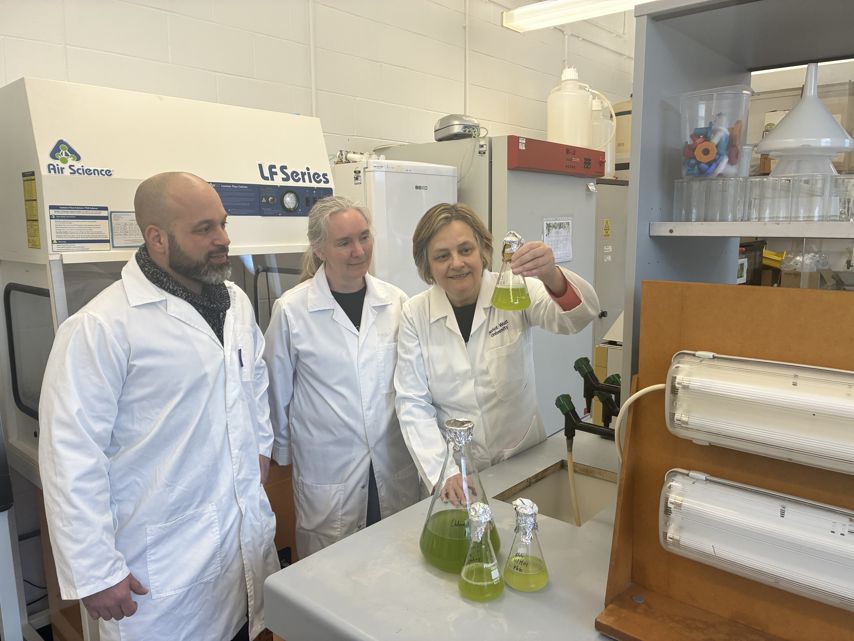
Heriot‑Watt University contribution will focus on the evaluation of environmental effects of selected pharmaceuticals and their transformation products. The team at Heriot-Watt will be led by Professor Fernandes and will include Anna Bradshaw and Miguel Sanchez-Lopez.
Professor Fernandes added: “Through this project, we want to develop practical solutions that healthcare providers, water companies and environmental regulators can use right away.
“That means creating better modelling tools, encouraging safer prescribing and disposal behaviours, and exploring new technologies that can remove pollutants before they reach our rivers and lochs.
“This kind of insight helps us pinpoint exactly where medicines are entering the water system and where targeted action can make the biggest difference.”
PhRESHWater builds on the Scottish One Health Breakthrough Partnership, which brings together researchers, public agencies and policymakers to tackle pharmaceutical pollution.
Pharmaceutical pollution is recognised internationally as a growing environmental and public‑health challenge. A large portion of medicines can be excreted unchanged, entering wastewater systems that were never designed to remove them.
Further contamination happens when unused medicines are flushed instead of being returned to pharmacies.
The partnership, co‑founded by UHI, NHS Highland, Scottish Water, SEPA and Scotland’s Centre of Expertise for Waters, aims to position Scotland as a world leader in reducing the environmental impact of medicines and improving the sustainability of healthcare and water services.
For more information, please visit the project webpage: https://ohbp.org/outputs/projects/pharmaceutical-reduction-in-the-water-environment-through-sustainable-healthcare/