Study sheds new light on the feeding behaviour of long finned pilot whales
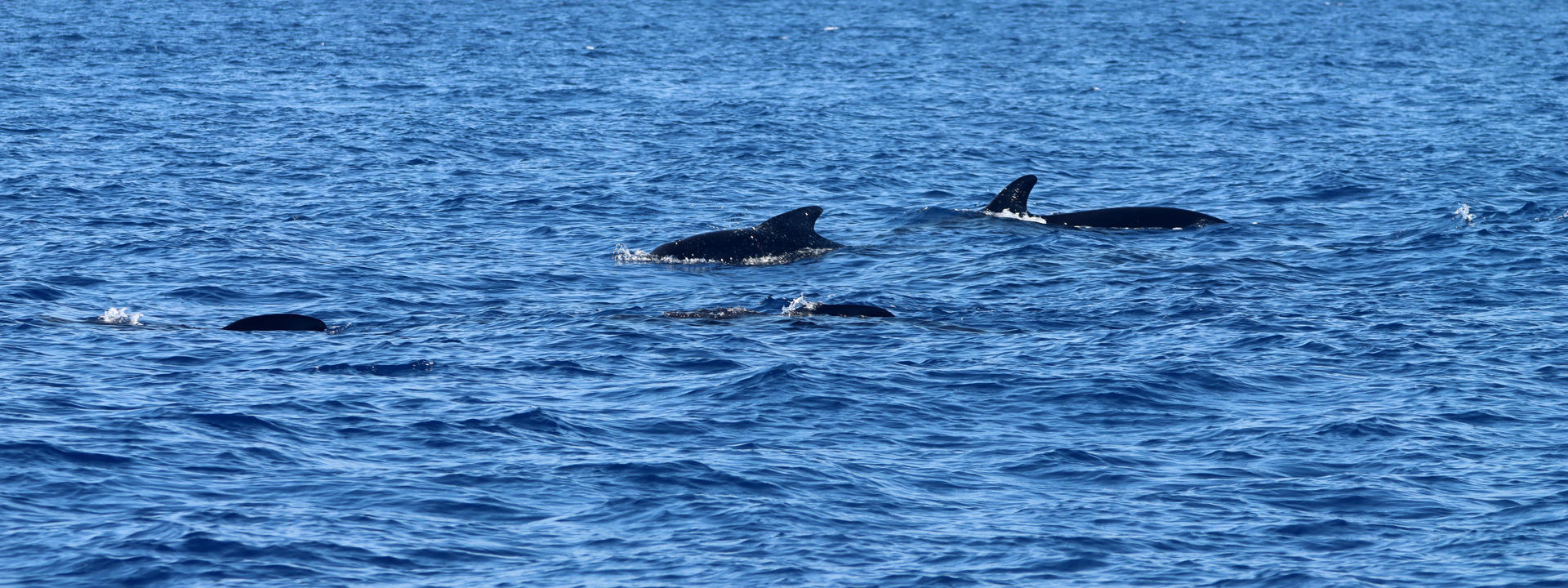
Scientists have gained rare new insights into the feeding habits and movement patterns of long‑finned pilot whales following the mass stranding of a pod in the Western Isles.
The study - published in PLOS One on 29 April 2026 - focuses on a pod of 55 long‑finned pilot whales that became stranded and died in Tolsta Bay, Lewis, in July 2023. Previous research indicated that this was likely triggered by a female experiencing difficulties during birth, causing the tightly bonded pod to enter shallow waters.
In the new study, researchers analysed skin tissue samples taken from the stranded animals to better understand their recent feeding history and health status.
The research was led by PhD researcher Anna Kebke from the Scottish Marine Animal Stranding Scheme (SMASS), based at the University of Glasgow, and co-authored by supervisor Dr Clayton Magill, Associate Professor in Geosciences at The Lyell Centre at Heriot‑Watt University, alongside partner institutions.
Using stable isotope analysis, the team identified distinctive chemical signatures within the whales’ tissues. These signatures suggest the animals were in good nutritional condition and had likely been feeding on fish and squid associated with deep‑water environments along the edge of the UK continental shelf.
Long‑finned pilot whales are a deep‑water species and are notoriously difficult to study in the wild. Opportunities to collect detailed biological data are rare, making stranded animals an important source of information.
The isotope data allowed the researchers to reconstruct the whales’ feeding patterns over several months, offering valuable insight into where the animals had been foraging before the stranding occurred.
The results indicate that the pod had been feeding primarily along the continental shelf slope which is the transitional zone where relatively shallow seas descend into deeper offshore waters.
This region is known to support rich biological communities, as mixing water currents bring nutrients to the surface, sustaining plankton, fish and squid populations, particularly during spring and early summer.
Although the whales were found to be in good overall health, their stomachs were empty at the time of death.
This raised questions about their foraging activity in the immediate period before stranding and suggests a disruption to normal feeding behaviour shortly before they entered shallow coastal waters.
The research provides the first direct evidence that shelf‑slope habitats are important seasonal feeding grounds for long‑finned pilot whales.
At the same time, reliance on these productive but geographically complex environments may increase the risk of accidental entry into shallow coastal areas, where whales are more vulnerable to stranding.
The findings improve scientific understanding of long‑finned pilot whale ecology and highlight the value of interdisciplinary approaches - combining biological, chemical and environmental analysis - to investigate rare and complex events such as mass strandings.
Research contributions from The Lyell Centre underscore its expertise in environmental geoscience and marine systems and state-of-the-art facilities, as well as its role in advancing understanding of how physical environments influence ecological processes and wildlife risk.