Scientists target faster sepsis pathogen identification through new international project
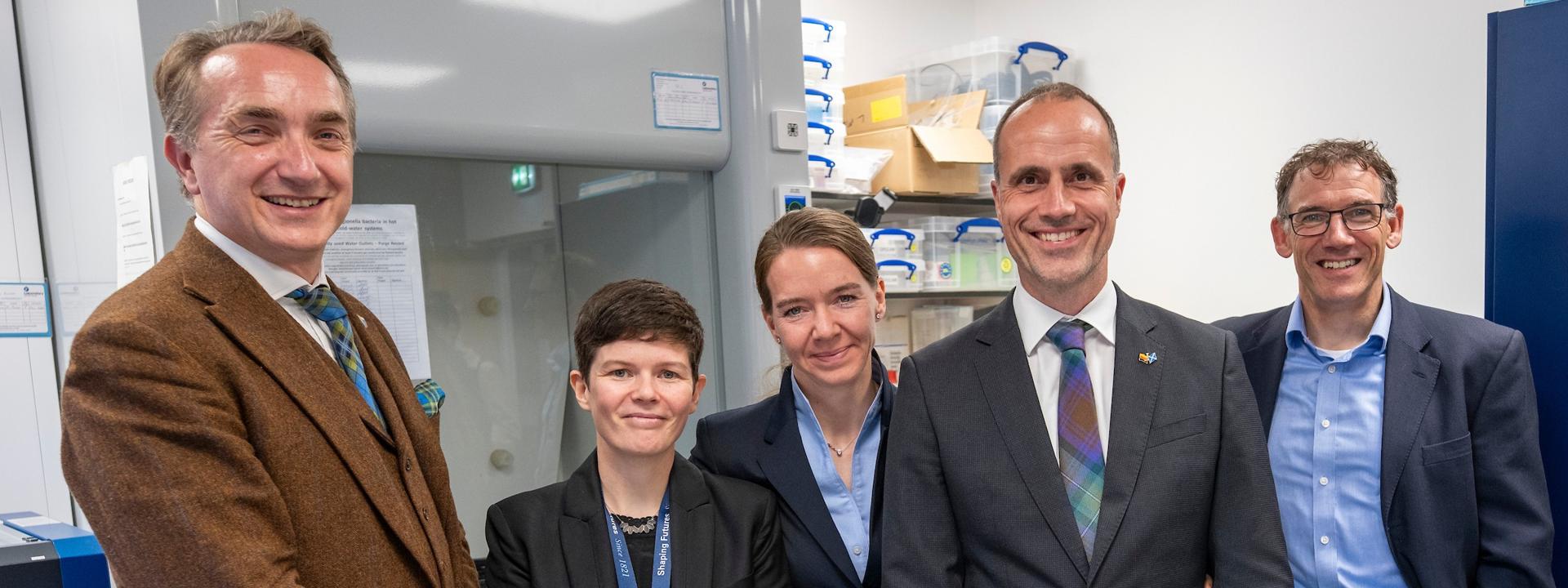
An international research project bringing engineering and critical care expertise together to deepen understanding of sepsis and explore new approaches to blood-based diagnostics is being extended following a €300,000 funding award from the Ministry of Science and Health of Rhineland-Palatinate, Germany.
The funding will support further development of a technology that, in a recently published BMJ Case Report, identified likely infection-causing pathogens several days before they were confirmed using conventional diagnostic methods in a patient being treated for sepsis.
This project is an excellent example of the type of research Heriot-Watt wants to accelerate through our Global Research Institute in Health and Care Technologies.
Professor Chris Turney
Deputy Principal for Research and Innovation at Heriot-Watt University
In the UK, sepsis affects an estimated 245,000 people each year and claims 48,000 lives, equivalent to five deaths every hour, according to the UK Sepsis Trust.
Across Europe, more than 3.4 million people develop sepsis annually and around 700,000 die, according to the European Sepsis Alliance.
Sepsis is a life-threatening response to infection that can lead to shock, multiple organ failure and death if it is not recognised early and managed promptly. One of the major challenges in treating sepsis is identifying the pathogen responsible for an infection quickly enough to support timely clinical decision-making. Against that backdrop, research into blood-based diagnostics has the potential to contribute to the wider effort to improve how clinicians understand and respond to the condition.
The GeSIC project brings together the team of Professor Maïwenn Kersaudy-Kerhoas from the School of Engineering and Physical Sciences and a clinical team at the University Medical Center Mainz, with the University of Mainz acting as the university partner.
The collaboration is focused on advancing a rapid blood-based DNA sequencing approach designed to identify infection-causing pathogens, bringing together Heriot-Watt's engineering expertise and clinical knowledge from intensive care. The newly funded phase is expected to begin in January and will extend work already underway between the teams.
The partnership has already resulted in a medical case report published earlier this year in the BMJ Case Reports, produced collaboratively by Professor Kersaudy-Kerhoas and the medical team in Mainz.
The medical case study provides an early real-world example of the potential of the approach. In a patient being treated for sepsis whose standard blood cultures remained negative throughout her stay in hospital, the blood-based DNA sequencing test developed by Heriot-Watt University identified two likely infection-causing pathogens, several days before they were confirmed through other bodily fluid cultures.
Conventional culture techniques can take between two and seven days to identify a pathogen and may return negative results in over 60% of suspected sepsis cases. The case report explored a different route, looking for fragments of microbial DNA circulating in a patient's blood rather than waiting for organisms to grow in a laboratory culture.
Using the iSEP-SEQ research workflow, the complete analytical process took approximately six hours. Although the result was generated within a research setting and did not guide treatment in this case, the findings highlight the potential for this type of technology to support faster pathogen identification alongside existing diagnostics, particularly where conventional cultures are delayed or negative.
The research and the wider partnership was showcased on 2 September when Clemens Hoch, Minister for Science, Further Education and Health in Rheinland-Pfalz, visited Heriot-Watt's Edinburgh campus as part of a three-day visit to Scotland.
Minister Hoch and a delegation of academic and clinical representatives heard about the clinical context for GeSIC, the work completed so far and the next phase of the project.
The visit also included the National Robotarium, with a focus on healthcare and robotics, and comes amid wider interest from Rheinland-Pfalz in collaboration with Scottish partners.
Professor Maïwenn Kersaudy-Kerhoas, Professor in Microfluidic Engineering and co-academic lead of Heriot-Watt University’s Global Research Institute in Health and Care Technologies said: "The fast identification of pathogens remains one of the most complex challenges facing healthcare systems around the world. Our iSEP-SEQ approach can accelerate the identification of any pathogen in circulation in the patient and has the potential to make a meaningful difference by enabling better patient management and correct therapeutics.
“This award gives us the opportunity to take an established international collaboration into its next phase and continue bringing engineering and clinical expertise together around a significant challenge in intensive care. Our work with colleagues in Mainz has already created valuable links between the laboratory and the clinical environment. The next stage will allow us to build on that foundation, with accelerating clinical validation for patient benefits at the heart of the collaboration.
"We are also proud to welcome Minister Hoch to Edinburgh. His visit is an opportunity to show the work firsthand and to demonstrate what can be achieved when researchers and clinicians across Scotland and Rheinland-Pfalz are connected around shared challenges."
Clemens Hoch, Minister for Science, Further Education and Health, said: “This flagship project marks another important step in strengthening our cooperation with Scotland, and I am grateful to the senior faculty members of Heriot-Watt University for sharing their valuable expertise.
“Scotland is recognised internationally for its success in combining public awareness with coordinated healthcare strategies to improve outcomes for patients with sepsis. Early and accurate diagnosis is essential to ensuring timely, targeted treatment and improving survival.
“Through the GeSIC project, we aim to understand the factors behind Scotland’s success and translate these insights into meaningful, measurable improvements for patients in Germany. By bringing together Scotland’s expertise in sepsis care and innovative genomic technologies developed through our research collaboration, we hope to generate robust evidence that can inform clinical practice, strengthen treatment guidelines and deliver lasting benefits for patients in Rheinland-Pfalz and Scotland.
Professor Nana-Maria Wagner, Director of the Department of Anaesthesiology in Mainz, said: “It is a wonderful opportunity for us as intensivists and critical care physicians to be in touch with cutting edge techniques that have the potential to fasten and ease diagnostics and clinical management of patients that are severely ill. Bringing together the clinical aspects of patient care and technology in such an international team can truly move our field forward.”
Professor Chris Turney, Deputy Principal for Research and Innovation at Heriot-Watt University, said: “This project is an excellent example of the type of research Heriot-Watt wants to accelerate through our Global Research Institute in Health and Care Technologies.
“Our strength lies in bringing engineering expertise together with clinicians and international partners to tackle significant healthcare challenges and turn innovative research into solutions that can ultimately make a difference to patients. The collaboration with Mainz also reflects our ambition to work across disciplines and borders, building the partnerships needed to move promising health technologies towards real-world application and, importantly, ensure their benefits can be delivered at scale.”
Heriot-Watt University’s Global Research Institute in Health and Care Technologies brings together more than 300 academics, researchers and professional staff to develop practical solutions to some of the world’s most pressing health challenges. Working across engineering, healthcare and the social sciences, the Institute focuses on accelerating new technologies from research into real-world care, with patients at the heart of the process. Its work spans areas including cancer, healthy ageing, chronic disease management, mental health and global health, supported by partnerships with clinicians, industry, charities and researchers around the world.