Scientists get AI-powered imaging platform that spots disease cell by cell
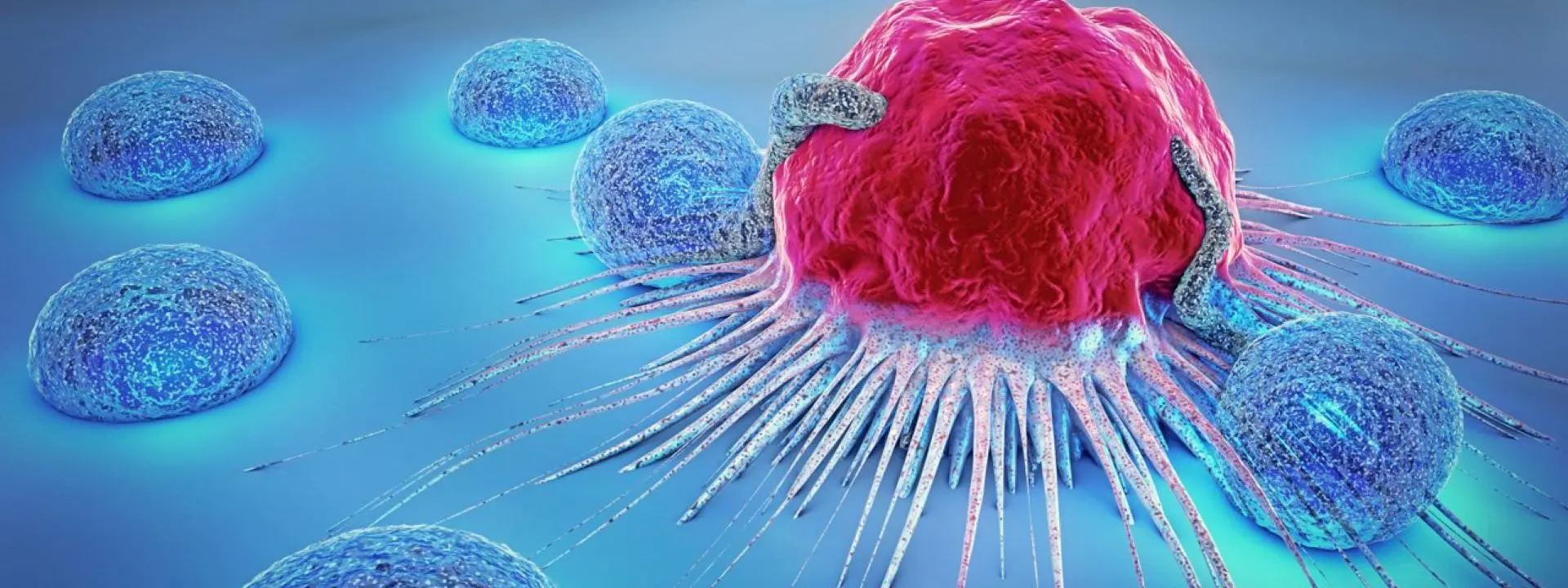
Scientists in Scotland are set to benefit from a new AI-powered imaging platform capable of identifying rare cellular events among millions of cells and examining biological processes in unprecedented detail. Using artificial intelligence to automatically identify areas of interest and capture high volumes of data, the platform will generate the large, high-quality datasets needed to better understand health, ageing and disease.
Heriot-Watt University has secured £449,000 from the Wolfson Foundation to bring the new system to the Edinburgh Super-Resolution Imaging Consortium (ESRIC), a national imaging facility used by researchers across Scotland.
The combination of volume, speed and precision provided by this imaging platform will give scientists new opportunities to understand how cells function in health and how those processes become disrupted in diseases such as cancer.”
Dr Jessica Valli
ESRIC's Imaging Technology Manager
ESRIC specialises in super-resolution microscopy, an advanced imaging technique that allows researchers to visualise structures and processes far smaller than can be seen with conventional light microscopes.
Unlike conventional super-resolution microscopes, which require hours of hands-on operator time, the new AI-enabled imaging platform will identify regions of interest, adjust its own settings and capture high volumes of data with minimal human input, making it possible to collect much larger, more statistically robust datasets than before.
The ability to identify and study rare cellular events is increasingly important in modern biomedical research. Many of the processes that control normal cell function occur only briefly, yet these same mechanisms can become disrupted in diseases such as cancer. Capturing these events requires researchers to analyse very large numbers of cells, making high-throughput, automated imaging a critical capability.
Researchers at ESRIC are already lining up projects that rely on this ability, from tracking how immune cells invade ageing muscle tissue to mapping how faulty genetic switches contribute to disease.
By combining automation with high-volume data acquisition, the new imaging capability will enable researchers to study many more cells than is currently practical. This will improve the statistical power of experiments, increase confidence in research findings and help scientists identify rare biological events that would otherwise be difficult or impossible to detect.
Dr Jessica Valli, ESRIC's Imaging Technology Manager, will be delivering the project day to day. She said: “This imaging platform will change how we work. At the moment, finding one important event among millions of cells can take hours of painstaking manual searching. This system does that in a fraction of the time, and it does it automatically, which means researchers can spend less time hunting for answers and more time understanding what they have found. The combination of volume, speed and precision provided by this imaging platform will give scientists new opportunities to understand how cells function in health and how those processes become disrupted in diseases such as cancer.”
Professor Chris Turney, Deputy Principal for Research and Innovation at Heriot-Watt University, said: “This investment will give researchers access to one of the most advanced imaging systems available, combining artificial intelligence with world-leading microscopy to reveal biological processes in unprecedented detail. It will strengthen Scotland's research infrastructure, accelerate discoveries in health and life sciences, and ensure ESRIC remains at the forefront of imaging innovation for researchers across the UK and beyond.
We are deeply grateful to the Wolfson Foundation for continuing to support innovative research in such a practical and future-shaping way, helping equip scientists with the tools they need to tackle some of society's most pressing health challenges.”
ESRIC is an open-access facility that has already trained more than 250 researchers from over 30 countries through its annual Super-Resolution Specialist School. The new equipment is expected to benefit research groups across Scotland working on topics ranging from neuroscience and healthy ageing to infection biology and cancer. It will enhance opportunities for early career researchers while building on ESRIC's existing programme of free training and remote access to advanced imaging technology for the wider research community.
The system's automation also brings environmental benefits by enabling much of the imaging process to be conducted remotely. Researchers from across Scotland, including those based far from Edinburgh, will be able to collect high-quality data without the need to travel, reducing both cost and carbon footprint.
Paul Ramsbottom, Chief Executive of the Wolfson Foundation, said: “The Edinburgh Super-Resolution Imaging Consortium has built up an impressive community of biomedical researchers – from Heriot-Watt and further afield – using super-resolution microscopy to observe cellular changes which are often vital clues in the early detection of disease. There are clear benefits of this new platform, which combines automated handling with analytical capabilities. It speeds up complex imaging processes and enables remote users right across Scotland to advance important discovery science.”
Heriot-Watt has already committed £150,000 towards the total project cost of just under £600,000, reflecting the strategic importance of the investment to the university's strengths in photonics, AI and health technologies. The project also aligns with Heriot-Watt's Shaping Futures campaign, which is supporting transformative research and innovation that delivers real-world impact.
The new AI-enabled imaging platform is expected to be fully operational by March 2027 and will be incorporated into ESRIC's annual Super-Resolution Specialist School from 2027 onward.