Scientists discover bizarre 'Alien' microbe that gives birth by bursting open
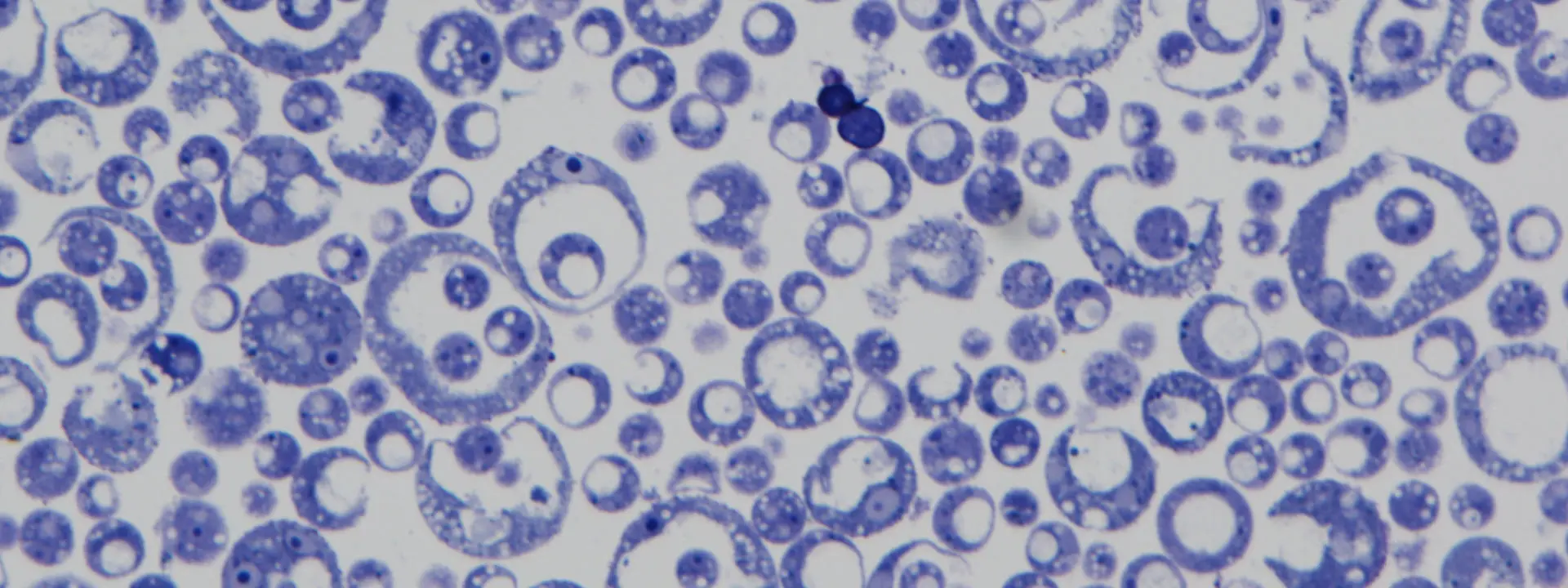
Scientists have revealed a bizarre microscopic creature that reproduces in a way reminiscent of the horror film Alien.
The microbe grows one or more new cells inside its own body before the outer "mother" cell ruptures to release them; a reproductive strategy never before seen in its group of organisms.
Unlike Ridley Scott's extraterrestrial monster, this tiny lifeform is completely harmless to people.
Instead, researchers believe it could help improve the production of valuable omega-3 oils and provide a natural source of the pink food colours called carotenoids.
Both are used in food supplements, infant formula and animal and fish farming. The cells are also approximately 50% protein.
The discovery was reported in the academic journal Protist by a long-standing consortium of scientists from Heriot-Watt, Heriot-Watt spinout company Strameno, the The Centre for Environment, Fisheries and Aquaculture Science (CEFAS) Weymouth and the Institute of Aquaculture at Stirling University.
“We couldn’t believe what we were seeing”
The new microbe is named Caledochytrium aldermaii, after Scotland (Caledonia), where it was found three times, and in honour of the CEFAS scientist, Dr David Alderman, without whom the early cultures would not have survived.
It belongs to a little-known group of marine microorganisms called Labyrinthulomycetes, which act as some of nature’s recyclers by breaking down dead organic matter in seas and other salty waters.
Professor Peter Morris, a plant biologist in Heriot-Watt's School of Energy Geoscience, Infrastructure and Society, said: “Instead of dividing into two, as we would expect, the mature cells develop a large internal chamber in which entirely new daughter cells grow.
“Some of those daughters already have another developing generation inside them, before they are released when the mother cell breaks open.
“Understanding how this species reproduces is key to understanding how it could be used in commercial settings, like aquaculture.”
Dr Jane Polglase has studied the microbes for almost 50 years, and founded spin-out company Strameno with Dr David Alderman and Dr Lydia Brown to explore their commercial potential.
Scientists have become increasingly interested in Labyrinthulomycetes because they naturally produce high levels of healthy omega-3 fatty acids, including DHA, the same nutrient found in oily fish.
Dr Jane Polglase said: “We’ve been investigating this particular group of microbes for decades, because of their products and role in the environment, but when we captured the reproduction, using an electron microscope, we couldn’t believe what we were seeing.”
“While lots of scientists now focus on the DNA of any creature, we’ve taken an old-fashioned approach, also observing the microbe’s behaviour and describing its morphology fully.
“If we had not done that, we never would have captured this peculiar reproductive process on camera.”
Clever little scavengers
Dr Jane Polglase said, “The marine environment swarms with microbes about which we generally know very little.
“In this case, we have found Caledochytrium in association with Scottish octopuses and their lairs, with Rainbow Trout and on their own in the middle of a salt marsh on Scotland’s east coast.
“We now know they’re doing essential work, returning animal and plant remains to the environment.
“But they have really unusual behaviours, like their method of reproduction and the unique membrane network they use for movement, feeding and buoyancy.
“The useful compounds that Caledochytrium and other Labyrinthulomycetes make for their own growth and reproduction are also used by other organisms, not just humans.
“Even the network of membranes, which they spin out, is left behind on any surface when they move on.
“Marine larvae are attracted to feast on these, moving the protein and lipids up the food chain when they are eaten by grazing organisms.
“Knowing how these ecosystems work is vital for keeping them healthy.”
The Heriot-Watt and Strameno scientists have completed their research for the moment, but are keen for others to take up study of these unique microscopic creatures.
Dr Jane Polglase said: “Even in 2026 we are finding forms of life with behaviours and biology we have never seen before; it’s a fascinating field of research.”