Scientists are fixing the big fat problem with vegan cheese
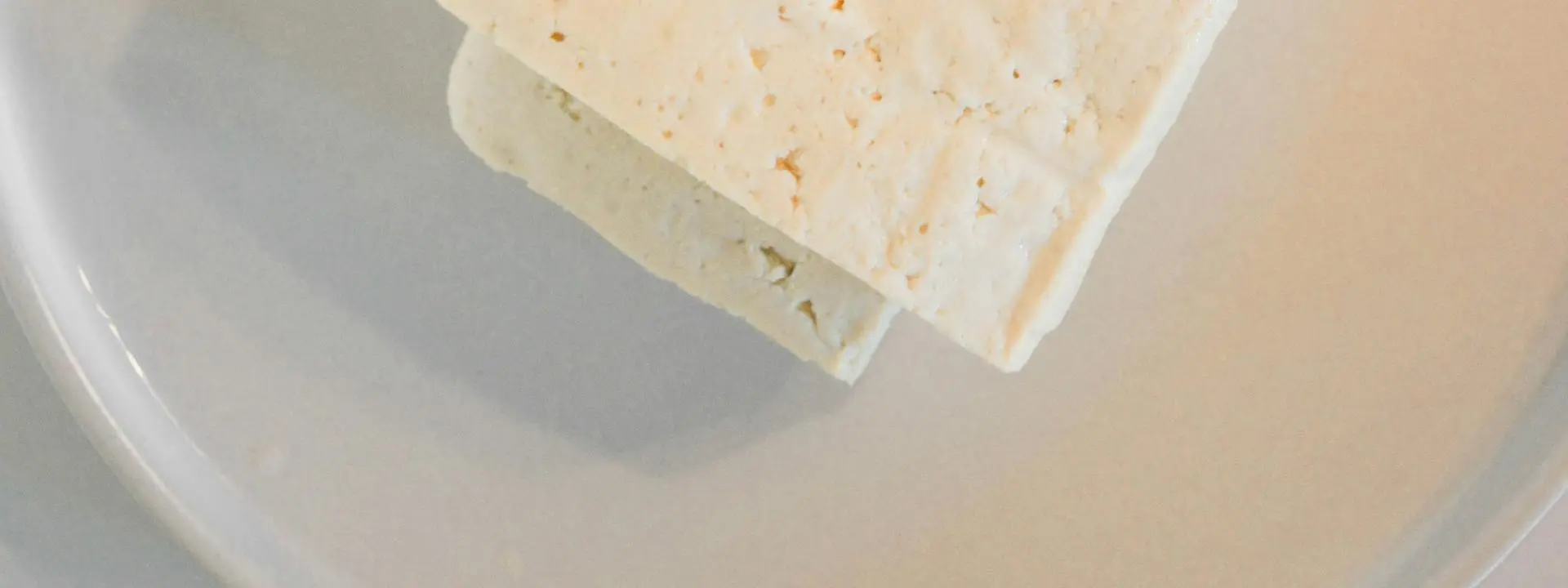
Scientists from Heriot-Watt's School of Engineering and Physical Sciences are cooking up a healthier vegan cheese.
Professor Stephen Euston has been working with a food innovation company for almost 10 years to make vegan cheese healthier and more sustainable.
The team has just received funding from the UK Research and Innovation Engineering and Physical Sciences Research Council (EPSRC) to reach a new milestone: moving the cheese from the lab into the kitchen and putting its taste to the test with real people.
I think it’s fair to say that when most people try vegan cheese for the first time, they don’t wax lyrical.
Professor Stephen Euston
Professor Euston is working to reduce the saturated fat content of the typical sliced vegan cheese.
He said: “I think it’s fair to say that when most people try vegan cheese for the first time, they don’t wax lyrical.
“The main reason for that is probably to do with the lack of protein. ‘Normal’ cheese is mostly protein, whereas vegan cheese has none.
“It’s mostly starch, with a few colourings and flavourings added, and sometimes a bit of salt.
“Its other main ingredient is fat: either coconut or palm oil.
“Solid fats help create the sliceable, meltable texture people expect from cheese.
“But it means that vegan cheese ends up with a high saturated fat content, often up to 25 percent, which means it isn’t the healthiest option.
“And consumers are becoming increasingly averse to palm and coconut oil due to the deforestation involved and its impact on wildlife like orangutans.
Turning liquid oil into solid fat
Professor Euston wants to replace the coconut and palm oil with healthier, UK-grown-and-produced sunflower or rapeseed oil.
“Vegetable oils have a lower saturated fat content, but the challenge is making them behave like solid fat, so that the vegan cheese has something resembling the texture of ‘normal’ cheese.
“We’re very mindful of reducing food miles, so we’re focused on using crops that can be grown sustainably, at scale, in the UK.”
Professor Euston and his colleagues are using a technique called oleogelation: special molecules called oleogelators are added to a liquid oil and they assemble into microscopic structures that trap the oil inside a 3D structure. The result is a gel that behaves like a solid fat.
The team also tested the ‘meltability’ of the cheese and found that their version, made with vegetable oils, had superior meltability compared to several off-the-shelf coconut oil based cheeses.
Professor Euston said: “Meltability is one of the biggest complaints about vegan cheese - it’s not very oozey - so improving that feature is an unintended bonus.
“We’ve proved that our recipe, which reduces the saturated fat content of the cheese to as low as 3%, works theoretically and in our lab.
“But we’ve yet to take it to the kitchen and onto a plate.
“We’re hoping to do that within the next 10 months, when it will be presented to a tasting panel.
“It won’t taste any better or worse than the current vegan cheese slices on the market, but it will be more heart healthy and greener.”
New funding has just been given by EPSRC, but over the years Professor Euston's research has received funding from UKRI Biotechnology and Biological Sciences Research Council and the food industry.
His peer-reviewed work on vegan cheese has been published in the journal Food Chemistry.