Reliability and route-by-route planning are key to bus fleet electrification, researchers find
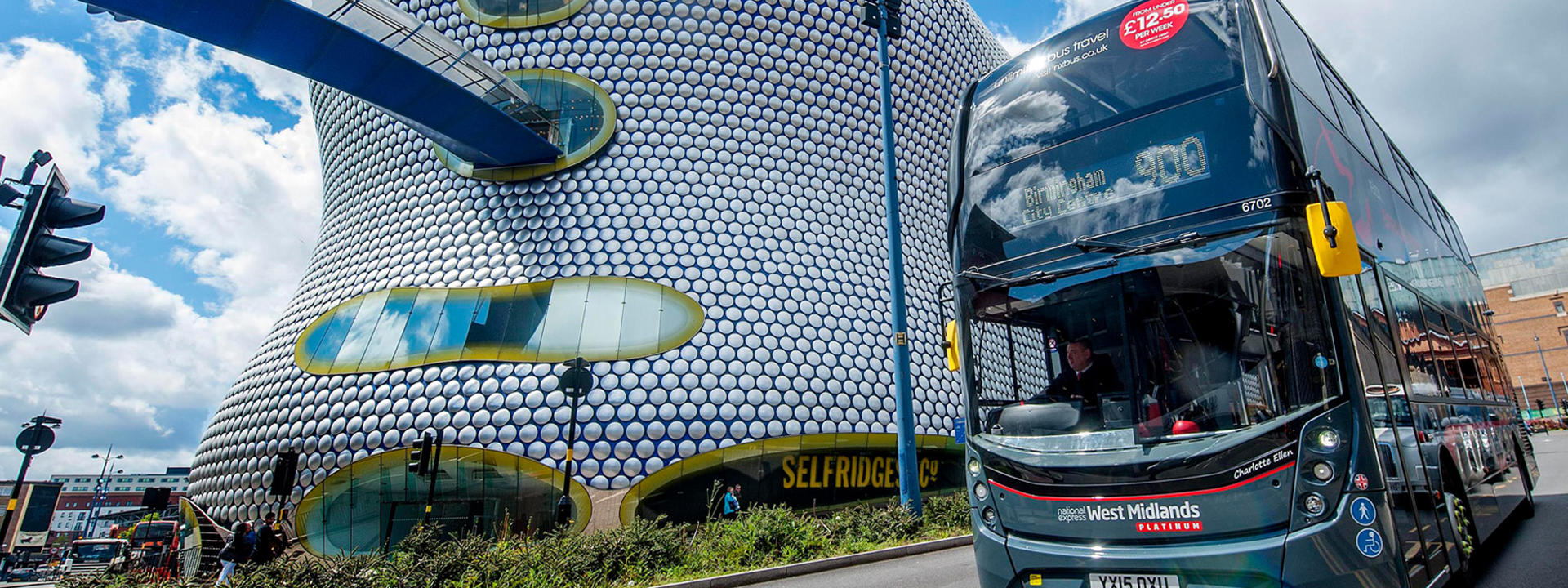
Bus routes in Birmingham are part of new research that shows the critical importance of electric bus reliability and the need for a route-by-route approach to fleet electrification.
In a study for UK research hub TransiT, researchers based at Heriot-Watt University in Edinburgh and the University of Glasgow present a planning framework that identifies – route-by-route – where electric buses are most economically attractive and how factors like vehicle reliability and charging infrastructure can influence electrification decisions.
In their case study of the West Midlands bus network, for example, the researchers found that bus route 61, from central Birmingham to Frankley, and route 76, from Solihull to Northfield, show strong electrification potential, while other routes remain diesel dominant.
The case for electrification depends on the characteristics of individual routes, including their length, frequency, peak time bus numbers and the availability of charging infrastructure.
Dr Wenhua Jiang
Researcher, TransiT
One of the study's key findings is the importance of electric bus reliability. When buses are unavailable because of breakdowns, maintenance or other downtime, the research found that this can quickly reduce the economic attractiveness of electrification.

TransiT researcher and lead author of the study, Wenhua Jiang, is a transport modelling and data science specialist based at Heriot-Watt University. She explained: “Even relatively small increases in electric bus downtime can significantly reduce the level of electrification. Once downtime becomes sufficiently high, cheaper electricity or greater charger availability may not be enough to prevent a shift back towards diesel buses.
“Ultimately our research finds that there isn't a single solution that works equally well across an entire bus network. The case for electrification depends on the characteristics of individual routes, including their length, frequency, peak time bus numbers and the availability of charging infrastructure.”
The route-level perspective is important for operators because it suggests that fleet electrification should be phased strategically rather than approached uniformly across the network, the researchers say.
Dr Jiang adds: “Some routes can provide a strong case for early electrification, while others may need improvements in vehicle reliability, additional charging capacity or changes to operating arrangements – like timetable changes, for example – before electrification becomes economically attractive.”
The researchers highlight that the framework is intended to support long-term strategic fleet and infrastructure planning, rather than detailed operational scheduling. Future research could extend the approach to consider detailed charging operations, en-route charging and other operational constraints affecting electric bus deployment.
Dr Jiang will present the research paper, Strategic Optimization Framework for Route-Level Bus Fleet Electrification, at the 2026 IEEE International Conference on Intelligent Transportation Systems (ITSC), an international conference focused on advances in intelligent transportation systems, hosted by the Institute of Electrical and Electronics Engineers.
The co-authors of the research are Asrul Ismail, Shiqi Sun, Jingjun Li, John Easton and Philp Greening at Heriot-Watt University and David Flynn at University of Glasgow.
TransiT is a UK research hub using digital twins – digital replicas of the physical world – to identify the least-risky, lowest-cost routes to zero emission transport in the UK.
It is a collaboration of eight universities and more than 70 industry partners, jointly led by Heriot-Watt University and the University of Glasgow, and supported by the UKRI Engineering and Physical Sciences Research Council (EPSRC), the main funding body for engineering and physical sciences research in the UK, and by the UK government’s Department for Transport.
TransiT’s other university partners are University of Leeds, University of Birmingham, Cranfield University, University College London, University of Cambridge and Durham University.