Red squirrel goals set out by experts
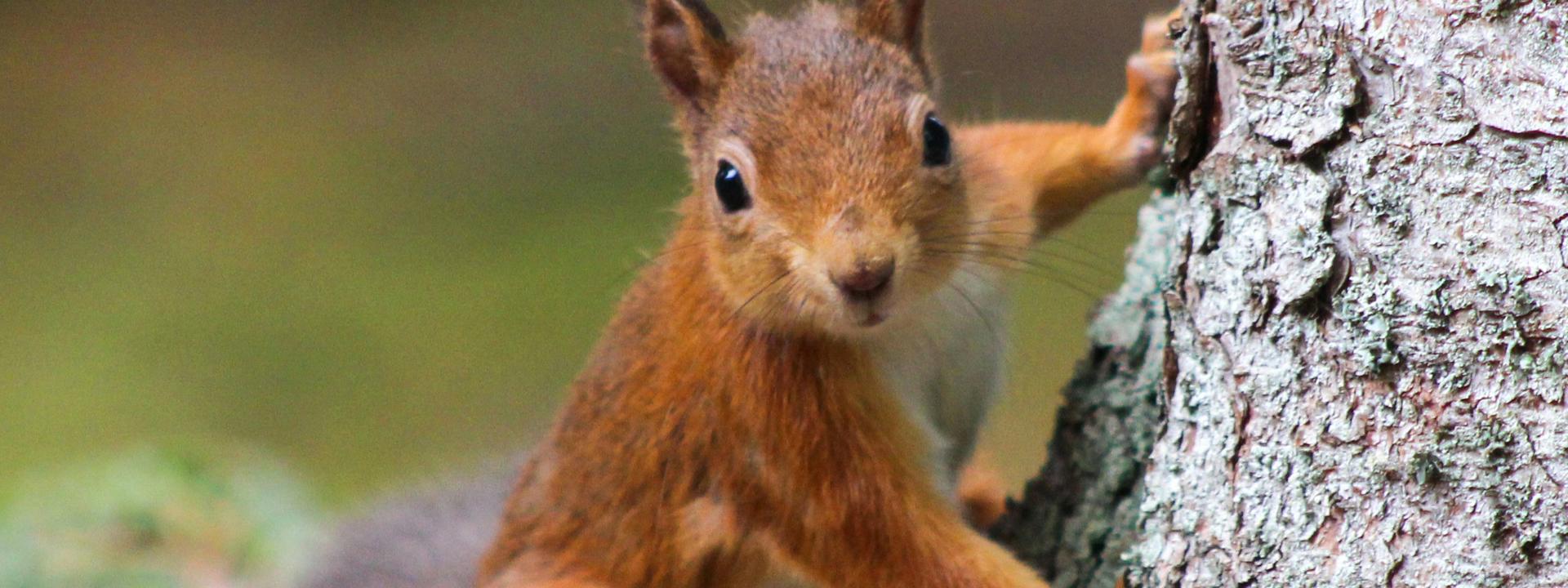
A Heriot-Watt University researcher has contributed mathematical modelling expertise to a new report that sets out key actions to support red squirrel populations in Scotland.
Professor Andrew White, from Heriot-Watt’s School of Mathematical and Computer Sciences, took part in a workshop on health and disease in Scottish squirrels.
Professor White presented modelling research on squirrelpox transmission and population dynamics that contributed to discussions reflected in the report.
Putting the report’s recommendations into action would support the conservation and management of the iconic species and aid woodland biodiversity, according to the group.
Network formation
Professor White took part in the expert workshop alongside organisations such as the University of Edinburgh’s Royal (Dick) School of Veterinary Studies, the Moredun Research Institute, Saving Scotland’s Red Squirrels and the Roslin Institute.
One of the workshop’s recommendations was to form a squirrel conservation research network to collaborate on monitoring and researching the species.
The group could develop and manage a centralised information hub to share monitoring protocols, research data and expertise. This could be extended to the whole of the UK in future, the report suggests.
In addition, a research network could enable enhanced interdisciplinary studies facilitated by the information hub. The group could also link with the UK Squirrel Accord, a partnership that seeks to protect red squirrels.
Improved surveillance
Workshop participants supported enhanced monitoring of the red squirrel population, including disease monitoring, increased sample acquisition and greater resourcing of post-mortem examinations of red squirrels, and better understanding of disease threats at the population level in reds and greys.
Professor Andrew White said: "Our mathematical modelling showed that squirrelpox can persist in grey squirrel populations and be transmitted to nearby red squirrel populations, where it can cause rapid declines.
“The report highlights the need to better understand how disease-causing agents persist in grey squirrel populations.
“Mathematical modelling, alongside field studies, can help investigate whether there is a threshold density of grey squirrels needed to support endemic squirrelpox, providing evidence that could help inform future grey squirrel management."
Representatives from NatureScot, National Museums Scotland, Forest Research and the University of Liverpool also took part in the workshop, which was supported by the Moray Endowment Fund.
Dr Katie Beckmann, of the Royal (Dick) School of Veterinary Studies, said:
"An expert network with ownership of an information hub to support red squirrel monitoring and research in Scotland could be a powerful approach to better understanding and supporting this iconic species, for its conservation and for the benefit of wider biodiversity."
The group says notable progress could be made with relatively modest but long-term funding to maintain an expert network, hub and enhanced health monitoring activities.
Read the report here: https://vet.ed.ac.uk/squirrel-health-report