Radar breakthrough aims to tackle prison suicides
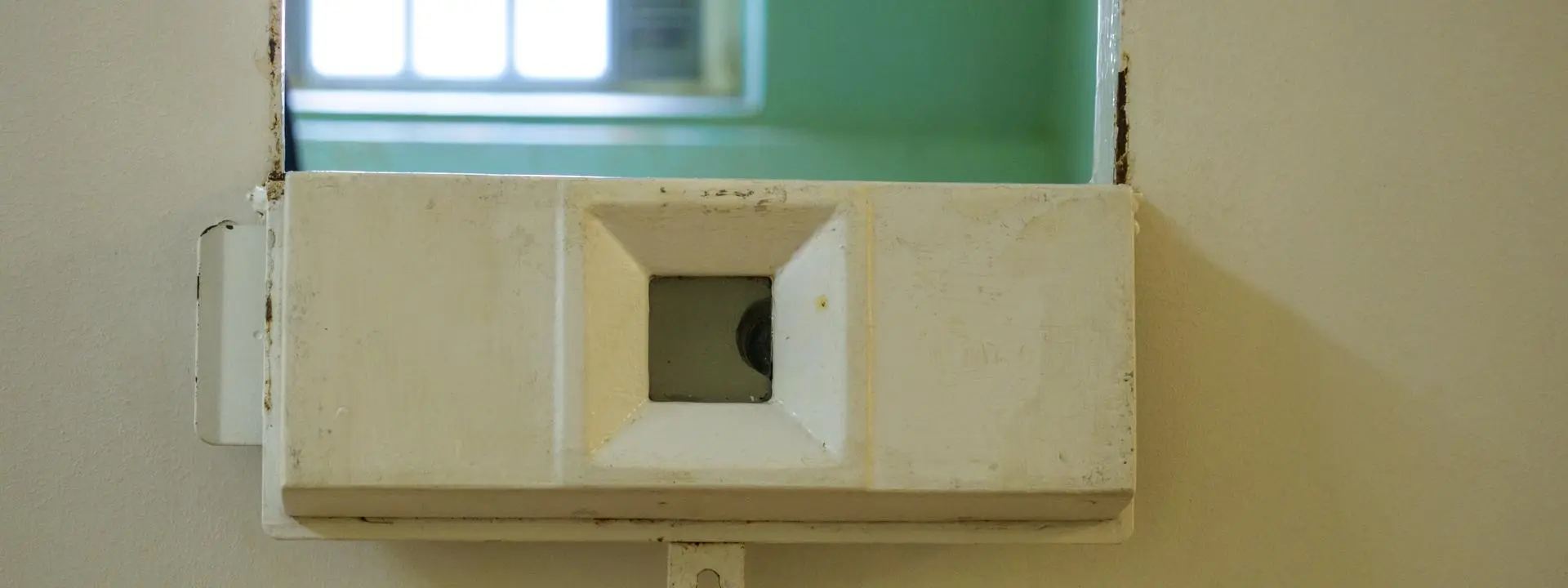
A pioneering new radar system is being developed at Heriot-Watt University to provide continuous, non-contact healthcare assessments of people in custody. It’s a move researchers believe could better support mental and physical health care in prisons.
The technology, known as VisionRF, detects breathing and heart rate without disturbing the individual. It offers a discreet alternative to distressing physical checks that are standard during suicide prevention protocols.
The project has secured funding from the National Institute for Health and Care Research (NIHR) through its THRIVE programme, which supports healthcare innovations with potential to address significant health inequalities.
The need for safer, more compassionate means of supporting healthcare in custody settings is critical.
Dr Dimitris Anagnostou
VisionRF uses ultra-low power radar to identify subtle chest movements, enabling 24/7 observation from several metres away. With no cameras, microphones or wearables, it is designed to prioritise privacy and dignity in secure environments, where healthcare surveillance can otherwise be intrusive or unsettling.
The radar system builds on several years of academic research, with patent-pending signal processing that enables it to isolate a person’s heartbeat and breathing in real time without contact or wearable sensors. Early trials have shown accuracy comparable to clinical ECG equipment, with results shared via a secure network interface.
Dr Dimitris Anagnostou, associate professor at Heriot-Watt University’s Institute of Signals, Sensors and Systems (ISSS), is leading the initiative. He said: “The need for safer, more compassionate means of supporting healthcare in custody settings is critical. Our aim is to provide a solution that allows early intervention during health emergencies, without adding to distress or stigma. VisionRF can detect serious changes in vital signs quickly and accurately, helping staff respond before a crisis escalates.”
Sixty-four people died in Scottish prisons during 2024/25, the highest annual figure in more than a decade. The death toll represents a 60% increase on the previous year, which saw 40 deaths recorded. Of those who died, 16 were recorded as suicides, with seven still pending the outcome of investigations.
In England and Wales, there were 401 deaths in prison custody in the year to June 2025, an increase of 30% from 308 deaths in the previous 12 months. Of these, 86 deaths were self-inflicted. In the 12 months to March 2025, the number of individuals who self-harmed reached 13,824.
These figures reflect deepening concerns about mental health pressures, systemic strain and the need for improved preventative measures within the prison estate.
International evidence indicates that suicide rates among people in prison are higher than in the wider community, highlighting an urgent need for focused health interventions. Expert analyses from organisations like the Samaritans emphasise that people in custody remain at significantly elevated risk compared with those outside.
Studies into recent suicides in custody highlighted how young, vulnerable individuals with histories of mental health struggles and addiction did not receive sufficient care.
Current prevention strategies, like safer cells and regular overnight observations, are often distressing for the individuals who are being monitored because frequent overnight checks can disrupt sleep and exacerbate mental health issues.
VisionRF, in contrast, can be mounted discreetly in a cell, such as behind a light fitting. The device operates autonomously, alerting prison healthcare teams or officers only when a person’s heart rate, breathing pattern or movement becomes irregular.
Families Outside is Scotland’s national charity which supports families that are affected by imprisonment.
Professor Nancy Loucks, Chief Executive of Families Outside, said: "With the death rate in prison higher than ever, such technology can reassure families that their loved one's safety is being monitored. The earlier response technology of VisionRF can help prevent deaths from suicide, as well as those related to substance misuse and natural causes. This will be reassuring for prison staff as well, who can be traumatised by the death of someone in their care."
Dr Anagnostou added: “We are not replacing existing care, but we are significantly strengthening it. VisionRF allows staff to assess wellbeing from a distance, without disrupting the person being observed. It respects their privacy while helping to prevent a tragedy.”
The nine-month project will include live demonstrations at the Immersive Suite at Heriot-Watt University’s Global Research Institute in Health and Care Technologies, a facility that can replicate custodial environments.
A dedicated advisory group, including people with lived experience of the prison system, representatives from the NHS, the Scottish Prison Service, Families Outside and the Prison Officers’ Association, will attend co-design workshops, providing feedback that will help to further shape the device.
The sessions will also help the team ensure the technology is ethical, tailored to real-world needs, and user-friendly, while exploring its placement, sensitivity settings and alert management.
Dr Katrina Morrison, associate professor in Criminology at Edinburgh Napier University, is collaborating on the project. She said: “VisionRF has real potential to reduce the health inequalities that exist within the penal system. By combining innovative technology with a collaborative, co-design approach, we can improve the safety and wellbeing for those in custody, while respecting their dignity and privacy.
“The involvement of key partners such as Families Outside, NHS prison GPs, and people with lived experience of the prison system, is vital in ensuring the system is practical, ethical and impactful for all those involved. Furthermore, ensuring strong governance around how health data is used and protected is essential to building trust in any new technology introduced into secure environments.”
The Heriot-Watt team is also developing a roadmap to spin out the technology commercially, with future applications for families delivering at-home care, in nursing and care homes as well as other community healthcare settings. The device’s low-power and low-cost design makes it suitable for wider rollout beyond the prison estate.
Dr Anagnostou concluded: “People in the care of the prison service face some of the most severe health inequalities in the country. If we can prevent even one life being lost, this technology will have been worth it. But we believe it has the potential to do much more, not just in prisons, but across other areas of health and social care.”
Dr Dimitris Anagnostou is working alongside technical lead Dr Souheil Ben Smida, supported by project manager Eirini Lekka. Bob Ward, PhD candidate and research associate, is undertaking the technical development of the device.