Passenger transport scientists use AI to accelerate West Midlands decarbonisation research
Researchers at Heriot-Watt University in Edinburgh are using artificial intelligence to help build passenger transport simulators that more closely resemble human behaviour.
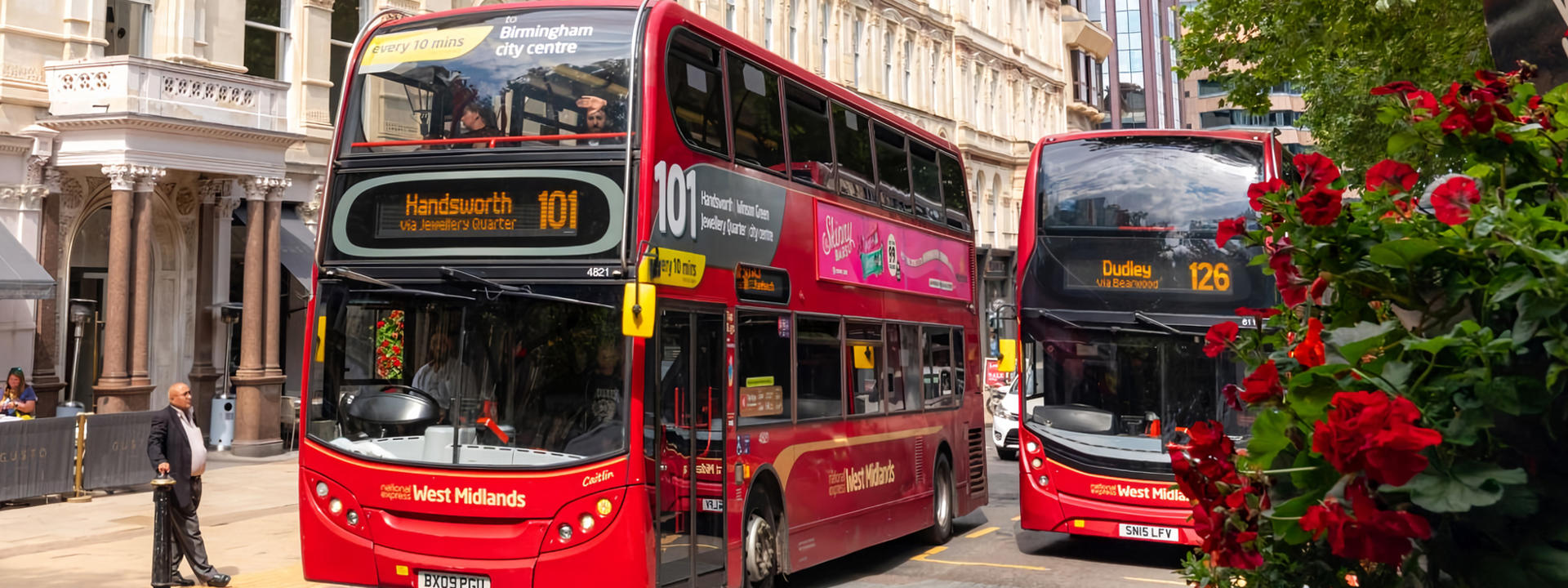
The work is part of a transport decarbonisation demonstration project in the West Midlands, where scientists are looking for ways to encourage car users onto buses, bikes and other active travel choices like walking.
Using a set of 12 transport user personas developed by the UK government’s Department for Transport (DfT), researchers Jingjun Li and Shiqi Sun hope to make a ‘synthetic’ population of the West Midlands with 3 million individuals behave more like real people.
With large volumes of transport users like this in a simulated environment, we can test the likely impact of changes to reduce carbon emissions.
Dr Shiqi Sun
Researcher, TransiT
Dr Sun explained: “In a real transport network, there are bus users, car drivers, cyclists and commuters travelling to or from their work or home. With large volumes of transport users like this in a simulated environment, we can test the likely impact of changes to reduce carbon emissions. For example, if we lower bus fares, which transport users are more likely to switch to buses?”
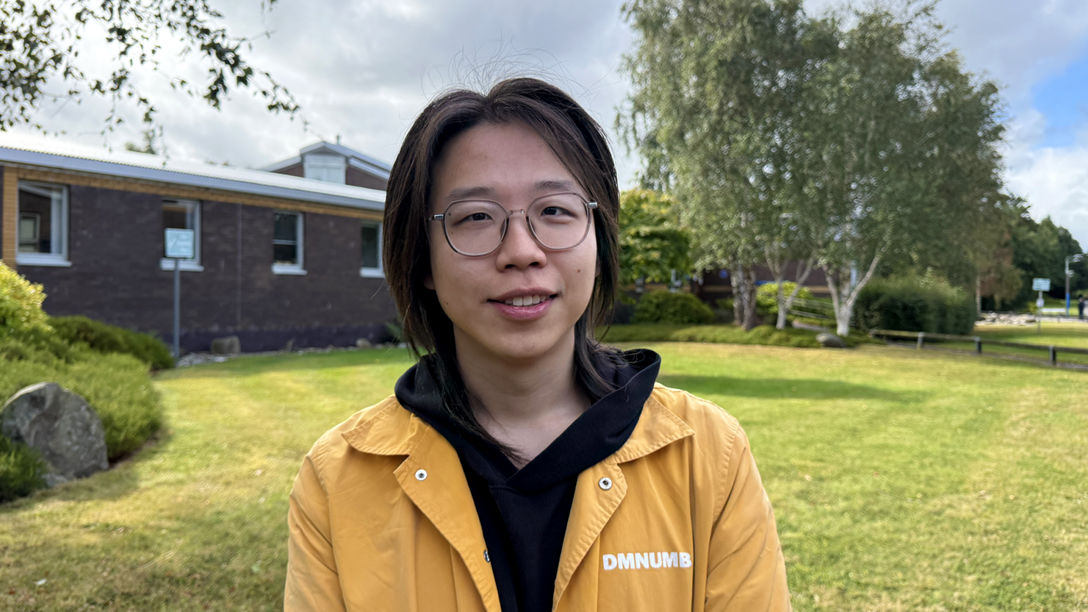
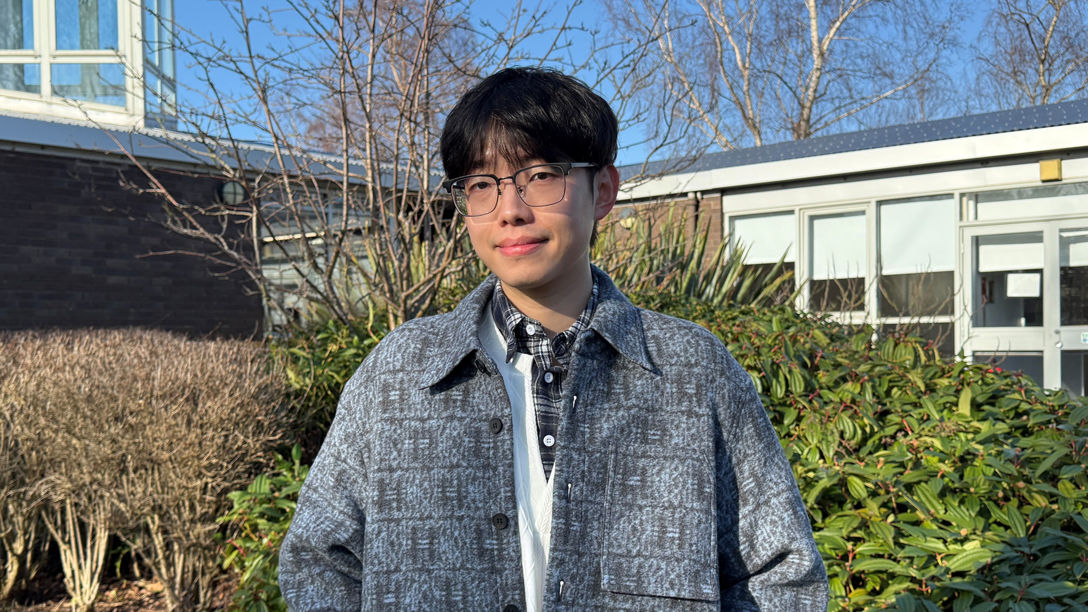
Dr Sun and Dr Li are based at Heriot-Watt University as researchers with TransiT, a national UK research hub focused on rapidly decarbonising transport using digital twins – digital replicas of the physical world.
Their research involves using artificial intelligence to train machine learning algorithms – computer programs that ‘learn’ from data – to link the DfT’s realistic profiles of transport users to the large West Midlands synthetic population.
Synthetic populations are datasets used in computer simulations to mirror population attributes like age, income and location, without using sensitive personal data. They are a critical component of future-looking research in sectors including healthcare, urban planning, finance, transport and retail. But they struggle to represent the unpredictability and diversity of human behaviour.
Dr Li explains: “The synthetic populations we use in our transport research are great for showing the impact of things like timetable or route changes. But they can’t represent the kind of granular richness in human behaviour that would be most helpful to our research. For example, different attitudes towards travel or preferences when making transport choices.”
To help bridge this gap, Dr Li had the idea of linking the individuals in TransiT’s synthetic population with the DfT’s transport user personas. These are 12 research-based, fictional characters representing different transport user groups, and are used widely to research transport mobility and behaviour.
Manually labelling a synthetic population this way would be a hugely time-consuming and laborious task. So, Dr Li’s research colleague, Dr Sun, has developed a way to automate and accelerate the process.
“It wouldn’t be feasible to manually label a database with 3 million individuals,” explains Dr Sun. “Also, each transport user persona includes multiple dimensions, like personal attributes, health status and car accessibility – and this can make them harder for humans to digest.
“Our innovation is to train algorithms to assign the transport user personas, so the synthetic individuals will demonstrate different personalities in our mobility simulation.”
Dr Sun’s approach uses Large Language Models (LLMs) – software tools which analyse, predict and generate human-like text and language – and which excel at extracting information from complex contexts.
The model Dr Sun has developed also includes an ‘active learning’ component, where the algorithm learns to improve its selection process while carrying out the task.
Dr Sun and his team have coined the term Active LLM Fusion (ALF) – to describe this learning process.
“Every time we feed new data to our model, it improves its prediction and labelling process,” Dr Sun said. “This means we can accelerate the speed and scale of our research, as well as helping our computer simulation experts to better predict the behaviour of real transport users.”

The researchers say their modelling tool can be used in different population simulation contexts and see potential applications for their work in other sectors beyond transport. For example healthcare, where scientists need to research different segments of the population.
Dr Li and Dr Sun recently presented papers on their work at an international intelligent systems event in Turkey, the 17th International Conference on Ambient Systems, Networks and Technologies (ANT).
The co-authors of the paper, which is entitled A Hybrid Framework Integrating Large Language Models and Active Learning for Synthetic Population Persona Labelling, are TransiT researchers and investigators Guy Walker, John Easton, David Flynn and Philip Greening.
TransiT is a collaboration of eight UK universities and almost 70 industry partners jointly led by Heriot-Watt University and the University of Glasgow. It is funded by the UK Research and Innovation Engineering and Physical Sciences Research Council (EPSRC), the main funding body for engineering and physical sciences research in the UK, and supported by the UK government's Department for Transport.
TransiT is using digital twinning and related digital technologies to identify the lowest-cost, least-risky pathways to net zero emissions in UK transport across all modes – road, rail, air and maritime – for both passengers and freight.
Its West Midlands passenger transport demonstrator is one of five critical demonstrator projects involving interconnected road, rail, air and maritime systems across different regions of the UK.
Using data from rail, tram and bus services, public transport and car, cycle and taxi use, the twin will help policymakers and transport planners identify what interventions would be most effective in shifting travel behaviour towards public transport and active travel choices like walking and cycling. Industry partners working with TransiT in its West Midlands demonstrator include Transport for West Midlands, Midlands Connect, and the global engineering consultancy, WSP.