Orkney oyster project could triple survival

Heriot-Watt University and Orkney partners have secured European Horizon funding for a landmark, five-year project to restore native oyster populations in Orkney’s waters.
The project will be led by Heriot-Watt's Professor Bill Sanderson, one of the UK’s foremost oyster restoration experts, and Professor Sandy Kerr, director of Heriot-Watt’s International Centre for Island Technology (ICIT) in Orkney.
They will work with Orkney Council, Orkney Islands Council Harbour Authority and Orkney Fishermen’s Association on the initiative.
A full-time research job will be created through the project, based in Orkney.
You can’t simply drop oysters in the sea, hoping that a reef will form.
Professor Bill Sanderson
Professor Sanderson from the University's School of Energy, Geoscience, Infrastructure and Society, has led several high-profile oyster restoration projects, including DEEP in the Dornoch Firth, which has reintroduced 130,000 oysters over 12 years, and Restoration Forth, which has placed 60,000 oysters into the Firth of Forth and reported a higher than average survival rate of 88%.
Professor Sanderson said: “Successful oyster restoration could have huge benefits for Orkney: marine biodiversity could double; water quality would improve and, with a sufficient population, a sustainable fishery could be formed for the next generation.
“But this all relies on reintroduced oysters surviving.
“You can’t simply drop oysters in the sea, hoping that a reef will form.
“We have to maximise their chances of survival.
“That’s where our oyster habitat structure comes in. We’re going to use waste material from shellfish processing to create new platforms for the baby oysters to cling to and thrive on.
“We believe it could increase survival rates threefold, which would be a huge win.”
In addition to the substrate innovation, the Heriot-Watt team is working with its island partners to find the best sites for new oyster beds.
They have been conducting site suitability assessments in Orkney for over 18 months in partnership with the Orkney Islands Council Harbour Authority.
Dr Jenni Kakkonen from the Orkney Islands Council Harbour Authority said: “We’ve been working with Heriot-Watt’s marine scientists on site suitability assessments for over 18 months.
“They’ve found evidence of historic native oyster populations in a few spots, so we know they can thrive in these waters.
“This is a long-term project that aligns with Orkney’s Local Marine Plan, which aims to restore marine habitat around the islands.”
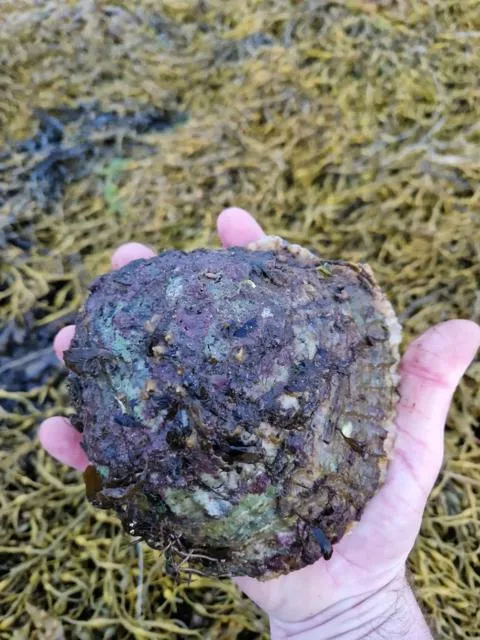
The native European or ‘flat’ oyster (Ostrea edulis) was abundant across Scottish sea lochs and firths for centuries, forming large beds that supported fisheries and local economies.
Overfishing, habitat destruction and pollution in the 18th–19th centuries led to catastrophic population collapses. By the early 1900s, most beds were extinct. Native oysters are now extremely rare and protected in Scotland, surviving only in a handful of locations such as Loch Ryan.
Professor Sandy Kerr, said: “Securing European Horizon funding is a major vote of confidence in the world-class research that Heriot-Watt conducts here, and the strengths of our partners around the island.
“This project will translate into real economic opportunity for Orkney: a new job will be created, there are supply chain opportunities and longer-term environmental benefits for the waters that surround us.”
The team hopes to begin introducing oysters to Orkney’s waters in the summer of 2027.