New evidence suggests carbon emissions from trawling may be lower than previous estimates
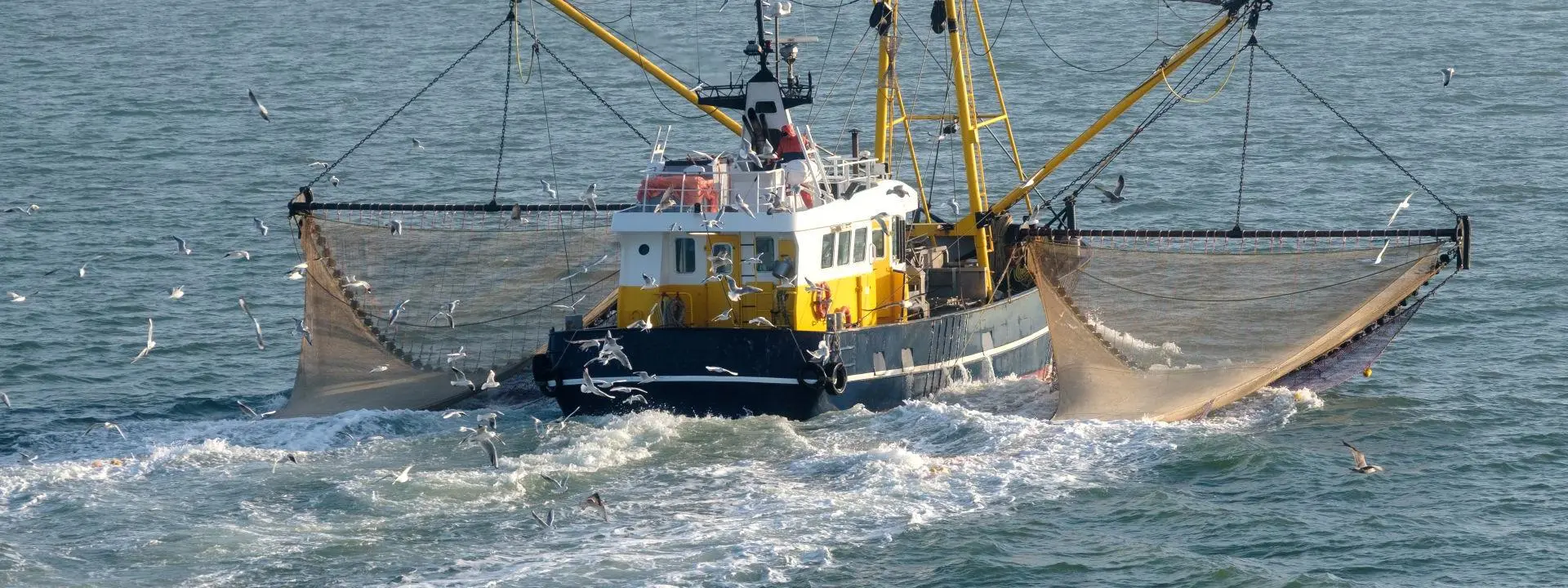
A new technical briefing has uncovered evidence on how trawling, climate change and other human activities affect seabed carbon.
In the briefing, a team of leading UK and international blue carbon experts, including researchers Dr Marija Sciberras, Dr Ryan Pereira, Dr Philippa Rickard and Professors Michel Kaiser and Alex Poulton from The Lyell Centre for Earth and marine sciences at Heriot-Watt University, explain the important role of the UK’s seabed in climate mitigation, storing an estimated 240–524 million tonnes in the upper 10 cm alone, and how better understanding of this emerging 'blue carbon' habitat could improve climate change mitigations at an international level.
To help highlight the findings, researchers from each partner institution have co-authored a CEFAS (Centre for Environment Fisheries and Aquaculture Science) blog post, which - amongst other points - presents new evidence on trawling gear and seabed interaction, suggesting that emissions released from trawling, while still significant, are likely lower than previously estimated.
The blog post also highlights uncertainties linking carbon disturbance from various human activities, carbon reactivity and actual emissions, which could inform potential trade-offs for management options supporting environmental, clean energy, and food security goals and paves the way for cross sector collaboration and consensus.
Dr Marija Sciberras co-authored the blog post. She said:
“At the Lyell Centre, our research focuses on how human activities such as bottom trawling physically interact with seabed ecosystems and alter their structure and function.
"In collaboration with 30 other UK and international blue carbon experts, a review of current evidence on how trawling gears interact with seabed carbon storage and emissions brings ecological evidence into the climate conversation, helping to clarify what we know, what remains uncertain, and how seabed carbon management can balance environmental protection with food security and clean energy goals.”
Read the full blog post Seabed Carbon Risks: What Our Evidence Shows' on the CEFAS website at: https://marinescience.blog.gov.uk/2026/02/25/seabed-carbon-risks-what-our-evidence-show/
Contact
Louise Jack
Related content
Lyell Centre scientists cast doubt on magnitude of CO2 emissions from bottom-trawling
Claims that bottom trawling releases more carbon than air travel have been debunked by a team of Heriot-Watt scientists.
Research spotlight: Environmental assessment of scallop innovation gear - EASIG
The EASIG project is an industry-science project that is testing several modified scallop dredge designs with the aim to reduce the impact of scallop dredging on the seabed.