Major study reveals how ready UK local councils are for AI technology
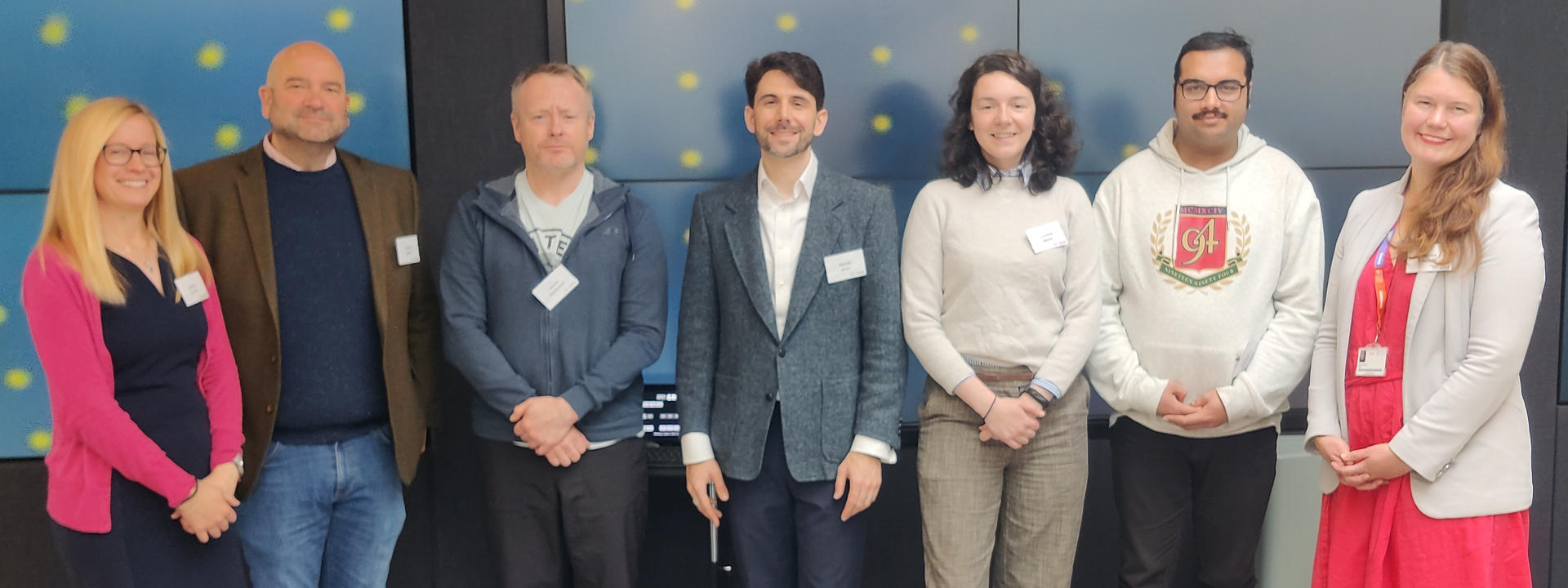
A major UK study examining how local councils are beginning to use AI has revealed widespread gaps and even progress across the country, according to new research led by Heriot‑Watt University and GoLLM.
The eighteen‑month study analysed two hundred and eight councils across England, Scotland, Wales and Northern Ireland to understand how ready local authorities are to adopt and use AI in public services.
The report, titled AI Readiness of UK Local Authorities 2025, shows a mixed national picture, with some councils moving quickly to build on their data, deploy targeted tools, and develop AI culture, while many others remain at the very first stages of building basic digital and data foundations.
There is huge variation between councils, often shaped by leadership priorities, legacy systems and the speed at which clear guidance is developing, which makes it much harder for many to move beyond early experimentation.
Luciana Blaha
IAS lab lead at Heriot-Watt University’s Edinburgh Business School
The research was carried out by Heriot‑Watt University’s Intelligent Automation Systems Lab (IAS), AI specialists GoLLM and made possible through partnership with the Association for Public Service Excellence (APSE), the Society for Innovation, Technology and Modernisation (Socitm), Coram Children’s charity and Sustainable Scotland Network (SSN)
Dr Luciana Blaha, IAS lab lead at Heriot-Watt University’s Edinburgh Business School said: “Our findings show a sector that is increasingly interested in using AI to improve public services, but one that is moving at very different speeds.
“In Scotland, we saw councils benefiting from a coordinated national approach, shared digital programmes and strong links with universities, which helped create more consistent data foundations and more confident early use of AI.
“In England, we saw some of the most advanced councils in the UK operating alongside others at the very earliest stages, reflecting how fragmented structures and different local conditions can shape what is realistically possible on the ground.
“In Wales, most councils are still focused on building the basics of data and digital, taking careful first steps with tools such as chatbots and AI scribes under a strong national framework.
“In Northern Ireland, councils are beginning to explore AI on top of improving shared systems, but progress is constrained by funding pressures, limited internal capacity and the need for more stable digital foundations.”
Funding of over £7k through the Innovation Voucher Programme, managed by Interface, which links organisations to academic expertise, and £3k from the IAS Lab supported the study, and additional in‑kind support from GoLLM enabled a team of eight researchers to complete the work.
In addition, GoLLM has since invested more than £6k in research analysts to continue supporting the project following the conclusion of the Interface and IAS Lab funding.
Dr Blaha added: “There is huge variation between councils, often shaped by leadership priorities, legacy systems and the speed at which clear guidance is developing, which makes it much harder for many to move beyond early experimentation.
“Despite this, we saw encouraging examples where AI was introduced in ways that strengthened services and supported staff rather than replaced them, which shows responsible, community‑focused, and sustainable adoption initiatives which differ by region.”
The report found early examples of AI being used across the UK, with councils in each nation exploring different tools to improve services and ease pressure on staff.
In Scotland, councils such as Fife and Glasgow City are using AI in waste and recycling, from automated sorting to advanced robotics that speed up materials processing.
Across England, councils including Surrey County are moving ahead with practical tools such as AI‑enabled pothole detection, helping road teams identify defects more quickly and safely.
In Wales, early adopters like Bridgend County Borough are introducing simple AI‑powered chatbots to support residents, demonstrating how small tools can make an immediate difference.
Northern Ireland is also beginning to see momentum, with Belfast City Council trialling generative AI to support communication and frontline services, while councils such as Lisburn & Castlereagh City and Mid & East Antrim Borough are using automation to streamline everyday internal processes.
Daniel Shorr, CEO of GoLLM and co‑author of the report, said “This research turns a complicated landscape into a clear starting point for action.
“It shows that AI readiness isn’t determined by size alone, the councils pulling ahead are distinguished by leadership ambition, governance discipline, strategic clarity and stronger data capability.
“Those are the same foundations we design for in our feedback-to-insights platform D.A.V.E. (Dynamic Analytics Visualisation Engine) which streamlines public consultations and other feedback data into actionable reports.”
The report says the UK can make the most progress by strengthening core digital foundations, including improving data quality, modernising legacy systems and expanding shared digital platforms that councils can use together.
It also calls for clearer national coordination, better workforce skills and stronger collaboration between councils, sector bodies and universities, helping local authorities adopt AI safely, consistently and with greater confidence.
A spokesperson for APSE said: "APSE was delighted to support the “AI Readiness of UK Local Authorities 2025” report. The findings reflect what we hear from our members regularly: councils are keen to innovate but progress depends on strong governance and organisational capacity.
“This research provides a timely and practical look at where local government stands on AI, and what’s needed to move from pilots to meaningful and scalable impact for communities.”
A spokesperson for Socitm added: “Socitm's own research aligns with the findings from this study, which highlight that enthusiasm for AI is growing across local government, but many councils are still navigating practical challenges, from legacy systems and siloed data to digital skills gaps.
“Working together with Heriot-Watt, GoLLM, and other sector partners we want to help councils overcome these barriers by strengthening data foundations, building capability, and embedding ethical governance, so they can turn ambition into trusted, tangible improvements in public services.”
Professor Luciana Blaha and the research team will share further insights at upcoming events including: the ALARM Scotland Seminar on Monday 9 March, as part of the AI Public Sector week on 17 March, and for an APSE member-only session on 24 March.