How one Medellín neighbourhood changed how a whole city plans for climate change
The Guardian has reported on work in Medellín, Colombia, that shows what happens when a community refuses to accept that flooding, landslides and water scarcity are problems for someone else to solve. Researchers from Heriot-Watt University and the University of Edinburgh are central to that story.
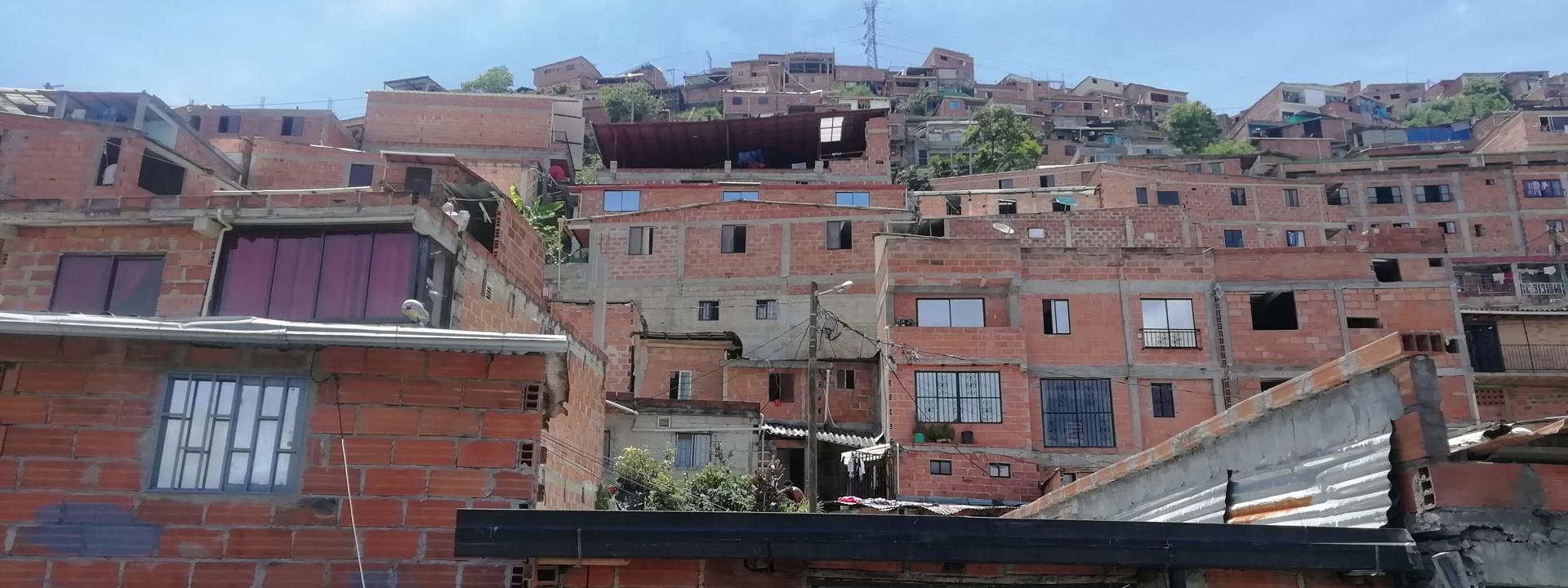
The community of Pinares de Oriente sits hundreds of metres above the city in the district known as Comuna 8, home to around 140,000 people. Many residents moved there to escape conflict elsewhere in Colombia, building homes on some of the most exposed land in the city. When the rains come, so does the risk of landslides and flooding.
It was this community that first asked for something better. And researchers from Heriot-Watt University and the University of Edinburgh, working alongside Colombian university partners, helped make that ask impossible to ignore.
“This has always been about the community. They identified the problem, they defined what an integrated approach should look like and they held local government accountable for delivering it.”
Professor Harry Smith
Professor in Global Urbanism at Heriot-Watt University
From a neighbourhood push to a city-wide plan
The story has its roots in work that began in 2014 through the Medellín Urban Innovation project, funded by the British Council. That project, led jointly by Heriot-Watt and the University of Edinburgh alongside Colombian partners, examined whether Medellín’s internationally celebrated reputation for urban innovation was genuinely improving lives in its most vulnerable areas.
What followed was years of patient, community-led research. Residents mapped hazards from their own doorsteps, using smartphones to photograph early signs of ground movement. Community volunteers monitored drainage and helped redirect rainwater flows that were triggering small landslides. The research teams brought technical expertise; the community brought local knowledge, trust and, crucially, determination.
Professor Harry Smith, a professor in Global Urbanism at Heriot-Watt University, said: “This has always been about the community. They identified the problem, they defined what an integrated approach should look like and they held local government accountable for delivering it.”
That determination produced a landmark outcome. The Integrated Disaster Risk Management and Climate Change Adaptation Plan for Comuna 8 has now been formally approved and is in the public domain. It is a pioneering document: the first of its kind for an urban edge community in the Global South and notable for the way it was co-produced by community organisations and local government agencies, with Heriot-Watt University and the University of Edinburgh facilitating the process.
Nature-based solutions on the ground
The plan is backed by real, community-managed projects on the ground, including rainwater harvesting systems, community gardens and tree nurseries. These serve as nature-based solutions to manage water, reduce landslide risk and build long-term food security. The Guardian coverage highlights how the combination of practical action and strategic planning is producing results that other cities are now watching closely.
Professor Soledad Garcia-Ferrari, a professor at the Edinburgh School of Architecture and Landscape Architecture at the University of Edinburgh, has been central to this collaborative from the start.
She said: “What makes this genuinely pioneering is the integration. Disaster risk and climate change adaptation have too often been treated in separate silos, by separate agencies. This plan, and the process that produced it, shows that they must be tackled together and that communities have to be at the centre of that work.”
Ana Miret Garcia, a researcher on the project at Heriot-Watt University who also lectures at the University of Edinburgh, has contributed significantly to how this work has been developed and communicated within and beyond the communities of Comuna 8.
Scaling up the impact
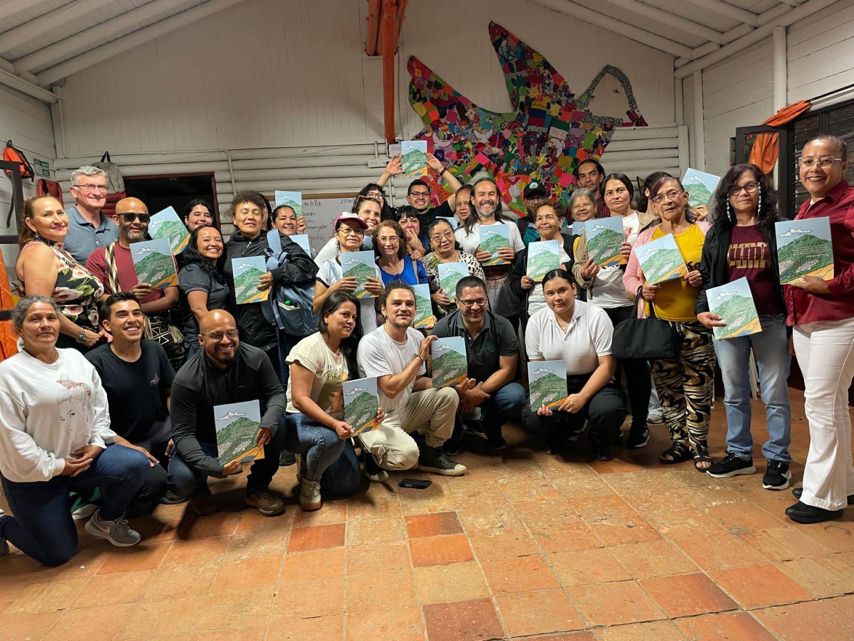
With the plan formally approved, the research team is now focused on accelerating its impact. Current activities include consolidating two community-managed nature-based solutions as demonstration projects, developing indicators to monitor their effectiveness and disseminating a citizen’s guide to the plan in accessible language and short video formats for local residents and community organisations.
The team has also been working with key local government agencies to promote replication of the approach and, by May 2026, individual plans had been approved for all comunas in Medellin benefiting more than 2.6 million people. The work was also presented at the international symposium ‘Co-producing Alternative Urban Futures through Experimental Urbanism’ in Brussels, organised by the Urban Studies Foundation.
A decade of collaborative research
The Medellín work sits within a growing Global Urban Research Collaborative led jointly by Heriot-Watt University and the University of Edinburgh. Since 2014, this collaborative has brought together researchers, communities, NGOs and government agencies across Latin America to co-produce knowledge aimed at improving living conditions in the region’s cities and towns.
Beyond Colombia, the collaborative has also conducted research on flood risk management in vulnerable communities in Mexico City and Puebla, and on sustainable resource management in the Galapagos in Ecuador. The ambition is to grow further across the Global South, taking the lessons from Medellín to new contexts where communities face similar pressures from climate change and inadequate urban infrastructure. To read more about the Global Urban Research Collaborative’s work in Colombia and across Latin America, please visit globalurbancollaborative.org.