Heriot‑Watt University to help train UK’s next generation of nuclear experts
Heriot‑Watt University will play a key role in a major new national initiative to develop the UK’s future nuclear science and engineering workforce. The Skills Centre for Advancing Nuclear Systems (SCANS) is one of seven recipients of the £65.6m Doctoral Focal Awards announced today by the Department of Energy Security and Net Zero.
The multi-disciplinary doctoral-level training centre will be led by the University of Glasgow, together with Heriot-Watt, the University of Edinburgh and 25 partners across the nuclear sector.
This is a really exciting opportunity to train the next generation of innovators in the UK’s nuclear sector.
Stephen Mansell
Assistant Professor, School of Engineering and Physical Sciences Heriot-Watt University
The awards are match funded by industry and delivered by UK Research and Innovation (UKRI). Today’s announcement is a crucial part of the Nuclear Skills Plan’s recommendation to quadruple the number of nuclear fission doctoral students to address the sector’s shortage of high-level nuclear skills and refresh an aging workforce.
The aim is to equip doctoral students with a broad range of advanced technical skills essential for the UK’s current and future civil and defence nuclear programmes, supporting the UK’s economic growth, energy and national security, and net zero objectives.
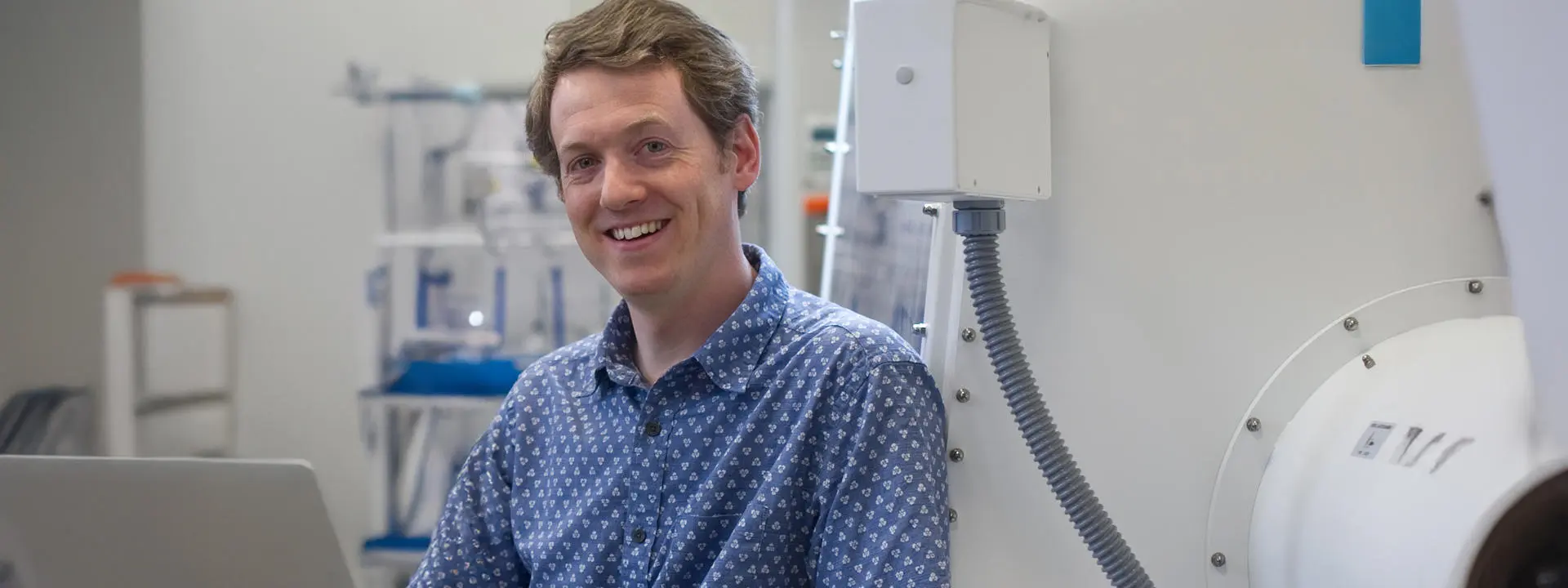
Assistant Professor Stephen Mansell, lead for Heriot-Watt University, said: “This is a really exciting opportunity to train the next generation of innovators in the UK’s nuclear sector.
“It will play an important role in decarbonisation throughout the coming decades, so I am delighted to work with my colleagues across many different fields in order to deliver new skills and careers for our students.”
Heriot‑Watt’s contribution to SCANS builds on its established strengths in energy systems, materials science, and applied engineering, reinforcing the University’s commitment to addressing global challenges through research‑led innovation and industry collaboration.
SCANS will provide doctoral students with advanced technical training and hands‑on experience across the full lifecycle of nuclear technologies—from the development of advanced fuels and reactors, to decommissioning, waste management and environmental stewardship.
The UK's nuclear sector is central to our national security, clean energy ambitions and economic future. Meeting those challenges demands a new generation of researchers and innovators with the technical expertise to make a real difference.
Professor Charlotte Deane
Executive Chair at UKRI’s Engineering and Physical Sciences Research Council
The centre will operate across two integrated and interconnected hubs, in Glasgow and Edinburgh. Students will have access to leading research facilities, including SUERC’s radioisotope laboratories, Heriot-Watt’s National Robotarium and Lyell Centre, the University of Edinburgh’s National Nuclear User Facility, and the University of Glasgow’s wet‑chemistry, nuclear materials and specialist physics laboratories.
At the same time, SCANS students will benefit from the backing of industry and national organisations, who are contributing funding, training, placements and specialist expertise to help students develop their skills and deepen their understanding of the sector.
SCANS will adopt a cohort-based recruitment and training model to enhance postgraduate experience and tailored training to enable student readiness to join the workforce. Each student will join SCANS as part of a community with networks across scientific disciplines, institutions, and industry partners.
Professor Charlotte Deane, Executive Chair at UKRI’s Engineering and Physical Sciences Research Council said:
“The UK's nuclear sector is central to our national security, clean energy ambitions and economic future. Meeting those challenges demands a new generation of researchers and innovators with the technical expertise to make a real difference.
“UKRI doctoral focal awards are a proven way to develop that talent. They bring together academic excellence, industry partnerships and cohort-based learning to give doctoral students the skills and experience to make an immediate impact in the nuclear workforce.
“These new nuclear focal awards, developed in partnership with government, will continue building the research base that the UK's national security and clean energy future depends on.”
Over the next seven years, more than 120 supervisors from across the partner institutions will work to train more than 60 individuals in four cohorts of doctoral researchers. They will build a shared foundation in nuclear science while developing tailored expertise to deliver challenge-led research projects co-created with industry.
Recruitment for SCANS will begin in 2026, with the first cohorts starting in the 2026/27 academic year.