Heriot-Watt wins prestigious RSE grants for equality, sustainability and quantum research
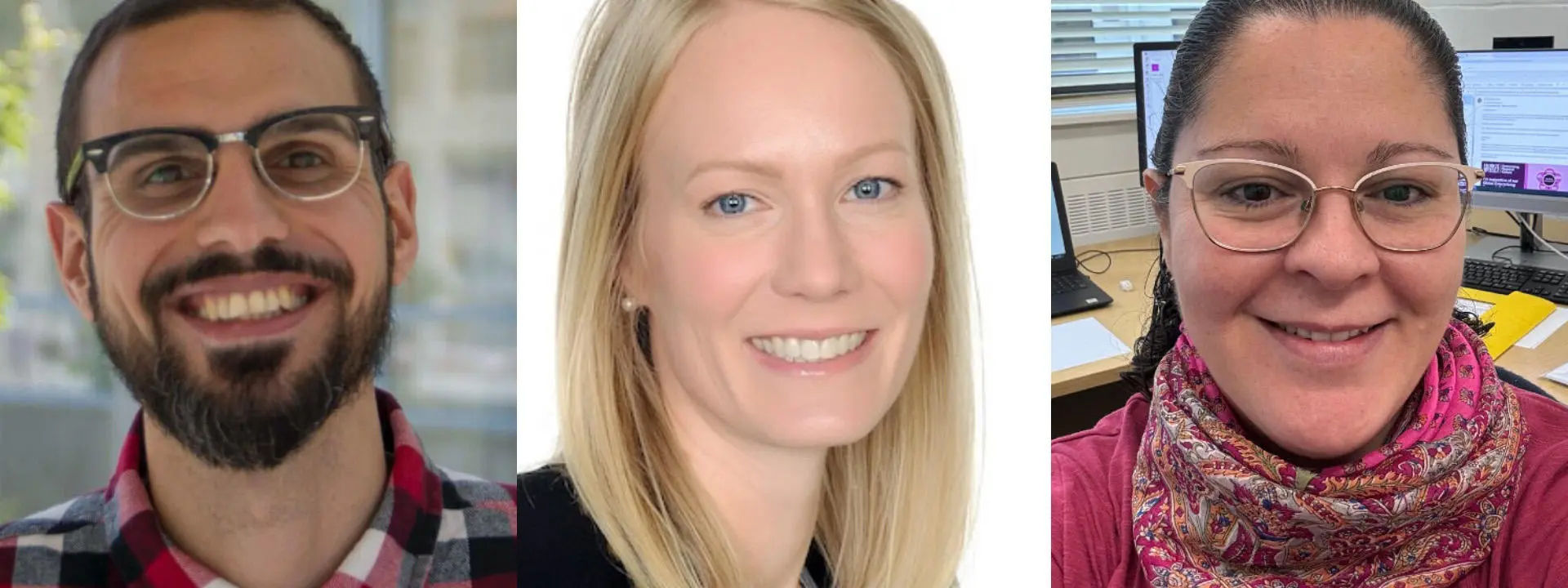
Heriot-Watt University is celebrating the success of three of its researchers whose projects have been recognised in the Royal Society of Edinburgh’s (RSE) Autumn 2025 Research Awards. Their pioneering work will range from redressing inequality in Scottish fisheries, to the transformation of an industrial by-product, and bringing tomorrow’s quantum technology a step closer.
Over £856,000 was awarded for innovative research in Scotland. The 92 projects selected will also enable work on virtual reality therapies, sea-level rise, global environmental resilience, and voting behaviours in Scotland’s diverse communities.
I am confident that the recipients of these prestigious RSE awards will advance knowledge and deliver meaningful benefits for Scottish society.
Professor Anne Anderson OBE FRSE, RSE Vice President (Research)
Heriot-Watt researchers secured funding in the Small Grants and Research Collaboration categories. These recognise significant contributions to social equality, advanced quantum sensing, and sustainable materials.
Dr Ingrid Kelling, from the University’s Institute of Life and Earth Sciences, is focusing on women in the fishing industry. Her project, entitled ‘Making Women Visible in Scotland’s Fisheries: Story-telling, Digital Analysis and Pathways to change’, will address longstanding gender inequalities within Scotland’s fisheries sector by combining narrative methods with digital tools to highlight women’s contributions. It will also advocate for systemic change.
Reflecting on her award, Dr Kelling said: “This award provides a powerful opportunity to highlight the often-overlooked contributions of women in Scotland’s fisheries.
“By combining storytelling with digital analysis, we can uncover new insights that support gender equity and help shape a more inclusive future for the sector.”
In the Institute of Photonics and Quantum Sciences, Dr Samer Kurdi, was also awarded a small RSE grant. Dr Kurdi’s research will advance the development of quantum sensors for detecting spin-wave dynamics in atomic-thick magnets at room temperature, opening new opportunities in quantum technologies and materials science. He said: “I’m grateful to the RSE for supporting fundamental research that bridges the boundaries between quantum technology and condensed matter physics.
“This project aims to bring atomic-thick magnets into the realm of room-temperature operation, an essential step toward low-power nanodevices for information technology."
Dr Ceren Ince, from Heriot-Watt's Institute of GeoEnergy Engineering, will work in partnership with Professor Richard J Ball at Bath University. Their Research Collaboration grant is for a project called ‘ACT Scotland: From classification to activation of mine tailings for sustainable resource recovery’. Mine tailings are one of the world’s most abundant industrial by-products, produced after minerals have been separated from mined ore. Dr Ince explained the importance of RSE funding:
“Through this field-based research, we will gain direct access to the mine tailings and carry out early analysis to better understand their potential for reuse. This will help identify ways to safely transform mine tailings into innovative construction materials, turning a long-term waste liability into a valuable resource.
“The project therefore supports resource recovery and contributes to mine site rehabilitation, while advancing a more sustainable and circular materials economy for Scotland and beyond.”
Professor Anne Anderson OBE FRSE, RSE Vice President (Research), said: “The RSE’s Research Awards Programme plays a crucial role in supporting and strengthening Scotland’s vibrant research community. I am confident that the recipients of these prestigious RSE awards will advance knowledge and deliver meaningful benefits for Scottish society.”
The reach of the RSE awards extends beyond Scotland, with collaborators from 45 institutions in total, including international organisations in the USA, Australia, Italy, Malawi, Germany, Finland, and Iraq.
The RSE Research Awards Programme runs annually with spring and autumn calls. The Royal Society of Edinburgh is Scotland's national academy of science and letters and was established in 1783 to deploy knowledge for public good.