Heriot-Watt joins global network enhancing education for older people

Heriot-Watt has taken yet another step forward as a global leader who transforms lives through research and education, as we join a global network committed to intergenerational learning.
The University have been awarded Age-Friendly University status, joining a global network of 140 research institutions committed to including older people at the heart of higher education.
This recognition is underpinned by a three-year action plan developed with input from staff, lived experience and community partners ensuring that their experiences and priorities are incorporated to help inform the University’s teaching, research and wider strategy.
This is a significant and accreditation which reflects Heriot-Watt University’s strong commitment to inclusion, lifelong learning and healthy ageing.
Katherine Crawford
Age Scotland
The University will expand opportunities for lifelong learning, flexible study, skills development and community participation through the accreditation, while embedding intergenerational learning across its global campus.
Professor Alan Gow, Professor in Psychology and Healthy Ageing co-lead at Heriot-Watt’s Global Research Institute in Health and Care Technologies, co-chaired the working group behind the application.
Of the accredidation, he said: "Achieving Age-Friendly University status reflects our commitment to ensuring that people of all ages can contribute to and benefit from everything a university has to offer.
“Through our research, education and partnerships, we are working to create solutions that support healthier, more independent lives while ensuring older people play an active role in shaping that work.
“We will also strengthen our partnership with Age Scotland and build similar relationships in Dubai and Malaysia, so this work reaches the communities we serve around the world.”
A new seminar series will bring students and older people together, with topics chosen by both. It will run alongside the University’s Healthy Ageing Showcase, which takes place every two years.
The University’s Citizen’s Advisory Network, a group of community members who help shape health and care research, will expand to include members from every campus. Postgraduate researchers will also be trained to work alongside older adults on real research challenges.
We now have in place an actionable plan that will see us make our courses more flexible for older learners, bring students and older people together to learn from one another, and give older people a real voice in our research across every one of our campuses.
Alan Gow
Professor in Psychology and Healthy Ageing co-lead at Heriot-Watt’s Global Research Institute in Health and Care Technologies
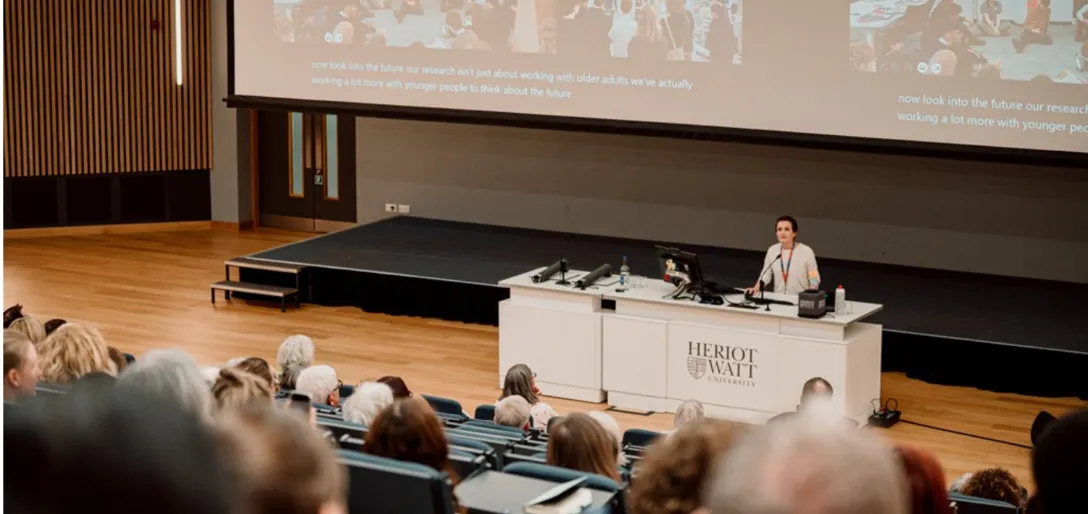
In the community, Heriot-Watt will develop volunteering opportunities for students and staff with Age Scotland and review physical and digital access across its campuses. It also plans to seek funding for workshops in which students help older people get to grips with smartphones, online shopping and staying safe online.
Hazel Matthews, Head of Operations, Global Research Institute in Health and Care Technologies at Heriot-Watt University said: “This is an ambitious programme which we have been developing for some time, and it is exactly what Heriot-Watt is about, furthering education and learning for all members of society.
“From the outset, we wanted this application to be shaped by the people it is meant to serve. We heard from colleagues across all five of our campuses, from Age Scotland and from members of our Citizen’s Advisory Network, who held their own workshop to decide what our priorities should be.”
Heriot-Watt was founded in Edinburgh in 1821 as the world’s first mechanics’ institute, set up to give working people access to education. More than two centuries on, the University sees Age-Friendly status as a natural continuation of that founding mission, by transforming lives through research and education.
Katherine Crawford, CEO of Age Scotland said: "As our population ages, it is increasingly important that learning environments are designed to welcome, support and value people of all ages, enabling individuals to continue learning, developing skills and contributing throughout later life.
"Age Scotland has been pleased to support the university through this process, and we hope this milestone encourages other institutions to follow their example. Creating age-friendly places to learn benefits not only older people, but society as a whole.”
The action plan was developed by a cross-university working group formed in December 2025. A total of 76 staff from all five campuses responded to a survey on the University’s priorities, alongside members of Age Scotland and the Citizen’s Advisory Network.
The University already has a strong track record in ageing research. Its healthy ageing research theme, wattAGE, brings together more than 100 researchers across campuses and disciplines.
Its work includes the £2 million CONSOLIDATE NetworkPlus, which is co-led with Age Scotland and develops technologies that help people living with dementia stay independent at home.
ENDS