From the first industrial revolution to the green one: the UK’s COP31 moment
Writes Professor Mercedes Maroto-Valer OBE, Deputy Principal (Global Sustainability) at Heriot-Watt University and Champion and Director of the UK Industrial Decarbonisation Research and Innovation Centre (IDRIC)
Professor Maroto-Valer attends COP31 in Antalya (Turkey) as member of the Council of Engineers for the Energy Transition (CEET) under the auspices of the United Nations Secretary General and with accreditation supported by the UN Industrial Development Organization (UNIDO).
Another year has flown by, and it has brought turbulent change with it. Wars continue, climate alarms are sounding in every corner of the globe, households are feeling the cost of energy, and much of the world is watching anxiously for a solution.
This week COP31 has started. For those of us working on climate policy and the energy transition, it is the biggest date in the diary. However, for many members of the public, it is understandably just another summit.
It is true that progress has not come at the pace it should have since the Paris Agreement in 2015 at COP21, and I share the frustration felt by many.
We have generations of skill and experience, world-class research, the largest potential for wind energy and CO2 storage in Europe and a track record of turning invention into industry. The question is whether we lead this change or watch it happen elsewhere.
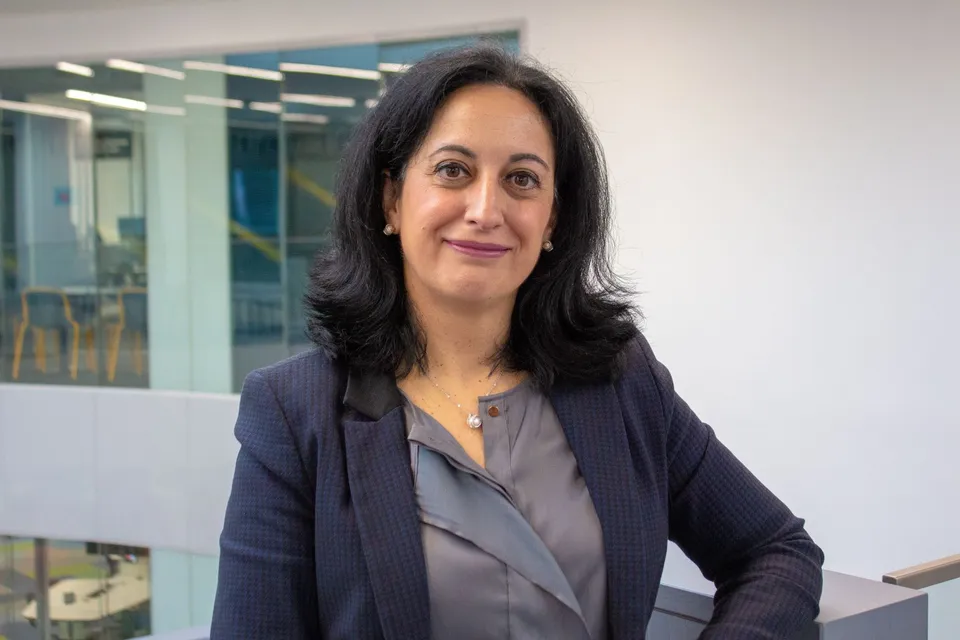
Professor Mercedes Maroto-Valer OBE, Deputy Principal (Global Sustainability) at Heriot-Watt University and Champion and Director of the UK Industrial Decarbonisation Research and Innovation Centre (IDRIC)
Alliances are shifting, some of the world’s largest economies are rethinking their commitments, and many ask whether the global consensus on climate is starting to fray.
Living costs are increasingly cited as a reason to retreat from net zero, yet in the UK expensive gas drove up most of the rise in our bills.
It would be easy to read all of this as a reason for gloom. I see it differently, I see this as a time for opportunity to be seized.
For the UK, I believe the greatest opportunity right now is green industry. That means more than renewable energy.
It means changing how we make the materials and manufactured goods our economy relies on, from steel and concrete to advanced manufacturing, so we can produce them cleanly here at home.
In the UK, our industrial heartlands are where that ambition becomes real jobs, exports and investment, through shared infrastructure, joined-up energy planning and collaboration between businesses, researchers and communities.
Many countries are talking about industrialising for the first time. In the UK, and here in Scotland, we are talking about reindustrialising.
We have generations of skill and experience, world-class research, the largest potential for wind energy and CO2 storage in Europe and a track record of turning invention into industry. The question is whether we lead this change or watch it happen elsewhere.
There is a temptation to look around the world and find reasons to hold back. As one country steps away from its commitments, why should we push on?
The UK produces less than 1% of global emissions, so does it really matter what we do? I would argue that it matters more now than ever, because the countries that hesitate today will be buying tomorrow’s clean technologies from those that did not.
Last year in Brazil at COP30, the UK was among a group of countries that led the Belém Declaration on Global Green Industrialisation, a coalition of the willing prepared to show what is possible before every nation signs up.
Through the UK Industrial Decarbonisation Research and Innovation Centre (IDRIC), which I lead, we have been part of those conversations ever since, and we are now taking them on to Antalya.
In my experience, I have found the progress does not always wait for unanimity. Sometimes it just needs a few countries to show the way.
China has shown an economic interest in the global shift to renewables. It is the largest emitter, at nearly a third of global CO₂.
Yet it has made a clear bet on the clean energy of the future, manufacturing over 80% of the world’s solar panels, around 60% of its wind turbines and 75% of its electric vehicles and their batteries.
Last year it invested more than $600 billion in clean energy, over twice its fossil fuel investment. Clean technology is not only about meeting targets. It is an opportunity for growth and a cleaner environment.
Every country is on a different journey to net zero, and not all of us will reach the end of that journey at the same time. But let’s not use what others are doing as an excuse for not doing what we must.
We all have a social responsibility here, and in a moment like this one, we also have a rare chance to lead.
When I walk those corridors in Antalya, among the suits and the national dresses, the ministers and the campaigners, I will not be looking for a perfect deal, but for bold, informed action.
I will be looking for progress, and for those willing to lead it. The UK powered the first industrial revolution. Let’s lead the green one.