EPS Dubai students win People’s Prize at Engineering for People Design Challenge
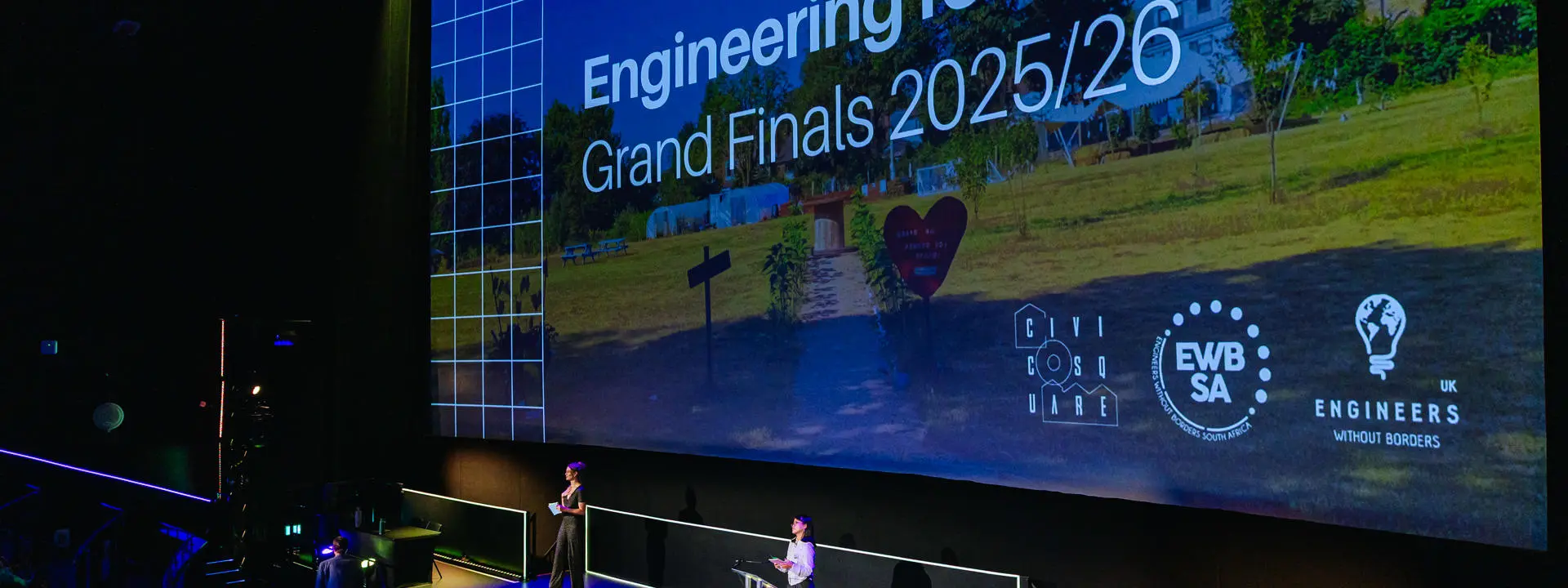
A team of Year 3 students from the School of Engineering and Physical Sciences Dubai (EPS Dubai) has won the prestigious People’s Prize in this year’s Engineering for People Design Challenge, held in Birmingham, UK.
Presented as part of the flagship Engineering for People Design Challenge, organised by Engineers Without Borders UK in partnership with Engineers Without Borders South Africa, the People’s Prize is a public-voted award that recognises the student project which best addresses the social, economic and environmental needs of a real-world community. The award also includes a £500 educational bursary.
The winning team, comprising Debbie Esther Jimmy, Syeda Sameeha Misbah, Apsara Sivaprazad, and Srinidhi Kasulabad, was mentored by Dr Manjula Nair, Assistant Professor at EPS Dubai, and supported by Associate Professor Dr Reza Mohammadi from the EPS UK team. The competition challenged university students from across the UK and Ireland to develop regenerative, community-led engineering solutions for the Ladywood neighbourhood in Birmingham. This year’s challenge focused on addressing local issues linked to economic inequality, ageing infrastructure and climate resilience through engineering solutions that place people and communities at the heart of decision-making.
The Dubai campus’ award-winning project, HydroGuard, is an adaptive, flood-resilient drainage system designed to be retrofitted into existing infrastructure to reduce recurring sewer overflows and street flooding. The solution addresses a pressing challenge in Ladywood, where around 10% of residents are at significant risk of flooding due to ageing drainage infrastructure.
HydroGuard uses a passive hydraulic mechanism with an automatically elevating drain grille to prevent blockages during heavy rainfall, while an integrated debris basket helps minimise sewer overflows. The system requires no external power supply or major structural modifications, making it a practical and cost-effective solution. Constructed from polypropylene and glass-reinforced plastic (GRP), the design also features a QR code that links users to a community reporting application, encouraging local engagement and proactive maintenance.
To be recognised with the People’s Prize from among more than 13,800 students participating across eight countries is a remarkable achievement. I am particularly proud that an all-female team delivered this project from our Dubai campus. The award reflects the creativity, dedication and professionalism of every member of the team and is a wonderful example of Heriot-Watt’s commitment to people-centred engineering. My congratulations to the team and to Dr Manjula Nair, under whose leadership the project was developed, on this well-deserved recognition.
Professor Dame Heather McGregor
Provost and Vice-Principal, Heriot-Watt University Dubai
The team’s project was selected from among 36 shortlisted teams, highlighting the quality of innovation and engineering excellence demonstrated by Heriot-Watt University Dubai students on an international stage.
Commenting on the win, Dr Manjula Nair said: “This achievement reflects our students’ ability to combine technical expertise with empathy and sustainability to solve real-world challenges. HydroGuard demonstrates the value of human-centred engineering and collaborative problem-solving, and I am immensely proud of the team's creativity, resilience and dedication throughout the competition. Winning the People’s Prize is a wonderful recognition of their hard work and the positive impact their solution can have on communities.”
The winning team said: “We are incredibly honoured and grateful to have received the People’s Prize Award for HydroGuard at the Engineering for People Design Challenge Grand Finals. Although we were unable to attend in person due to visa delays, it means a great deal to have our work recognised by the wider community.
“HydroGuard was developed to address surface flooding challenges in Ladywood through a practical, affordable, scalable and sustainable drainage solution. This experience reinforced the importance of designing with people and communities at the centre of engineering decisions, and showed us the value of multidisciplinary collaboration in creating meaningful real-world impact.”
Now in its fifteenth year, the Engineering for People Design Challenge has engaged more than 120,000 students across eight countries, helping transform the way engineering is taught and practised worldwide. The programme encourages future engineers to develop innovative, globally responsible solutions that respond to the needs of communities while delivering long-term environmental and social impact.
Tom Whitehead, Education and Skills Lead at Engineers Without Borders UK, said: “This year’s finalists showed exactly why the future of engineering must be globally responsible. Their projects combined technical creativity with a real understanding of people, place and long-term impact - demonstrating the kind of thinking our sector urgently needs.”