Prestigious fellowship for leading Heriot-Watt mathematician
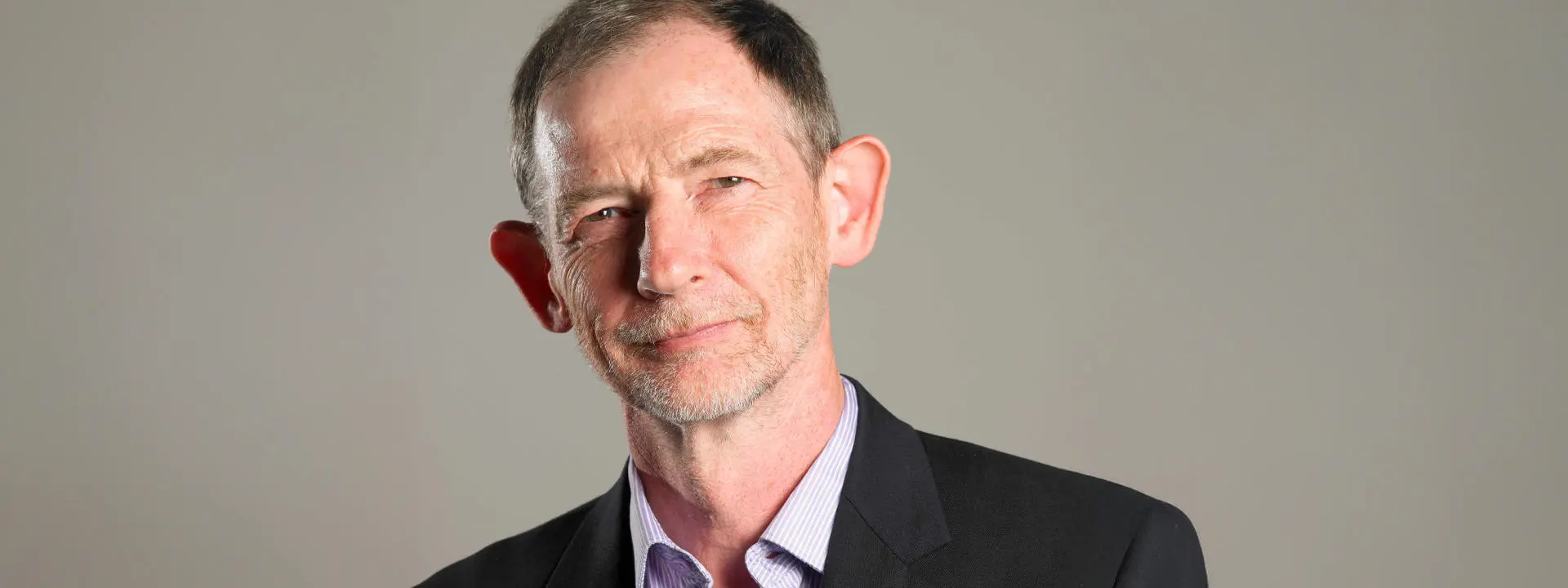
Sir John Ball, a professor of mathematics at Heriot-Watt University whose pioneering work has advanced the frontiers of mathematical science, has been awarded a prestigious fellowship by the Institute for Advanced Study (IAS).
Each year, the IAS welcomes more than 250 of the world’s most promising postdoctoral researchers and distinguished scholars, offering them the opportunity to pursue ambitious projects free from teaching and administrative commitments.
Sir John, who recently completed his term of office as President of the Royal Society of Edinburgh, was selected for his outstanding contributions to nonlinear analysis and its applications to materials science, which have significantly shaped the field and influenced a generation of researchers.
The fellowship will allow him to dedicate an extended period to advancing his research on static and dynamic models for martensitic phase transformations, liquid crystals and computer vision.
The fellowship begins in November 2025 and runs until April 2026.
Reflecting on the fellowship, Professor Sir John Ball said: “This will be my third time as a member of the IAS. It is a tremendous privilege to once again be able to join its community, which has such a rich history of intellectual discovery. I look forward to deepening my research into nonlinear analysis, building new collaborations, and contributing to the Institute’s culture of curiosity and innovation.”
Congratulating her colleague, Professor Sara Lombardo, Executive Dean of the School of Mathematical & Computer Sciences at Heriot-Watt University, said: “This fellowship is a fitting recognition of Sir John’s exceptional contributions to mathematics.
"His selection by the IAS highlights the global impact of his research and the esteem in which he is held by peers worldwide. We are immensely proud of his achievement and excited to see the advances that will result from his time at the Institute.”
Founded in 1930, the IAS in Princeton, New Jersey, has built a community of more than 8,000 scholars who have influenced entire fields of study as well as generations of colleagues and students. Albert Einstein was among its first faculty members, and the Institute’s affiliates include 37 Nobel Laureates, 46 Fields Medalists, and 24 Abel Prize Laureates.